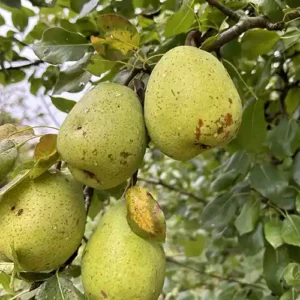
Pre-orders are open No payment today. Stock will be checked during the inventory in early August, then you will receive a payment link for the available trees.

Dessert pear trees

Dessert pear trees
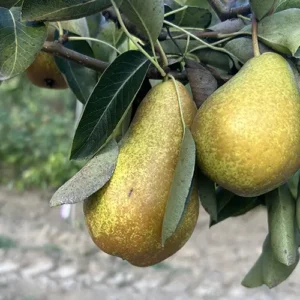
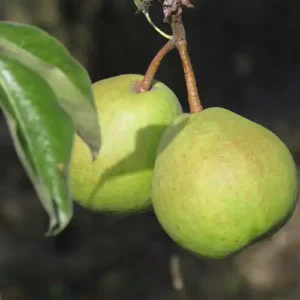
Beurre Hardy

One of the classic French pears, with a very good flavour, but needs a warm sheltered situation.
From 26,50 

Dessert pear trees

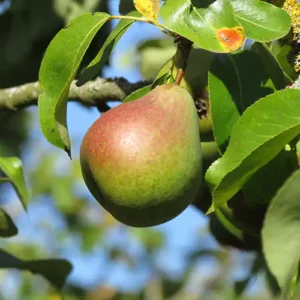
Beurre Superfin

A traditional French 19th century pear, widely considered one of the best for flavour.
From 26,50 

Dessert pear trees

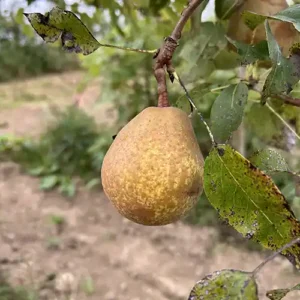
Clapp’s Favorite

An attractive red-flushed early-season pear from the USA.
From 26,50 

Dessert pear trees

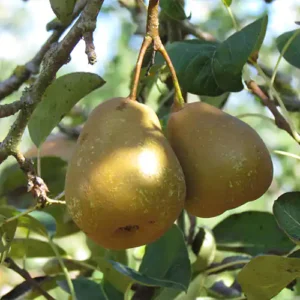
Clement’s

Clement's pear is a high quality French dessert pear, very similar to Williams / Bartlett.
From 26,50 

Dessert pear trees

Comice

Doyenne du Comice is arguably the best flavoured of all pears.
From 26,50 

Dessert pear trees

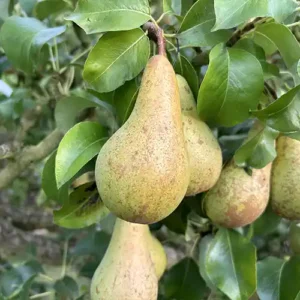
Comtesse de Paris

Comtesse de Paris pear tree, a low-disease storage pear picked in mid-October and eaten from December to February.
From 26,50 

Dessert pear trees

Concorde

A marriage of Conference and Comice - Concorde is easy to grow, heavy crops, excellent flavour.
From 26,50 

Dessert pear trees

Morettini

An early season dessert pear with a good flavour.
From 26,50 

Dessert pear trees

Packam’s Triumph

Packham's Triumph pear tree, with fine melting flesh similar to Williams, harvested in late September and keeping for a few weeks.

From 26,50 

Dessert pear trees

Passe-Crassane

Passe Crassane pear tree, with fine melting juicy flesh, picked in October and kept for early winter eating.

From 26,50 

Dessert pear trees

President Heron

President Heron is a high-quality French dessert pear, a good choice for the home orchard.
From 26,50 

Dessert pear trees

Seigneur Esperen

An old fashioned French pear with a notably sweet flavour.
From 26,50 
Autumn 2026

Dessert pear trees

Stark Crimson

A red form of Clapp's Favorite, also known as Kalle. The pears have a sweet flavor, and ripen in late summer.
From 26,50 
Autumn 2026

Dessert pear trees

Abate Fetel

A highly regarded Italian pear variety producing elongated fruit with sweet juicy flesh.
From 26,50 

Dessert pear trees

Beurre d’Anjou

Beurre d'Anjou is a highly-regarded traditional French dessert pear with melting sweet flesh.
From 26,50 

Dessert pear trees

Beurre de Naghin

A vigorous Belgian pear variety producing fine, melting and sweet fruit for winter eating.
From 26,50 

Dessert pear trees

Beurre Lebrun

Beurre Lebrun is a high-quality French mid-season dessert pear, with a fine sweet flesh.
From 26,50 

Dessert pear trees

Conference

Conference is a popular and reliable English pear, well-suited to temperate climates in north-west Europe.
From 26,50 

Dessert pear trees

Cornelie

Cornelie is a traditional sweet buttery French dessert pear.
From 26,50 

Dessert pear trees

Deveci

Deveci is a large late-season eating pear, originating from Turkey.
From 26,50 
Autumn 2026

Dessert pear trees

Harrow Delight

A compact pear variety producing very sweet, musky-flavoured fruit with excellent fire blight resistance.
From 26,50 
Autumn 2026

Dessert pear trees

Jeanne d’Arc

A traditional French pear variety producing large fruit with fine flavour and good keeping qualities.
From 26,50 

Dessert pear trees

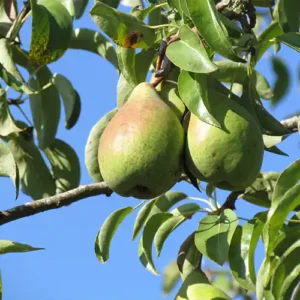
Kravnicka

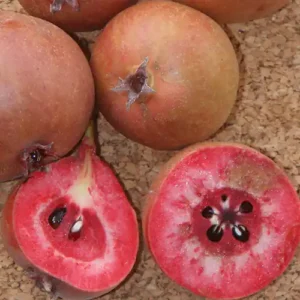
Kravnicka pear tree, a rare red-fleshed pear with small sweet, lightly juicy fruit and a distinctive spicy flavour.
From 26,50 

Dessert pear trees

Legipont

Legipont or Fondante de Charneu is a traditional Belgian dessert pear, ripening in mid-September.
From 26,50 

Dessert pear trees

Louise Bonne

Louise Bonne is a pretty red-flushed French pear variety with sweet melting flesh.
From 26,50 
Autumn 2026

Dessert pear trees

Madame Gregoire

A traditional French pear variety producing large fruit with fine juicy flesh and excellent flavour.
From 26,50 

Dessert pear trees

Marguerite Marillat

Marguerite Marillat is a traditional pear raised by Mr Marillat in the 1870s and named after his wife.
From 26,50 

Dessert pear trees

Melinda Red

A red-fleshed pear variety producing juicy fruit with a mild sweet flavour and attractive pink flesh.
From 26,50 
Autumn 2026

Dessert pear trees

Precoce Henin

Precoce Henin is an early-season eating pear with a rich sweet melting flesh.
From 26,50 

Dessert pear trees

Red Anjou

Red Anjou pear tree, with sweet, aromatic red pears, late ripening and good storage, harvested in late September.
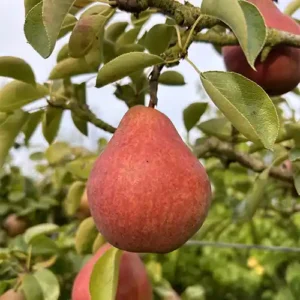
From 28,00 
Autumn 2026

Dessert pear trees

Red Williams

A red-coloured sport of the popular Williams pear, with a similar good flavour.
From 26,50 
Autumn 2026

Dessert pear trees

Saint Jean d’Hardelot

One of the earliest-ripening pears, you should be able to pick them at the end of June.
From 26,50 

Dessert pear trees

Sans Pépins

Seedless pear tree, a vigorous variety with sweet, rounded pears harvested gradually from late August to early October.
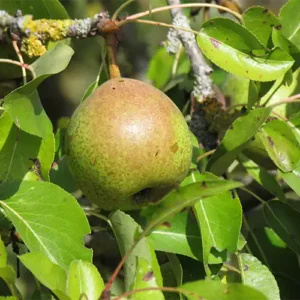
From 26,50 

Dessert pear trees

Sucree de Montlucon

Sucree de Montlucon is an exceptionally sweet dessert pear.
From 26,50 
Autumn 2026

Dessert pear trees

Trapezitsa

A very early-season pear for eating fresh, with good resistance to scab.
From 26,50 

Dessert pear trees: choosing a cultivar and harvesting it correctly

Dessert pear trees include cultivars selected primarily for eating fresh. They differ considerably in texture, aroma, sweetness, acidity, juiciness and their ability to develop melting flesh after harvest.

A good dessert pear is not necessarily soft while it remains on the tree. Unlike apples and nashi pears, most European pears should be picked when physiologically mature but still firm, then allowed to complete their ripening after harvest.

A pear left on the tree for too long may begin softening from the inside, develop coarse or grainy flesh or turn brown around the core before its external appearance suggests that it is overripe.

Conversely, a pear picked too early may shrivel, remain hard, lack sweetness and never develop the characteristic aroma of the cultivar.

The correct picking date is therefore one of the most important factors in enjoying a dessert pear. It influences eating quality, storage life and the fruit’s ability to ripen normally.

Picking maturity and eating maturity are not the same

Picking maturity is the stage at which the pear has completed enough of its development on the tree to ripen correctly after harvest.

At this stage, the fruit is normally still firm and may remain completely green.

Eating maturity is reached later, once the flesh has softened, the aroma has developed and the balance between sweetness, acidity and texture corresponds to the expected qualities of the cultivar.

Between these two stages, the pear may require a period of cold storage followed by several days of ripening at room temperature.

The time required varies greatly between cultivars. Some summer pears become ready to eat only a few days after picking, while certain winter pears require several weeks of cold before they can soften properly.

A pear that is hard immediately after harvest is not necessarily unripe or of poor quality. It may simply be a storage cultivar that has not yet completed its normal ripening process.

How can you tell when a pear is ready to pick?

Home gardeners rarely have access to laboratory maturity tests, but several simple observations can be combined.

No individual sign is completely reliable. The normal season of the cultivar, changes in the skin, ease of detachment, seed development and the behaviour of trial fruit should all be considered together.

Begin with the usual harvest period

Start observing the tree as the normal harvest period for the cultivar approaches.

The date remains approximate and may move earlier or later according to country, region, exposure, rootstock, crop load and seasonal temperatures.

A calendar date should therefore indicate when regular observation should begin rather than prescribe one exact picking day.

View the pear harvest calendar

Harvest dates are intended mainly for comparing cultivars. Local conditions may move the actual picking period by several weeks.

Observe the background colour

In many cultivars, the background colour changes from dark green to a lighter green or a slightly yellowish shade as picking maturity approaches.

The lenticels visible on the skin may become browner and the surface may develop a smoother or slightly waxy appearance.

A red flush is not a reliable maturity indicator because it depends strongly on exposure to sunlight and may develop well before the fruit is ready to pick.

Use the lift test

Hold the pear in the palm of your hand and raise it gently towards an almost horizontal position while making a very slight turn.

When picking maturity has been reached, the stalk normally separates from the spur without requiring a strong pull.

Do not pull the pear downwards because this may break the fruiting spur that also carries future flower buds.

When the fruit remains firmly attached, wait several days before testing it again.

Cut and examine a representative fruit

Choose a pear from a representative part of the tree rather than the warmest and most exposed branch.

The seeds normally begin turning brown as harvest approaches, but their colour should never be used as the only indicator because it develops differently according to cultivar and season.

The flesh should be fully developed but still firm. A small, very hard and strongly grassy fruit is probably too immature.

Soft, grainy flesh or browning around the core indicates that picking has probably been delayed for too long.

Carry out a ripening trial

When the correct stage remains uncertain, pick several trial pears and allow them to ripen according to the normal method for the cultivar.

When they shrivel without becoming aromatic, they were probably harvested too early.

When they soften extremely quickly or become brown internally, the main crop should be picked without further delay.

This test is particularly useful during the first harvests from an unfamiliar tree.

Record the picking date, condition of the fruit and behaviour during storage. After several seasons, these observations provide a more accurate guide for the garden than a general calendar date.

Why should most European pears not become soft on the tree?

Many European pears begin ripening from the inside when left on the tree beyond their correct picking stage.

The flesh around the core may become overripe, brown or grainy while the outside of the fruit still feels relatively firm.

Fruit picked too late is also more easily bruised and normally has a much shorter storage life.

For most dessert cultivars, the best result is obtained by picking the fruit while firm and completing the ripening process after harvest.

This general principle should still be adapted to the cultivar. Early summer pears can sometimes remain on the tree until close to eating maturity, while autumn and winter cultivars usually require a clearer separation between picking and eating.

How should pears intended for storage be picked?

Harvest during dry weather where possible and avoid picking fruit that has become hot in strong sunlight.

Handle each pear carefully. Pressure from fingertips or a small impact may cause bruising that becomes visible only several days later.

Keep the stalk attached and place the fruit gently into shallow trays or crates.

Do not pour pears into a bucket or stack them deeply because the weight of the upper layers damages the fruit beneath.

Sort the crop immediately. Split, insect-damaged, fallen, stalkless, deformed or bruised pears should be eaten or processed promptly.

Only healthy fruit picked with its stalk and without visible damage should be reserved for longer storage.

Move storage fruit into cool conditions as soon as reasonably possible after harvest.

Storing pears at home

Commercial storage may use highly controlled temperature, humidity and atmosphere, but useful results can still be obtained at home.

A refrigerator is normally the most reliable option for a small quantity because its low and relatively stable temperature slows respiration, reduces water loss and delays over-ripening.

Place the pears in perforated bags, shallow trays or lightly covered containers that retain humidity without causing permanent condensation.

Do not wash fruit before storage. Water on the skin encourages decay and removes part of the natural protective surface.

A cold cellar, fruit store or frost-free garage can be suitable where the temperature remains genuinely low and stable.

A room regularly reaching 10 to 15°C is normally too warm for extended storage and functions more as a ripening area.

Inspect the fruit at least once a week and remove any pear that begins to soften, shrivel, leak or develop rot.

Storage periods quoted for commercial conditions should not be transferred directly to an ordinary cellar or garage.

Ripen stored pears progressively

Remove from cold storage only the quantity likely to be eaten during the following days.

Leave these pears at a moderate room temperature, generally between approximately 15 and 20°C, until they reach eating maturity.

Depending on cultivar and length of cold storage, this may take from two or three days to more than a week.

To test the fruit, apply gentle pressure near the neck beside the stalk. When this area begins to yield slightly, the pear is usually approaching its best eating stage.

Avoid repeatedly pressing the widest part of the fruit because this leaves visible bruises.

Ripe apples and bananas release ethylene and can accelerate the ripening of nearby pears.

This can be useful for a small batch but should not be applied to the entire stock, as all of the fruit may become ready at the same time.

A ripe pear can be returned to the refrigerator for several days to slow further softening, but it will not regain its original storage potential.

Summer, autumn and winter dessert pears

Summer pears

Summer cultivars are valued for their early harvest and often juicy, aromatic flesh.

They usually keep for only a short period and must be monitored carefully because they can move rapidly from firm to overripe.

They are suitable for extending the fresh-fruit season into summer but are not appropriate where several months of storage are required.

Several picking rounds may be necessary because the fruit does not always reach maturity simultaneously across the whole tree.

Autumn pears

Autumn cultivars often provide the best balance between flavour, diversity of texture and practical home storage.

Some become melting after only a few days at room temperature, while others keep for several weeks under refrigeration.

This group includes many classic dessert pears with fine flesh, pronounced aroma and good versatility.

Winter pears

Winter pears are picked firm and may appear almost inedible immediately after harvest.

They generally require several weeks of cold storage before developing the ability to soften normally at room temperature.

Their principal advantage is the possibility of extending pear consumption well beyond the end of the orchard harvest.

Their final quality depends particularly strongly on an accurate picking date and stable storage conditions.

Choose according to texture

The term dessert pear covers fruit with very different textures.

Some cultivars develop exceptionally fine, melting and juicy flesh, while others remain firmer, crisper or slightly grainy even when fully ripe.

Pears traditionally described as buttery develop tender and melting flesh with an almost creamy sensation.

This quality requires accurate picking and ripening. Harvested too early, the fruit remains hard; left too long, it becomes soft, floury or internally brown.

Other pears retain firmer flesh and tolerate handling more successfully. They may be preferable for eating away from home, packing into lunches or keeping for several days after ripening.

Stone cells occur naturally in pear flesh and produce a grainy sensation, particularly near the core. Their quantity and distribution vary greatly between cultivars.

Choose according to flavour

Dessert pears may be sweet, sharp, musky, floral, spicy, vinous or delicately aromatic.

Some cultivars provide a powerful and complex flavour but have a very short eating window.

Others have a milder flavour but compensate with regular cropping, large fruit, good disease tolerance or longer storage.

The balance between sugar and acidity is more informative than sugar alone. A very sweet pear with little acidity may seem flat, while moderate acidity can make an aromatic cultivar appear fresher and more complex.

Aroma depends strongly on maturity. A cultivar eaten too early may appear bland and firm even when it is naturally capable of producing highly perfumed fruit.

For eating directly from the hand, also consider skin thickness, juiciness, the amount of graininess near the core and whether the ripe fruit remains firm enough to handle.

Build a complete season of dessert pears

Planting several cultivars that all ripen together creates a large crop that may be difficult to eat or store before it deteriorates.

A more useful collection combines one early pear, one or two autumn cultivars and a genuine storage pear.

This provides fresh fruit over a much longer period and distributes the work of harvesting, checking and ripening the crop.

Pollination must be considered at the same time. Most pear trees crop more reliably beside a genetically different cultivar with a sufficiently overlapping flowering period.

A good combination should therefore be compatible in blossom while remaining complementary in its picking and eating seasons.

Two cultivars that pollinate one another but produce all of their fruit during the same week do not extend the season as effectively as a carefully staggered collection.

Pollination of dessert pear trees

Most European pear cultivars are not reliably self-fertile and produce more consistently when compatible pollen is available from another variety.

Some cultivars are described as partially self-fertile and may set fruit alone during favourable seasons, but cross-pollination normally improves both yield and regularity.

The two cultivars must flower at sufficiently similar times and be genetically compatible.

Two trees carrying the same named cultivar are genetically identical and do not provide genuine cross-pollination.

Some triploid pear cultivars produce pollen of limited fertility. They can receive pollen and produce fruit but should not be relied upon as the only pollinator for a neighbouring tree.

A compatible pear growing in a nearby garden or orchard may provide pollen, as insects can travel between properties.

Cold, wind or prolonged rain during flowering may reduce bee activity and fruit set even where compatible cultivars are present.

Rootstock influences the size and behaviour of a dessert pear tree

The rootstock affects tree vigour, mature dimensions, time to first cropping, anchorage and adaptation to soil.

Quince rootstocks generally produce smaller pear trees that begin cropping earlier and are easier to prune, thin and harvest.

They are particularly useful for low-stem trees, espaliers, cordons and gardens where the available space is limited.

Vigorous pear rootstocks produce larger and more deeply rooted trees suited to traditional orchards, half standards and standards.

They normally require more time to reach full production but can form long-lived and relatively autonomous trees.

Not every pear cultivar is directly compatible with quince. Where necessary, a compatible interstem is inserted between the quince rootstock and the selected dessert cultivar.

Read our guide to fruit-tree rootstocks

Dessert pear, cooking pear or perry pear?

Dessert pears

A dessert pear is selected mainly for the quality of its flesh at eating maturity: aroma, juiciness, fineness, sweetness and texture.

It can naturally be cooked, but its principal value lies in fresh consumption.

Cooking pears

Cooking pears are selected for their ability to retain structure during heating, develop distinctive aromas or lose excessive firmness and astringency when cooked.

Some remain too coarse, tannic or hard to be enjoyable when eaten raw.

Perry pears

Perry pears are selected for the composition of their juice, including sugar, acidity, tannins, aroma and fermentation behaviour.

Their small size, firm flesh and astringency are not disadvantages for fermentation, but often make them unsuitable for eating directly.

These categories are not always completely separate. Some cultivars are genuinely versatile, but the correct picking stage and selection criteria still depend on the principal intended use.

Which dessert pear tree should you choose?

For the earliest harvest, choose a summer cultivar and accept that its storage period will normally be short.

For melting flesh, choose a buttery dessert pear and plan to monitor the picking and ripening stages carefully.

For several weeks of home storage, choose a suitable autumn cultivar rather than relying on an early pear.

For winter consumption, choose a genuine storage pear and make sure that sufficiently cold and stable storage is available.

For a small garden, select a cultivar compatible with a lower- or moderate-vigour rootstock and consider a low-stem or trained form.

For a humid climate, compare susceptibility to scab, canker and fruit cracking as well as flavour.

For reliable cropping, confirm that compatible pollen is available and avoid selecting cultivars solely according to the appearance or advertised size of the fruit.

Frequently asked questions about dessert pear trees

Should European pears be allowed to ripen on the tree?

Usually not. Most should be picked when mature but still firm and then allowed to complete their ripening after harvest. A pear that has become soft on the tree may already be grainy or brown around the core.

How can I tell whether a pear is ready to pick?

Consider the normal season of the cultivar, changes in background colour and the ease with which the fruit detaches when lifted towards a horizontal position. A small trial batch provides useful confirmation.

Do brown seeds prove that a pear is mature?

No. Darkening seeds provide only one additional indication and should be considered together with the cultivar’s normal season, skin colour, firmness and ease of detachment.

Why do my pears shrivel without ripening?

They may have been picked too early or stored in conditions that were too dry. A physiologically immature pear may lose water without developing normal texture and aroma.

Why are my pears brown inside?

They may have been harvested too late, stored for too long, bruised during handling or kept under unsuitable conditions. Some cultivars are also naturally more susceptible to internal breakdown.

Can pears be stored in a cellar?

Yes, for a variable period, provided that the cellar remains cold, ventilated, humid without condensation and free from frost. A refrigerator normally provides more consistent conditions for small quantities.

Should pears be washed before storage?

No. Store them dry and wash them shortly before eating. Moisture on the skin increases the risk of decay.

How do I ripen a pear after cold storage?

Move it to a moderate room temperature for several days. For many cultivars, the pear is ready when the flesh near the stalk yields slightly under gentle pressure.

Do apples make pears ripen faster?

Yes. Ripe apples release ethylene, which accelerates pear ripening. This is useful for a few pears but should not be applied to the whole stock intended for long storage.

Which pears are best for long storage?

Choose a late-autumn or winter cultivar specifically known for storage. Actual keeping time still depends on accurate picking, fruit condition and storage temperature.

Is a storage pear good to eat immediately after harvest?

Often not. Many winter pears are hard and weakly aromatic when picked. Cold storage followed by ripening at room temperature allows them to become melting and fragrant.

Are two dessert pear trees required?

In most cases, two compatible cultivars improve fruit set and crop regularity. A suitable pear tree growing nearby may also provide pollen.

Can two trees of the same cultivar pollinate one another?

No. Trees of the same named cultivar are genetically identical and do not provide effective cross-pollination.

Why does my pear tree flower but produce no fruit?

Possible causes include an absent or incompatible pollinator, frost, poor weather during flowering, a tree that is still too young or a cultivar producing pollen of limited fertility.

Why are my pears hard and tasteless?

They may have been eaten before reaching eating maturity, picked too early or produced by a cultivar that requires a period of cold storage before ripening.

Why do ripe pears become overripe so quickly?

Many dessert pears have a short eating window. Ripen only a small quantity at one time and keep the remaining fruit in cold storage.

Which dessert pear is suitable for a small garden?

Choose a cultivar on a lower- or moderate-vigour rootstock and consider a low-stem tree, espalier or cordon. Check pollination compatibility before planting only one tree.