Pre-orders are open No payment today. Stock will be checked during the inventory in early August, then you will receive a payment link for the available trees.

Hazelnut trees

Autumn 2026

Hazelnut trees

Coxford

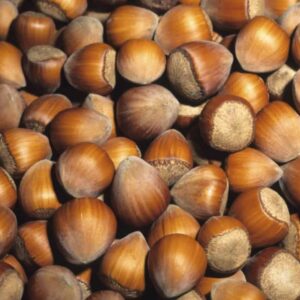
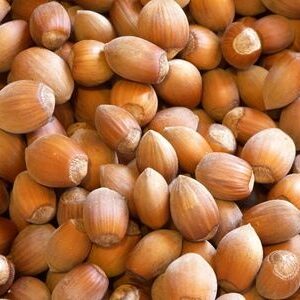
Coxford hazelnut tree, very productive with medium elongated, firm aromatic nuts, harvested from late September to October.

From 15,00 
Autumn 2026

Hazelnut trees

Merveille de Bollwiller

Merveille de Bollwiller hazelnut tree, a productive late variety with medium to large well-filled nuts, harvested in October.

From 15,00 

Choosing hazelnut trees for regular crops

Fruiting hazelnuts are principally cultivars of the European hazel, Corylus avellana, although some are associated with Corylus maxima or descend from more complex crosses between cultivated hazel groups.

For the gardener, the exact botanical classification is generally less important than the characteristics of the individual cultivar: pollination compatibility, pollen-release period, nut size, kernel quality, vigour, suckering habit and ability to fill its nuts reliably.

Hazel grows readily across much of northern, western and central Europe, but a large shrub producing abundant leaves and shoots does not necessarily produce a useful crop.

Poor results are commonly caused by unsuitable pollination, excessive shade, drought during kernel filling or a dense and ageing plant whose fruiting wood receives too little light.

Most named fruiting cultivars should be planted with another compatible variety. Two cultivars with different names do not automatically pollinate one another: their flowering periods must overlap and their genetic incompatibility system must permit fertilisation.

Hazelnuts, cobnuts and filberts

European hazelnuts

The wild European hazel, Corylus avellana, generally produces relatively small and variable nuts surrounded by a short leafy husk.

It is valuable in native hedges, wildlife plantings and as a possible source of pollen, but an unselected seedling does not provide the uniform fruit quality or predictable flowering behaviour of a named cultivar.

Cobnuts

In British horticulture, cobnut commonly describes cultivated hazels producing relatively large and often rounded nuts.

The term is particularly associated with traditional varieties grown for eating while fresh or after drying.

It is a useful horticultural name rather than a perfectly defined botanical group.

Filberts

Filbert traditionally refers to hazels whose nuts are often more elongated and enclosed within a longer tubular husk.

Several cultivars associated with Corylus maxima display this appearance, but commercial naming is not completely consistent.

A variety should therefore be chosen according to its pollination, kernel quality, productivity and growing habit rather than from the name cobnut or filbert alone.

Useful characteristics when comparing hazelnut cultivars

Kernel flavour

The largest hazelnut is not necessarily the best to eat.

Some large-fruited cultivars possess a thick shell, a substantial empty cavity or a relatively mild kernel.

For fresh eating, look for a well-filled, crisp and aromatic kernel with a fine texture and no persistent fibrous character.

Flavour changes considerably during drying and roasting. Certain cultivars develop intense toasted aromas and a particularly fine texture, while others are valued mainly for size or ease of cracking.

Shelling percentage

Shelling percentage is the proportion of edible kernel obtained from the total weight of the nut in its shell.

A very large nut with a thick shell may provide less usable kernel than a slightly smaller but more completely filled cultivar.

This characteristic is particularly important for roasting, pastry work, praline production and processing substantial quantities of nuts.

Nut shape and ease of cracking

Rounded hazelnuts are convenient for roasting and mechanical processing.

Elongated nuts are often attractive for eating in the shell and may reach a large size, but their ease of cracking depends on shell thickness, regularity and internal structure.

A shell should protect the kernel during drying and storage while breaking cleanly without crushing the contents.

Removal of the kernel skin

The ability of the brown kernel skin to detach after roasting is known commercially as blanching quality.

It is an important criterion for confectionery, chocolate and professional processing because poorly blanching cultivars require more work and can leave a bitter skin on the finished kernel.

For a family garden, eating quality, productivity and pollination are generally more important than perfect blanching.

Kernel filling

A useful cultivar should produce a high proportion of fully developed kernels.

The number of empty or partially filled shells depends on genetics, but also on light, water availability, crop load and the general health of the plant.

An empty shell should not automatically be interpreted as failed pollination. Once a shell has developed, pollination has generally initiated fruit development before the kernel later stopped growing or aborted.

Ripening season

Early cultivars begin dropping mature nuts sooner and may be particularly useful where autumn becomes wet quickly.

Later cultivars can extend the harvest and may produce excellent kernels in favourable locations, but require enough warmth and water to complete filling before leaf fall.

Combining several maturity periods spreads harvesting and reduces the risk of the entire crop encountering the same period of rain or animal pressure.

Vigour and suckering

Most hazelnuts growing on their own roots naturally form a multi-stemmed shrub and produce shoots from the base or surrounding root system.

Some cultivars sucker vigorously and require regular removal of unwanted shoots to remain open and accessible.

This habit can be useful in a fruiting hedge where natural renewal is desired.

It becomes a significant maintenance issue where the plant is intended to remain on one trunk or within a closely managed orchard.

Why one hazelnut tree rarely crops reliably

Hazel is monoecious, meaning that one plant carries separate male and female flowers.

The male flowers form the long catkins visible on bare branches during winter.

The female flowers remain almost completely enclosed within small buds and reveal only their fine red stigmas.

Pollination is carried by wind rather than primarily by bees.

Catkins can release large quantities of pollen, but that pollen must reach receptive female flowers belonging to a compatible cultivar.

Most cultivated hazelnut varieties are self-incompatible, so their own pollen cannot fertilise their female flowers effectively.

Two genetically different cultivars may also share incompatibility characteristics and form a poor pollinating pair.

The presence of catkins on both plants is therefore insufficient. The pollinating cultivar must release compatible pollen while the female flowers of the principal variety remain receptive.

How many hazelnut cultivars should be planted?

Two cultivars can be sufficient in a garden when both their genetic compatibility and flowering overlap are known.

Where information is incomplete, planting three cultivars covering complementary pollen-release periods provides greater security.

A wild hazel or neighbouring hedge may contribute pollen, but should not be treated as a guarantee.

Its exact pollen period, incompatibility characteristics and ability to provide enough pollen at the required distance are usually unknown.

Hazelnut plants do not need to be positioned immediately beside one another.

A distance of several metres provides room for light to reach each crown while remaining close enough for effective wind pollination.

Pollen density decreases with distance, so pollinating cultivars should remain distributed within or close to the fruiting planting rather than being isolated far away behind substantial barriers.

A cultivar described as a good pollinator is not universal. It must produce abundant viable pollen, shed it at the correct time and be genetically compatible with the cultivar requiring pollination.

Hazelnut flowering takes place during winter

Hazel catkins form several months before they begin releasing pollen.

Female flowers also develop on shoots produced during the previous growing season and become receptive on the bare branches during winter.

Depending on cultivar and weather, pollen release and female flowering may occur from midwinter into early spring.

Mild periods can advance flowering, while cold conditions interrupt or delay the process.

Pollination and fertilisation do not occur immediately one after the other.

After compatible pollen reaches the stigma, development continues very slowly and actual fertilisation takes place several months later, once the ovary has developed sufficiently.

This unusual biology explains why a poor crop cannot always be attributed to one period of winter weather.

Pollen availability, spring growth, soil conditions and summer water supply all contribute to the final number of properly filled nuts.

Choose a bright position for fruit production

European hazel is fully winter hardy across most cool temperate regions of Europe.

For regular crops of well-filled nuts, however, the plant requires substantially more light than a wild hazel surviving beneath a woodland canopy.

Choose a sunny or lightly shaded position receiving several hours of direct sunlight.

Light should reach the lower and central parts of the plant so that productive young shoots are maintained throughout the crown.

Deep shade encourages leafy growth towards the outside and upper part of the shrub while reducing flowering and kernel filling.

A position enclosed tightly between buildings or behind a dense evergreen hedge may also restrict the movement of wind-borne pollen.

Conversely, a site exposed continuously to severe winds can dry young plants and damage heavily laden branches.

Allow enough space for the mature hazel

A vigorous hazelnut grown as a multi-stemmed bush can reach approximately 4 to 6 metres in height and a similar width.

Cultivar, soil, rootstock and pruning influence its final dimensions, but hazelnuts should not be treated as naturally compact shrubs.

For bushes in a garden or fruiting hedge, spacing of approximately 3 to 5 metres is common according to vigour and the intended management system.

Closer orchard spacing is possible with regular pruning and sucker control, but each crown must retain enough light and airflow.

Trying to confine a vigorous cultivar permanently within a two-metre space requires repeated cutting, stimulates regrowth and often produces a dense plant with reduced fruiting inside the crown.

Soil, drainage and sensitivity to drought

Hazelnuts prefer deep, fertile and moisture-retentive soil that remains well aerated and adequately drained.

The root system is relatively shallow compared with that of a large walnut or pecan, making hazel more sensitive to summer drying than its vigorous foliage may suggest.

Clay soil can be very suitable where it remains structured and contains enough air.

Ground that stays saturated for prolonged periods during winter or spring causes weak growth, dieback and an increased risk of root disease.

Hazelnuts tolerate soils ranging from slightly acidic to moderately calcareous.

Strongly calcareous, shallow or rapidly drying soils may produce weak growth and nutrient deficiencies in susceptible cultivars.

On sandy ground, regular additions of mature organic matter, mulching and irrigation become particularly important.

Drought during shell development and especially during kernel filling reduces nut size and increases the proportion of empty or poorly filled shells.

An established hazel may survive a dry summer while still producing a disappointing crop.

Planting a young hazelnut

Bare-root plants are installed during dormancy, from leaf fall until early spring, whenever the soil is neither frozen nor waterlogged.

Container-grown hazelnuts can be planted over a longer period, although autumn and early spring normally provide the simplest establishment conditions.

Where a container plant is already in leaf, its young shoots are less frost-resistant than the dormant wood of an established hazel.

In frost-prone regions, wait until the principal risk has passed or protect the tender growth temporarily.

Prepare a broad area of loosened soil once the ground has drained sufficiently to form a fine crumbly structure.

Remove couch grass, bindweed and other perennial weeds before planting, as they become difficult to control between the future stems.

Do not fill a narrow hole with pure potting compost.

Backfill mainly with the original soil, improved across a broad area with mature compost where necessary.

Water thoroughly after planting and maintain a weed-free area around the young plant.

Continue watering throughout the first growing season whenever rainfall is insufficient, rather than stopping after the first few weeks.

An organic mulch reduces evaporation but should not remain pressed against the stems or graft union.

Own-root hazelnuts or grafted hazelnut trees?

Layered and own-root plants

Named hazelnut cultivars are traditionally propagated by layering or by rooting selected shoots and suckers.

The resulting plant grows on its own roots and remains genetically identical to the selected cultivar.

Own-root plants naturally produce replacement stems from the base and are well suited to multi-stemmed bush cultivation.

They can renew old or damaged stems readily and integrate naturally into fruiting hedges.

The disadvantage is regular sucker production, particularly where a clean single-trunk tree or mechanically maintained orchard floor is required.

Hazelnuts grafted onto Corylus colurna

The Turkish hazel, Corylus colurna, can be used as a rootstock to produce a hazelnut tree on a clear trunk with very little suckering.

Its naturally arborescent habit and deeper root system make mowing, weed control, access and harvesting around the base easier.

Corylus colurna is not comparable with a dwarfing apple rootstock.

It can produce a vigorous and long-lived tree and should be chosen for its tree form, anchorage and limited production of suckers rather than as a method of obtaining a very small hazel.

Its deeper rooting may provide useful resilience during dry periods once established, but a newly planted grafted tree still requires careful watering.

Performance depends on the cultivar, rootstock, soil and graft union, so grafted hazelnuts should not be presented as automatically superior in every situation.

Keep the graft union clearly above the soil. Any shoot appearing beneath it belongs to the Turkish hazel rootstock and should be removed.

Bush or single-trunk hazelnut tree?

Multi-stemmed bush

The multi-stemmed bush corresponds with the natural growth habit of most own-root hazelnuts.

It is robust, renews itself readily and suits fruiting hedges and gardens where a broad shrub is acceptable.

Retain a limited number of strong and well-spaced stems rather than allowing an impenetrable mass of suckers to develop.

Remove weak, badly positioned and inward-growing shoots at ground level.

An excessively dense bush crops mainly around its outer surface and becomes difficult to prune, inspect and harvest.

Single-trunk tree

A hazelnut can be trained on one trunk either by continually removing suckers from an own-root plant or by using a cultivar grafted onto a low-suckering rootstock.

This form facilitates mowing, weed management, airflow and collection of nuts from the ground.

It requires a correctly formed framework and regular inspection for shoots appearing around the base or along the trunk.

On an own-root plant, maintaining one trunk is a permanent management task because the root system retains its natural ability to produce suckers.

Which wood carries the hazelnut crop?

Future catkins and female flowers form principally on shoots produced during the current growing season.

These shoots carry their flowers during the following winter and the resulting nuts during the next season.

Regular cropping therefore depends on a continuous supply of healthy and well-lit young growth.

A hazel producing almost no annual extension, or one whose interior remains deeply shaded, gradually forms fewer useful flowers and fewer well-filled nuts.

Severe pruning creates the opposite problem by stimulating long vegetative shoots and removing a large quantity of wood already carrying flower buds.

The objective is to balance renewal, light penetration and preservation of productive shoots.

How should a fruiting hazelnut be pruned?

On a young bush, select several vigorous stems distributed evenly around the base.

Remove surplus suckers at ground level rather than shortening them halfway, as a partially cut sucker branches and makes the plant even denser.

On an adult bush, remove several of the oldest stems periodically and replace them with well-positioned young growth.

Renewal should remain gradual. Removing a large proportion of the bush in one season produces vigorous regrowth and a temporary reduction in yield.

Remove crossing branches and growth that completely closes the centre.

Do not prune a fruiting hazel as a geometrical hedge by trimming every branch to the same outline.

Uniform cutting removes flower-bearing wood and produces a dense shell of shoots surrounding a dark and unproductive centre.

Large wounds can be colonised by wood-decay fungi.

Make clean cuts at the branch collar, avoid leaving long stubs and remove unwanted stems before they reach an excessive diameter.

Why are some hazelnuts empty?

An empty shell does not necessarily mean that the female flower received no compatible pollen.

Development of the shell usually indicates that fruit formation began before the kernel stopped growing or aborted.

Possible causes include genetic susceptibility, drought during summer, insufficient light, an unbalanced nutrient supply, excessive crop load or another stress affecting kernel development.

Where the plant produces almost no nuts at all, investigate pollination first by checking the presence, flowering period and genetic compatibility of another cultivar.

Where many normal-sized shells form but contain incomplete kernels, examine water availability, crown density, soil conditions and cultivar performance.

A nut containing a round exit hole is not simply empty. It has generally been consumed by a hazelnut weevil larva before the insect left the shell and entered the soil.

Hazelnut harvest season

Hazelnut cultivars differ in the date at which their husks dry and the mature nuts begin falling.

Actual harvest periods vary according to cultivar, country, exposure, soil moisture, crop load and seasonal temperatures.

The calendar is intended principally for comparing cultivars rather than predicting one exact date for every garden.

Variety
September 1–15 16–30
Available Available on backorder Currently unavailable

Harvest periods are indicative and may vary according to the region, exposure, rootstock and the season’s weather conditions.


Harvesting and drying mature hazelnuts

Hazelnuts intended for storage should complete kernel filling and physiological maturity before collection.

Depending on the cultivar, the leafy husk becomes yellow or brown, begins drying and releases the nut more or less readily.

Fully mature nuts eventually fall naturally to the ground.

Harvesting too early produces moist kernels with less flavour and poor storage potential.

Fresh hazelnuts can be eaten before complete drying, but should then be consumed promptly.

Collect fallen nuts regularly to reduce losses to rodents, birds and damp soil.

Remove remaining husks and spread the nuts in a shallow layer within a dry, well-ventilated place away from direct sunlight.

Turn or stir the crop where necessary so that moisture escapes evenly.

Nuts retained in their shells keep better than shelled kernels.

Warmth, moisture, oxygen and light accelerate rancidity, so dried hazelnuts should be stored in cool and dry conditions.

Shelled kernels intended for prolonged storage are better refrigerated or frozen.

Important hazelnut pests and diseases

Hazelnut weevil

The hazelnut weevil, Curculio nucum, is one of the most conspicuous pests of hazelnuts.

The adult pierces young nuts and lays an egg inside.

The larva consumes the developing kernel and then leaves through a round hole before entering the soil.

Collecting affected and prematurely fallen nuts reduces part of the population, although larvae can remain within the soil for an extended period.

Pressure varies greatly between sites and seasons.

Hazelnut big bud mite

Hazelnut big bud mite causes abnormal swelling of affected buds.

The buds become large and rounded and fail to produce normal shoots or flowers.

A severe infestation reduces the amount of productive wood and can weaken susceptible cultivars.

Where only a small number of plants are grown, removing conspicuously deformed buds can reduce the population.

Bacterial diseases and shoot dieback

Several bacteria can cause spots, cankers and shoot dieback, particularly on young plants exposed to injury, frost or excessive moisture.

Remove clearly affected wood during dry weather and clean cutting tools between plants.

Do not attribute every case of dieback automatically to bacterial disease.

Waterlogged soil, a buried root collar, drought after planting and mechanical injury can produce similar symptoms.

Powdery mildew and leaf spots

Powdery mildew and several leaf-spot diseases may appear towards the end of the growing season.

They are often of limited importance on a vigorous established plant but can be more damaging to a weakened young tree or a particularly susceptible cultivar.

A bright and open crown, moderate nitrogen supply and avoidance of repeated irrigation over the foliage reduce favourable conditions.

Squirrels and other animals

Squirrels, mice, jays and other animals may remove a substantial proportion of the crop before or shortly after natural nut fall.

Frequent collection reduces losses from the ground, although protecting a large mature hazel completely is difficult.

Which hazelnut cultivar should you choose?

For eating directly, choose a cultivar with a well-filled, aromatic kernel and a shell that breaks cleanly.

For roasting, pastry work and praline, prioritise shelling percentage, flavour after roasting, rounded nut shape and good blanching quality.

For a fruiting hedge, an own-root cultivar grown as a multi-stemmed bush integrates naturally and can renew itself through new basal shoots.

For a specimen tree, lawn or orchard where suckering must be limited, a cultivar grafted onto Corylus colurna can be particularly useful.

For a small garden, choose moderate vigour and plan regular renewal rather than attempting to control an exceptionally vigorous cultivar through severe annual cutting.

For dry soil, improve water availability and consider the rooting behaviour of the plant, while remembering that no rootstock removes the need to water during establishment.

In every case, choose the pollinating cultivar at the same time as the principal variety.

An excellent hazelnut planted alone or beside an incompatible cultivar can remain almost unproductive despite suitable soil and careful pruning.

Frequently asked questions about hazelnut trees

Can one hazelnut tree produce nuts?

It may produce a few nuts using pollen from an unknown neighbouring hazel, but most cultivated varieties are self-incompatible. For regular cropping, plant at least one compatible cultivar whose pollen-release period overlaps the female flowering period.

Are two different hazelnut cultivars always compatible?

No. They may be genetically incompatible or flower at periods that do not overlap sufficiently. Both genetic compatibility and flowering time must be checked.

Are hazelnuts pollinated by bees?

Hazel is pollinated principally by wind. Catkins provide early pollen that may be collected by insects, but nut production does not depend mainly on insect visits.

Why does my hazel carry catkins but no nuts?

Catkins are the male flowers. Their presence does not prove that the female flowers received compatible pollen or that the cultivar can fertilise itself.

Can a wild hazel pollinate a named cultivar?

It can contribute pollen, but its flowering period and genetic compatibility are normally unknown. It should not automatically replace a documented pollinating cultivar.

Can hazelnuts crop in shade?

Hazel can grow in partial shade, but insufficient light reduces flower formation and kernel filling. A sunny or only lightly shaded position is preferable for fruit production.

Can hazelnuts grow in clay soil?

Yes, where the clay remains structured and adequately drained. Moist clay can be favourable, while compacted soil saturated during winter weakens the roots.

Do established hazelnuts require watering?

An established plant can survive without irrigation in many regions, but drought during kernel filling reduces nut size and increases the number of poorly filled shells.

Why does my hazelnut produce many suckers?

Suckering is natural on own-root plants. Remove surplus shoots at ground level or choose a cultivar grafted onto a low-suckering rootstock for a permanent single-trunk form.

Does Corylus colurna make the tree smaller?

No. It is used mainly for its tree habit, deeper rooting and very limited suckering. It can produce a vigorous tree and should not be regarded as a dwarfing rootstock.

Are grafted hazelnuts better than own-root plants?

Not universally. Grafted trees are useful for single-trunk cultivation and reduced suckering, while own-root plants are easier to renew and suit multi-stemmed bushes and fruiting hedges.

Why are some shells empty without having a hole?

The kernel may have aborted after the shell began developing. Drought, shade, cultivar susceptibility, nutrition and other stresses can contribute.

How can hazelnut weevil damage be recognised?

The nut normally contains little or no kernel and has a round exit hole through which the larva left the shell.

What are the large swollen buds on my hazel?

They are commonly caused by hazelnut big bud mite. Affected buds become round and swollen and fail to produce normal shoots or flowers.

Can a hazelnut be kept very small by pruning?

A vigorous cultivar responds to severe cutting by producing strong shoots and additional suckers. For a restricted space, choose moderate vigour and maintain an open crown rather than trimming the plant repeatedly as a hedge.

When are hazelnuts ready to harvest?

They are mature when the husks begin drying and the nuts release readily or fall naturally. Nuts intended for storage should be fully filled before collection.

Can hazelnuts be eaten fresh?

Yes. Fresh hazelnuts have a moist and tender kernel but should be eaten quickly because they contain too much moisture for long storage.

How should hazelnuts be dried?

Remove the husks and spread the nuts in a shallow layer within a dry and ventilated place away from direct sunlight. Do not store damp nuts in deep piles.

How should hazelnut kernels be stored?

Shelled kernels become rancid more quickly than nuts in their shells. Refrigeration or freezing is preferable for extended storage.