Pre-orders are open No payment today. Stock will be checked during the inventory in early August, then you will receive a payment link for the available trees.
Choosing the right peach tree

For reliable peaches in a cool or humid climate, choose a cultivar that ripens sufficiently early and shows useful tolerance of peach leaf curl. Flowering time, planting position, fruit type, rootstock and regular renewal of the fruiting wood are equally important.

View harvest calendar Choose a rootstock

Peach trees

Peach trees

Amsden

An early-ripening white-fleshed freestone peach from the USA.
From 35,00 

Peach trees

Avalon Pride

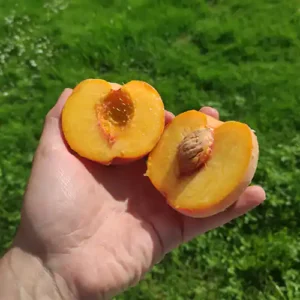
Avalon Pride is a disease-resistant yellow-fleshed peach, well-suited to growing outdoors in northern Europe.
From 35,00 

Peach trees

Charles Roux

An old French self-fertile peach variety producing large white-fleshed fruit with good disease resistance.
From 35,00 

Peach trees

De Moncheaux

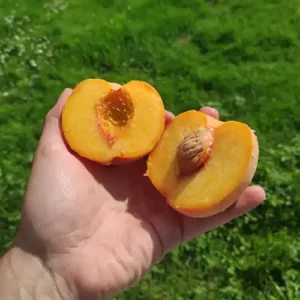
De Moncheaux peach tree, a juicy northern French variety harvested around mid-August, with good tolerance to leaf curl.
From 35,00 
Autumn 2026

Peach trees

Francis

A vigorous peach variety producing large juicy fruit with sweet aromatic flavour.
From 35,00 
Autumn 2026

Peach trees

Grosse Mignonne

A classic heritage peach variety producing large fragrant fruit with rich sweet flavour.
From 35,00 

Peach trees

Jayhaven

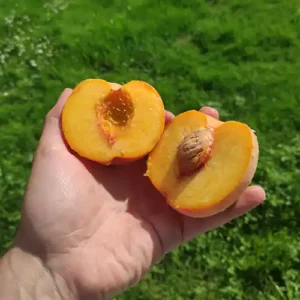
Jayhaven peach tree, with large juicy yellow-fleshed peaches, good leaf curl resistance and harvest from late July to early August.
From 35,00 

Peach trees

Redhaven

Red Haven is a yellow-fleshed peach, popular because it has some resistance to peach-leaf curl.
From 35,00 
Autumn 2026

Peach trees

Reine des Vergers

A traditional French peach variety producing large fragrant fruit with rich sweet flavour.
From 35,00 
Autumn 2026

Peach trees

Saturne

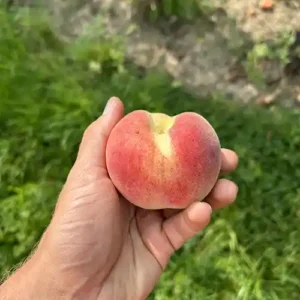
A flat peach variety producing sweet fragrant fruit with tender white flesh.
From 35,00 

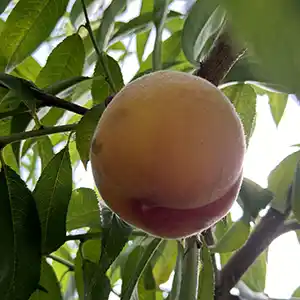
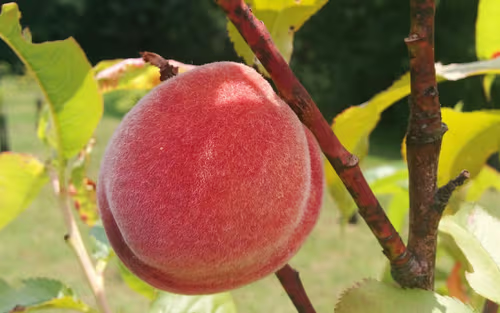
White vineyard peach tree, with medium white-fleshed peaches, red near the stone, harvested from late July to early August.
From 35,00 

How should you choose a peach tree for your garden?

Peach trees can produce excellent fruit across much of Europe, including regions with relatively cool summers, but they generally require more careful cultivar selection and pruning than apple or pear trees.

The tree prefers warmth and abundant light, flowers early and can be severely weakened by peach leaf curl during cool and wet springs.

The most important selection criteria are therefore tolerance of peach leaf curl, flowering period, ripening season, fruit quality and adaptation of the rootstock to the soil.

An outstanding cultivar that ripens too late, suffers severe leaf curl every spring or is planted in cold and waterlogged ground will normally prove more disappointing than a slightly less famous but earlier and more robust selection.

Most peach and nectarine cultivars are self-fertile, so one tree can usually produce fruit. This makes peach trees particularly attractive for small gardens, provided that enough space, sunlight and suitable soil are available.

Peaches, nectarines and the principal fruit types

White-fleshed peaches

White-fleshed peaches are often valued for their fine texture, abundant juice and delicate perfume.

At full maturity, good cultivars can develop melting flesh with floral, honeyed or musky aromas.

The fruit is frequently more delicate than that of firm yellow-fleshed cultivars and should be eaten or processed soon after picking.

White peaches are particularly suitable for eating directly from the tree, where flavour can take priority over transportability and storage life.

Yellow-fleshed peaches

Yellow-fleshed peaches often possess firmer flesh and a more pronounced balance between sugar and acidity.

Many withstand handling more successfully than the most melting white peaches and are useful for tarts, bottling, preserves and fruit in syrup.

This group still contains a wide range of textures and flavours. Yellow flesh does not automatically mean that a cultivar is firm, sharp or intended primarily for processing.

Red-fleshed and blood peaches

Red-fleshed peaches, sometimes known as blood peaches, develop flesh ranging from red-streaked white to deep crimson or purple-red.

Their flavour is often powerful, aromatic and sharper than that of conventional dessert peaches.

They can be excellent when eaten fresh at full maturity and are particularly valuable for jam, compote, juice and baking, where their colour and concentrated flavour remain distinctive.

Some old vineyard peach types produce relatively small or irregular fruit but compensate with exceptional aroma and useful culinary quality.

Flat and doughnut peaches

Flat peaches produce characteristically flattened fruit, often with a small stone and sweet flesh.

They are commonly called doughnut peaches or Saturn-type peaches in English-language catalogues.

The flattened shape provides no information about ripening season, leaf-curl tolerance, winter hardiness or disease resistance.

These characteristics must be checked for each cultivar rather than inferred from fruit shape.

Nectarines

Nectarines belong to the same species as peaches, Prunus persica. Their principal visible difference is the absence of fuzz from the skin.

The French term brugnon traditionally refers to a smooth-skinned fruit whose flesh remains attached to the stone, but in English both freestone and clingstone forms are generally described as nectarines.

Nectarine trees require the same general growing conditions as peach trees and remain susceptible to peach leaf curl, blossom frost, brown rot and unsuitable soil.

The smooth skin can make ripening fruit particularly vulnerable to cracking and fungal decay during persistently wet weather.

Freestone, semi-freestone or clingstone?

Freestone peaches

In a freestone peach, the ripe flesh separates relatively easily from the stone.

This characteristic is convenient for eating, baking, preserving and preparing large quantities of fruit.

Many mid-season and late dessert peaches are freestone, although the behaviour can vary slightly according to maturity and growing conditions.

Clingstone peaches

In a clingstone peach, the flesh remains firmly attached to the stone.

This is common among several early cultivars and traditional processing peaches.

Clingstone fruit can possess excellent flavour, but requires more work when halves or clean slices are needed.

Semi-freestone peaches

Semi-freestone cultivars occupy an intermediate position. Part of the flesh separates readily while some remains attached around the stone.

The classification should be considered together with flavour and harvest season rather than used as the only criterion for choosing a tree.

Useful characteristics when comparing peach cultivars

Ripening season

In cool, maritime, northern or elevated regions, an early or mid-season cultivar is generally more reliable than a very late peach.

The fruit must complete sugar accumulation and aroma development while temperatures and light levels remain favourable.

Late cultivars may survive the winter perfectly while failing to develop satisfactory fruit during a cool summer.

Flowering period

A cultivar flowering slightly later may avoid certain spring frosts, although no flowering date can guarantee a crop during an exceptionally cold season.

Differences of only a few days can be useful where damaging frost repeatedly occurs during the earliest blossom period.

Peach leaf curl tolerance

Susceptibility to peach leaf curl differs considerably between cultivars.

A cultivar described as tolerant may retain more healthy foliage or recover more successfully after infection, but should not be considered completely immune.

In wet spring climates, useful tolerance can be more important than maximum fruit size or the highest theoretical yield.

Flavour

Peach flavour can be floral, honeyed, musky, sharp, vinous or intensely fruity.

Cultivars selected for commercial transport may emphasise firmness, appearance and shelf life, while softer garden varieties can possess a much stronger perfume.

For eating directly from the tree, flavour at full maturity should take priority over the ability to withstand long-distance transport.

Firmness and handling

Firm fruit withstands picking, short storage and transport more successfully.

Very melting peaches may provide superior eating quality but bruise easily and have a short harvest window.

Firmness should not be confused with immaturity. A peach picked too early may remain hard because it has not completed normal development.

Stone type

Freestone fruit is easier to prepare, while clingstone cultivars may still be valuable for their earliness, flavour or suitability for a particular recipe.

The ease with which the stone separates should be assessed at normal eating maturity.

Fruit size and crop regularity

Large fruit is attractive, but actual size depends heavily on thinning, water availability, leaf health and crop load.

A cultivar producing numerous small peaches without thinning may produce significantly larger fruit when the crop is correctly regulated.

Peach leaf curl: the principal disease to consider

Peach leaf curl is caused by the fungus Taphrina deformans. It produces thickened, swollen and distorted leaves that frequently become red, pink or pale green.

Severely affected leaves eventually dry and fall, forcing the tree to use stored reserves to produce a replacement canopy.

One moderate attack does not necessarily kill an established peach tree, but severe and repeated defoliation weakens growth, reduces fruit development and limits the production of young wood for the following crop.

Infection occurs very early, around bud swelling and leaf emergence, when cool and wet weather keeps the developing tissues moist.

Once the distorted leaves are visible, the infection responsible for those symptoms has already taken place.

Removing a few severely affected leaves can reduce diseased material, but stripping a heavily affected tree of most of its foliage creates additional stress and does not cure the existing infection.

Collect fallen diseased leaves, remove badly damaged shoot tips where appropriate and support healthy regrowth with sufficient water during dry weather.

Do not apply excessive nitrogen in an attempt to force recovery, as very soft growth can create an unbalanced and vulnerable tree.

Can planting position reduce peach leaf curl?

A position protected from part of the winter and early-spring rainfall can reduce the duration for which swelling buds remain wet.

Fan training beneath the overhang of a wall or against a suitably sheltered building can therefore be valuable in wet climates.

The tree must still receive sufficient airflow. An enclosed and persistently humid position is not desirable.

Protection from rainfall does not change the genetic susceptibility of the cultivar, but it can reduce the conditions favourable to infection.

A tolerant cultivar in a bright and sheltered position normally provides a more reliable combination than a highly susceptible cultivar planted in the open solely because its fruit description is attractive.

Early flowering and spring frost

Peach trees flower early in spring. Dormant wood may withstand substantial winter cold, while swollen buds, open flowers and newly formed fruit are much more vulnerable.

Winter hardiness and the ability to produce a crop after spring frost are therefore separate characteristics.

A tree may survive a severe winter without damage and still lose its complete harvest during one cold night in blossom.

Avoid enclosed hollows, the bottom of slopes and positions where cold air accumulates during calm nights.

A bright position protected from cold winds but allowing cold air to drain away generally provides the best opportunity for regular cropping.

A south- or south-west-facing wall supplies warmth and assists fruit maturity, but may also advance flowering slightly.

In a highly frost-prone location, the warmest wall is not automatically the safest position. The objective is to balance warmth, shelter, airflow and avoidance of excessively early growth.

Choose a cultivar early enough for your climate

A peach must receive sufficient summer warmth to complete its development and produce its characteristic sugar, acidity and aroma.

Early and mid-season cultivars are generally the safest choices for cool European climates.

A very late cultivar may form attractive fruit that remains firm, weakly coloured and low in sweetness when temperatures decline towards the end of summer.

An early cultivar ripening during a warm and bright period has a greater chance of expressing its full eating quality.

Planting cultivars with several maturity periods extends the harvest and reduces the risk that every fruit will encounter the same episode of heavy rain, hail or extreme heat.

Peach harvest season

Early peach cultivars can begin ripening near the start of the stone-fruit season, while late peaches and nectarines may continue until the end of summer or early autumn in favourable regions.

Actual dates vary according to cultivar, country, exposure, rootstock, tree form, crop load and seasonal weather.

The calendar is therefore intended primarily for comparing cultivars rather than predicting one exact harvest date for every garden.

Variety
June 1–15 16–30
July 1–15 16–31
August 1–15 16–31
Available Available on backorder Currently unavailable

Harvest periods are indicative and may vary according to the region, exposure, rootstock and the season’s weather conditions.


Most peach trees are self-fertile

The great majority of peach and nectarine cultivars can produce using their own pollen.

A second cultivar is therefore not normally required solely for pollination.

Pollinating insects remain useful and can improve the fertilisation of the flowers.

Cold, wind and prolonged rain during blossom may reduce fruit set even on a self-fertile tree.

Late frost can also destroy the reproductive organs without immediately removing the petals, creating the appearance of normal flowering followed by a complete absence of fruit.

Check the information provided for the individual cultivar because a small number of exceptions and selections with reduced fertility exist.

Where should a peach tree be planted?

Peach trees require a sunny and relatively warm position.

They need enough light to ripen the current crop and to produce strong young shoots capable of carrying fruit during the following season.

A shaded tree develops weak and poorly ripened wood, carries fewer flower buds and produces fruit with reduced sweetness and aroma.

Shelter from severe prevailing winds is useful, particularly for young trees and wall-trained forms.

The position should not be completely enclosed, as foliage and fruit need to dry after rain.

In cool regions, a wall or warm courtyard can improve maturity substantially, provided that the roots have enough soil volume and the tree is not planted in a narrow, permanently dry strip beneath foundations or roof overhangs.

Drainage is essential

Peach trees perform poorly in soil that remains waterlogged or deprived of oxygen.

Repeated saturation weakens fine roots, encourages root and collar diseases and can lead to sudden decline.

Heavy clay is not automatically unsuitable. A deep and structured clay soil can be productive where water moves through it and the rootstock is adapted.

A compacted hollow in which rainwater remains visible for several days is much less suitable.

Do not place the tree at the bottom of a deep hole filled with loose compost. This can create a basin in which water collects around the roots.

On heavy ground, improve the movement of water through the wider area and plant slightly above the surrounding soil level where appropriate.

A raised position cannot compensate for a site with permanently high groundwater, but can reduce local water accumulation around the crown.

Which rootstock should be chosen for a peach tree?

The rootstock influences tree vigour, mature dimensions, soil adaptation, tolerance of lime, drought behaviour, anchorage and time to first cropping.

No rootstock is ideal for every soil. A combination suited to dry and calcareous ground may be inappropriate in heavy and moisture-retentive clay.

Peach seedling rootstocks

Peach seedlings generally suit light, fertile, warm and well-drained soils.

They produce vigorous trees with good compatibility with most peach and nectarine cultivars.

They are less suitable for very wet, compact or strongly calcareous soils, although performance varies between seedling populations and selections.

Peach–almond hybrid rootstocks

Rootstocks such as GF 677 and Garnem generally produce vigorous trees with useful adaptation to calcareous, alkaline and relatively dry soils.

Their almond ancestry can improve tolerance of iron chlorosis and drought compared with conventional peach seedlings.

They remain poorly suited to ground that stays saturated for prolonged periods.

Their vigour must also be considered where the available space is limited.

Plum-derived and interspecific rootstocks

Rootstocks with plum or cherry-plum ancestry can provide useful adaptation to heavier and more moisture-retentive soils.

Some also reduce vigour and encourage earlier cropping compared with peach–almond hybrids.

Compatibility with peach and nectarine cultivars varies between rootstocks, and delayed incompatibility can occasionally appear after several years.

The precise combination should therefore be selected according to documented compatibility as well as soil type.

Read our guide to fruit-tree rootstocks

Planting a young peach tree

Dormant bare-root peach trees are normally planted between autumn and early spring whenever the ground is neither frozen nor waterlogged.

In cold and wet soil, planting towards the end of winter or beginning of spring may be safer than leaving a newly planted tree in saturated ground throughout winter.

A container-grown tree that has already begun growing under protection is more vulnerable to frost than a dormant tree.

Where young leaves or flowers are present, wait until the principal frost risk has passed or provide temporary protection.

Prepare a broad area of soil, work it only when it has drained sufficiently and remove couch grass, bindweed and other perennial weeds carefully.

Position the root collar correctly and keep the graft union clearly above the final soil level.

Spread bare roots naturally and backfill mainly with the original soil rather than creating a narrow pocket of pure potting compost.

Water thoroughly after planting to settle soil around the roots.

Stake the tree where wind movement could disturb the new roots, but allow the trunk to strengthen rather than tying it rigidly along its complete length.

Maintain a broad weed-free area and water throughout the first growing season whenever rainfall is insufficient.

A newly planted peach must produce vigorous shoots for its future framework and fruiting wood. Prolonged drought during establishment can weaken both the current tree and the following crop.

Peach trees crop mainly on the previous season’s growth

Unlike apple and pear trees, which can carry fruit on long-lived spurs, peach trees produce most of their crop on shoots formed during the previous growing season.

The tree must therefore continue producing well-positioned new wood every year.

A peach that forms very little new growth gradually becomes bare within the centre and carries fruit only at the ends of increasingly long branches.

Retain suitably vigorous young shoots receiving sufficient light and progressively remove older sections after they have cropped when younger replacement growth is available.

This continual renewal explains why a peach tree normally requires more regular pruning than an apple, pear or plum tree.

Understanding peach flower buds

Flower buds are generally rounder and fuller than the smaller pointed leaf buds.

They frequently occur in pairs on either side of a central leaf bud along the previous season’s shoot.

A vigorous shoot carrying well-spaced flower and leaf buds can support a useful crop and produce new replacement growth.

A weak shoot carrying numerous flower buds but little capacity for leafy growth may become exhausted under a heavy crop.

Pruning decisions should therefore consider shoot vigour and bud arrangement rather than simply shortening every branch to a fixed length.

When should a peach tree be pruned?

Avoid large pruning cuts during prolonged cold and wet winter weather.

Peach trees and other stone fruits are more vulnerable to canker and wood diseases when wounds remain wet and inactive for a long period.

The framework of a young tree can be adjusted during spring, when swelling buds make living and damaged wood easier to distinguish.

On an established tree, part of the renewal pruning can be completed during active growth or after harvest in dry weather.

The objective is to maintain a bright, accessible crown containing a regular supply of young fruiting shoots.

Avoid removing a very large proportion of the crown during one operation.

Severe pruning produces vigorous upright regrowth, delays fruiting and creates unnecessary wounds.

Open-centred trees and fan-trained peaches

Open-centred tree

In a favourable position, a peach can be grown as a free-standing tree with an open centre and several well-spaced main branches.

This form allows light to reach the fruiting wood and keeps the crown accessible for pruning, thinning and harvesting.

The centre should remain open without creating a large exposed framework that is vulnerable to sun damage and branch breakage.

Fan-trained peach

In a cool region, fan training against a warm wall can improve fruit maturity and provide partial protection from rain and frost.

The permanent framework branches are spread across the wall, while young fruiting shoots are tied into the available spaces and replaced regularly.

A fan uses limited ground space and makes it easier to inspect the leaves, thin the fruit and protect the blossom.

It requires a permanent wire system, regular tying and more precise pruning than a free-standing tree.

Thin the fruit to obtain better peaches

When blossom escapes frost and pollination conditions are favourable, a peach tree can set far more fruit than it can develop properly.

Without thinning, the peaches remain small, ripen unevenly and can overload or break the branches.

Excessive crop load also reduces the formation of strong new shoots and flower buds for the following season.

Wait until the principal natural fruit drop has occurred, then remove damaged, malformed and crowded peaches first.

Retain healthy fruit distributed along shoots strong enough to support them.

Final spacing depends on cultivar, expected fruit size and shoot strength, but mature peaches should not remain pressed tightly against one another.

Thinning improves size, sweetness, colour, airflow and the practical ability to inspect each fruit for damage.

Watering and feeding peach trees

Peach trees require drainage but should not be allowed to suffer prolonged drought during shoot and fruit development.

Water stress limits fruit size and restricts production of the young shoots needed for the following crop.

Water deeply enough to moisten the complete root zone, then allow air to return to the soil before watering again.

Frequent superficial watering encourages roots to remain near the surface and provides little protection during hot weather.

An organic mulch applied to moist soil reduces evaporation and grass competition.

Keep mulch away from direct contact with the trunk and graft union.

Use nitrogen moderately. Excessive feeding produces long, soft shoots, dense shade and increased susceptibility to aphids and disease.

A balanced tree should form enough new growth to renew its fruiting wood without producing an uncontrolled mass of vertical shoots.

How can a ripe peach be recognised?

The red blush on the sunlit side is not a reliable indication of maturity because some cultivars colour long before their flesh is ready.

Observe the background colour, especially around the stalk and shaded parts of the fruit.

As maturity approaches, the green background normally becomes cream, yellow or pale according to the cultivar.

The fruit develops its characteristic aroma, begins to yield slightly under gentle pressure and detaches more readily.

Do not repeatedly squeeze the fruit, as this causes bruising before harvest.

Peaches are climacteric and can continue softening after picking, but fruit harvested too early does not develop the same sugar and aroma as fruit allowed to complete more of its maturity on the tree.

Fruit intended for immediate eating can be picked softer and more aromatic than fruit that must be transported or stored briefly.

The peaches on one tree do not all ripen simultaneously. Several selective harvests normally provide much better quality than removing the complete crop in one operation.

Harvesting and storing peaches

Pick during dry and relatively cool conditions where possible.

Support the fruit in the palm of the hand and turn it gently rather than pressing it between the fingertips.

Place peaches in shallow trays and avoid stacking heavy layers that bruise the fruit beneath.

Fully ripe garden peaches have a short storage life and should be eaten, cooled or processed promptly.

Do not wash the fruit until shortly before use, as moisture encourages deterioration.

Slightly firmer but physiologically mature peaches can soften for a short period at room temperature.

Refrigeration slows further softening but prolonged cold storage can reduce aroma and produce a dry or woolly texture in susceptible cultivars.

Brown rot and fruit decay

Brown rot, caused by fungi of the genus Monilinia, can infect peach flowers, shoots and ripening fruit.

On fruit, a small brown area can enlarge rapidly and become covered with pale fungal cushions.

Wounds caused by insects, birds, hail, cracking and contact between crowded fruit facilitate infection.

Remove affected peaches promptly and do not leave mummified fruit attached to the tree.

Maintain an open crown, thin dense clusters and harvest ripe fruit regularly.

A peach touching an infected fruit may decay quickly even when its skin was initially undamaged.

Canker, bacterial diseases and gumming

Peach branches can be affected by bacterial and fungal cankers that kill bark, buds and young shoots.

Symptoms may include sunken lesions, dieback and amber-coloured gum.

Gumming is a general response to injury or stress and does not identify one disease by itself.

Possible causes include canker, frost damage, waterlogging, mechanical injury and insect damage.

Remove confirmed dead or cankered branches back to healthy wood during dry conditions and avoid creating large unnecessary wounds.

A tree weakened by waterlogged soil, repeated leaf curl or excessive cropping is generally less able to contain wood infections.

Which peach tree should you choose?

For a cool or maritime climate, choose an early or mid-season cultivar with documented ability to ripen reliably and useful tolerance of peach leaf curl.

For fresh eating, prioritise flavour, aroma and texture at full maturity rather than transport firmness alone.

For cooking, bottling and fruit in syrup, choose a cultivar with firmer flesh, useful acidity and a stone type suited to preparation.

For a wall, choose a cultivar that responds well to fan training and plan sufficient space for regular renewal of fruiting shoots.

For heavy ground, select a compatible rootstock with better adaptation to moisture-retentive soil and improve drainage before planting.

For dry and calcareous soil, a suitable peach–almond hybrid rootstock may be preferable where adequate space is available.

For a small garden, remember that rootstock, pruning and tree form influence the final dimensions as much as the apparent size of the young plant.

For an extended harvest, combine cultivars from several maturity periods rather than planting several peaches that all ripen during the same week.

Do not choose exclusively by fruit colour or size. A healthy and sufficiently early cultivar will usually provide better peaches than a spectacular but late and highly susceptible variety.

Frequently asked questions about peach trees

Are two peach trees required for fruit?

Usually not. Most peach and nectarine cultivars are self-fertile and can produce when planted alone. Insect activity and favourable blossom weather still improve fruit set.

Are nectarines a different species from peaches?

No. Peaches and nectarines belong to the same species, Prunus persica. Nectarines possess smooth skin but have similar cultivation and disease requirements.

What is a brugnon?

In French terminology, a brugnon is traditionally a smooth-skinned peach whose flesh adheres to the stone. In English, it is normally described as a clingstone nectarine.

What is the difference between a freestone and a clingstone peach?

Freestone flesh separates relatively easily from the stone at maturity, while clingstone flesh remains attached. Both types can possess excellent flavour.

Why does my peach tree lose its leaves in spring?

Red, swollen and strongly distorted leaves normally indicate peach leaf curl. Severely affected leaves may fall and be replaced where the tree has enough reserves.

Is there a completely leaf-curl-resistant peach?

No conventional cultivar should be treated as completely immune. Some varieties show useful tolerance and remain substantially healthier than highly susceptible cultivars under the same conditions.

Should every curled leaf be removed?

A few severely affected leaves can be removed, but stripping most of the foliage from a heavily infected tree creates additional stress and does not cure the infection already present.

Why does my peach tree flower without producing fruit?

Late frost is a common cause. Cold, wet or windy blossom weather, weak pollinator activity, poor tree health and an exceptional fertility problem can also reduce fruit set.

Can peaches be grown in a cool climate?

Yes, with a sufficiently early cultivar, a bright and warm position, suitable soil and careful management of leaf curl, pruning and crop load.

Which position is best in a cool region?

Choose a sunny, warm and sheltered position with good drainage and airflow. A well-exposed wall can improve fruit maturity and allow fan training.

Can a peach tree grow in clay soil?

Yes, where the clay remains structured and excess water can escape. Rootstock selection and planting slightly above the surrounding level can be important in heavy ground.

Why is waterlogging dangerous?

Peach roots require oxygen and decline rapidly in soil that remains saturated. Waterlogging also encourages root and collar diseases.

When should a peach tree be planted?

Dormant trees are planted from autumn to early spring when the ground is neither frozen nor waterlogged. In cold and wet soil, late-winter or early-spring planting may be preferable.

Which wood produces peaches?

Most fruit is carried on shoots formed during the previous growing season. Regular production therefore depends on maintaining a supply of healthy young wood.

Why has my peach tree become bare in the centre?

Without regular renewal, fruiting moves progressively towards the ends of older branches. Light shortage and excessive shading accelerate this process.

When should a peach tree be pruned?

Avoid major cuts during cold and wet weather. Formative and renewal pruning can be completed during spring, active growth or after harvest in dry conditions.

Should peaches be thinned?

Yes when fruit set is heavy. Thinning improves fruit size, maturity and flavour while reducing the risk of overloaded and broken branches.

Why do the peaches remain small?

Common causes include excessive crop load, drought, severe leaf curl, weak young growth, shade and poor soil conditions.

How can a ripe peach be recognised?

Observe the background colour, aroma, slight softening and ease of detachment. A red blush alone does not prove that the fruit is ripe.

Do peaches ripen after picking?

They can soften after harvest, but fruit picked too early does not develop the full sugar and aroma of a peach allowed to reach physiological maturity on the tree.

Why do peaches rot immediately before harvest?

Brown rot develops rapidly on ripe and wounded fruit, especially during humid weather. Remove affected and mummified fruit, thin crowded clusters and harvest regularly.

What does gum on a peach branch mean?

Gum indicates that the tree is reacting to injury or stress. Possible causes include canker, frost, waterlogging, pruning wounds and insect damage.

Can a peach tree be grown in a container?

A compact tree can be maintained for a period in a very large container, but watering, feeding, root temperature and regular renewal of the fruiting wood require close attention. Open ground is normally more suitable for a durable tree.