Walnut trees
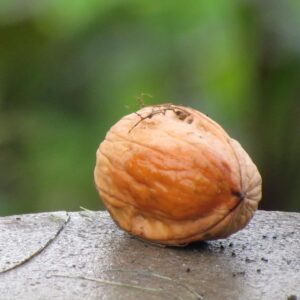
Fernor walnut tree, a late-budding INRA variety with large, excellent-quality nuts, harvested in October.
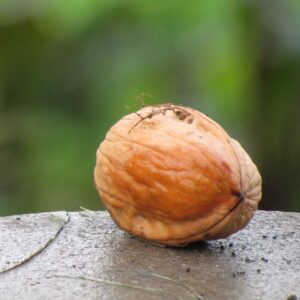
Walnut trees
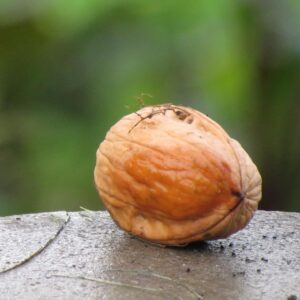
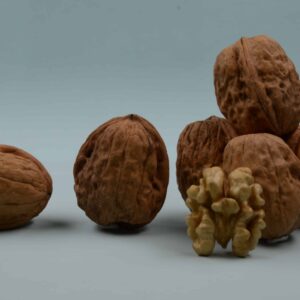
Franquette walnut tree, a vigorous late-budding variety with large fine-shelled nuts, harvested in October.
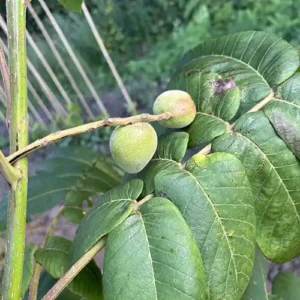
Walnut trees
Walnut trees
Walnut trees
Walnut trees
Choosing a walnut tree capable of cropping in your climate
The common or Persian walnut, Juglans regia, is the principal species cultivated in Europe for edible walnuts. It forms a large and long-lived tree whose success depends on much more than its resistance to winter cold.
The most important characteristics are the cultivar’s date of bud break, exposure to spring frost, nut maturity, pollination, fruiting habit, kernel quality and adaptation to the soil.
In northern, central and other cool parts of Europe, winter cold is not normally the principal obstacle for a well-hardened established tree. Young leaves, flowers and extending shoots are much more vulnerable than dormant wood.
A late-leafing cultivar can therefore be more suitable than a cultivar described simply as exceptionally winter hardy.
Late bud break is not sufficient on its own. The nuts must also complete kernel filling, shell development and husk separation before cool autumn weather stops normal maturity.
The best choice combines sufficiently late spring growth with a ripening period appropriate for the local growing season.
Common walnut, black walnut and hybrid walnuts
The common walnut, Juglans regia
The principal European, French, American and eastern European cultivars grown for table walnuts belong to Juglans regia.
Their nuts generally possess a thinner shell and a kernel that is easier to remove than that of the American black walnut.
The species contains cultivars differing considerably in vigour, bud-break date, tree habit, fruiting type, nut shape, shelling percentage and kernel quality.
The species name alone therefore provides little information about the suitability of a particular cultivar for a cool, frost-prone or humid region.
The black walnut, Juglans nigra
The American black walnut, Juglans nigra, is grown in Europe principally for timber, as a rootstock or as a collection tree.
Its kernels are edible and possess a distinctive flavour, but the exceptionally hard, deeply sculpted shell makes extraction much more difficult than with most cultivars of Juglans regia.
A fruiting cultivar of Juglans regia grafted onto a black-walnut rootstock should not be confused with a black-walnut cultivar.
The scion determines the nuts, while the rootstock influences the roots, vigour, soil adaptation and certain aspects of long-term tree behaviour.
Hybrid walnut trees
Hybrids involving Juglans regia, Juglans nigra, Juglans major and related species have often been selected for timber production and rapid growth.
They should not be regarded as substitutes for a named grafted fruiting cultivar where the principal objective is to obtain walnuts of known quality.
Some hybrid walnuts are used as rootstocks to provide strong vigour or particular soil adaptations.
The qualities of the rootstock must then be assessed separately from the nut characteristics of the cultivar grafted above it.
Why choose a grafted walnut rather than a seedling?
A walnut tree grown from a nut is genetically different from the tree that produced it.
Even when the seed comes from an excellent named cultivar, the resulting tree may leaf out earlier, crop less regularly, possess a thicker shell or produce kernels of lower quality.
The pollen parent also contributes half of the seedling’s genetic material and is often unknown.
A seedling normally passes through a long and unpredictable juvenile period. Many years may be required before its flowering, productivity and nut quality can be assessed.
Seedlings remain useful for producing rootstocks, timber trees and new breeding material, but are unsuitable when the characteristics of a particular cultivar are required.
Grafting preserves the genetic identity of the selected variety.
It allows the grower to choose a known bud-break period, pollination behaviour, fruiting type, nut shape, shell thickness, kernel percentage and approximate maturity date before planting.
A grafted walnut also normally begins cropping sooner than an unselected seedling growing under comparable conditions.
Important characteristics when comparing walnut cultivars
Bud-break date
Bud break is the stage at which the dormant buds open and the first leaves and shoots begin developing.
It is one of the principal selection criteria in regions exposed to late spring frost.
An early-leafing cultivar may already carry tender leaves and female flowers while a late cultivar remains protected within closed buds.
Damage can affect foliage, flowers, young nuts and the complete tips of extending shoots.
In frost hollows, valleys and low ground where cold air accumulates, a difference of only several days can have a major effect on crop regularity.
Nut maturity in a cool climate
A late-leafing walnut does not necessarily ripen its nuts late.
Some cultivars combine delayed spring growth with sufficiently early or mid-season nut maturity, making them particularly valuable for frost-prone regions.
Bud break and nut maturity should therefore be compared as two independent characteristics.
Where the season is too short, kernels remain incompletely filled, shells may be poorly hardened and the green husk can remain attached.
A smaller walnut that reaches complete physiological maturity is more useful than a very large nut that remains moist, weakly flavoured and unsuitable for storage.
Shelling percentage
Shelling percentage is the proportion of edible kernel obtained from the total weight of the dried nut in its shell.
A very large nut is not necessarily advantageous when the shell is thick or the internal cavity is poorly filled.
For domestic use and processing, look for a shell strong enough to protect the kernel but reasonably easy to crack.
The internal partitions should release the kernel without causing excessive breakage.
Kernel quality and colour
A good kernel should be well filled, healthy, not excessively shrivelled and capable of developing a clean flavour after drying.
Cultivars differ in oil content, skin thickness, ease of extracting complete half-kernels and susceptibility to browning.
A light-coloured kernel is commercially attractive, but colour alone does not describe eating quality.
Some traditional cultivars produce exceptionally aromatic kernels whose colour is darker than that of varieties selected principally for visual presentation.
Nut size and shape
Large and regularly shaped nuts are attractive for sale in the shell and can be easier to handle mechanically.
Nut size must be considered together with shelling percentage, shell strength, kernel filling and maturity.
An impressive shell containing a small or incompletely developed kernel provides little practical advantage.
Tree vigour and mature size
A walnut remains a large fruit tree.
Even cultivars described as moderate in vigour should not be compared with apple trees grafted onto dwarfing rootstocks.
No widely used walnut rootstock can maintain a mature tree permanently at a height of only two or three metres.
Depending on cultivar, rootstock, soil and training, a walnut may exceed 10 metres and form a very broad crown.
The space required by the adult tree must be considered before planting rather than judged from the size of the young nursery plant.
Terminal, lateral and intermediate fruiting
Terminal-fruiting walnut cultivars
On traditional terminal-fruiting cultivars, female flowers and future nuts form principally at the ends of shoots.
Cultivars such as ‘Franquette’, ‘Parisienne’, ‘Mayette’, ‘Corne’, ‘Marbot’ and ‘Grandjean’ are commonly associated with this type.
Terminal bearers generally enter production more slowly and possess a lower potential yield than intensively managed lateral-fruiting cultivars.
They are often vigorous, long-lived and suitable for extensive orchards, parks and large gardens.
Pruning must preserve a sufficient number of shoot tips. Systematically shortening every branch removes many of the buds capable of producing the next crop.
Lateral-fruiting walnut cultivars
On lateral-fruiting cultivars, fruit buds are distributed along a substantial part of the previous season’s shoots rather than being concentrated only at their ends.
This habit normally produces earlier cropping and a higher potential yield.
‘Lara’, ‘Chandler’, ‘Fernor’ and several modern cultivars belong to this group.
Their productivity requires an adequate supply of water, fertile and sufficiently deep soil, healthy foliage and a well-lit crown.
A lateral-fruiting cultivar is not automatically preferable in every situation.
In shallow, dry or poor soil, a highly productive variety may struggle to fill its crop and form sufficient young wood for the following season.
Intermediate fruiting types
Some cultivars possess an intermediate fruiting habit.
Nuts remain concentrated towards the outer parts of the shoots, but the number of potentially fruitful positions is greater than on strictly terminal cultivars.
Their cropping behaviour lies between the gradual production of old terminal types and the high early productivity of strongly lateral cultivars.
Walnut pollination: one tree carries both sexes
The walnut is monoecious, meaning that one tree carries separate male and female flowers.
The male flowers form long hanging catkins on wood produced during the previous season.
The smaller female flowers appear at the ends or along young shoots according to the fruiting habit of the cultivar.
Pollination is carried mainly by wind. Bees are not essential in the way they are for apple and cherry trees, although insects may occasionally visit walnut flowers.
The principal difficulty is the difference between the period when the catkins release pollen and the period when the female flowers are receptive.
This separation is known as dichogamy.
On many cultivars, the male flowers mature first. These cultivars are described as protandrous.
On others, the female flowers become receptive before the catkins release pollen. These cultivars are described as protogynous.
Can one walnut tree produce nuts?
Some walnut cultivars possess enough overlap between their male and female flowering periods to produce part of a crop when planted alone.
They may be described as partially self-fertile, but the degree of overlap varies with cultivar, spring temperatures and the individual season.
Temperature can advance or delay the male and female phases differently.
A tree that pollinates itself successfully during one spring may have very little overlap during the following year.
For more regular production, plant a cultivar whose pollen-release period overlaps the female flowering period of the principal variety.
Simply planting two different walnut cultivars is not sufficient. Their actual flowering periods must be complementary.
In an area containing mature walnut trees, pollen arriving from surrounding gardens or orchards may provide sufficient fertilisation.
Where neighbouring trees are absent, distant or unidentified, selecting a documented pollinating pair from the beginning is more reliable.
How should a walnut pollinator be chosen?
A useful pollinator must release viable pollen while the female flowers of the principal cultivar are receptive.
This correspondence should be checked cultivar by cultivar.
No walnut should be presented as a universal pollinator.
‘Ronde de Montignac’, ‘Meylanaise’, ‘Fernette’ and ‘Franquette’ are frequently used within particular combinations, but each covers a specific flowering period and is not suitable for every cultivar.
Large orchards distribute pollinating cultivars throughout the planting while taking prevailing winds into account.
Within a garden, a distance of a few metres to several tens of metres is generally suitable, provided that buildings or dense barriers do not completely obstruct the movement of air.
Choose a bright position with enough space
Plant walnut trees in full sun within an open area that is not exposed continuously to violent winds.
Abundant light is essential for kernel filling, ripening of the wood and maintenance of fruiting throughout the crown.
A walnut planted beneath established trees becomes drawn, poorly branched and progressively unproductive within the shaded parts of its canopy.
Avoid valley floors, enclosed hollows and the lower parts of slopes where cold air accumulates during spring nights.
A slightly raised position or gentle slope can experience much less frost than ground situated only a short distance lower.
A south-facing wall may advance bud break and is not automatically beneficial for a tree whose young growth is vulnerable to spring frost.
A walnut generally benefits more from a broad volume of soil and an open position than from being confined close to a building.
Consider the future shade, falling nuts, stained husks and access required for harvesting.
A large walnut should not be positioned immediately above a terrace, parking space or area where falling nuts and husks will create a persistent nuisance.
Soil, drainage and water availability
Walnut trees produce best in deep, fertile and aerated soil that remains reasonably moist during summer and drains adequately during winter.
Loam and clay loam can be highly suitable where their structure allows roots to breathe and extend deeply.
Clay soil is not automatically unfavourable. The true danger is root suffocation caused by prolonged water stagnation around the root collar and major roots.
Waterlogged conditions encourage decline and root diseases caused by Phytophthora and other soil pathogens.
Shallow, compacted soils or ground lying above an impermeable layer restrict root development severely.
A tree may survive in these conditions but becomes more susceptible to drought and produces irregularly filled nuts.
Juglans regia generally tolerates moderately calcareous ground.
Very high active lime combined with dry or poorly structured soil can cause chlorosis and weak growth.
Soil depth and water availability are often more important than pH considered alone.
An established walnut develops an extensive root system, but drought can still reduce nut size, kernel filling and shoot growth.
Highly productive lateral-fruiting cultivars are particularly demanding when carrying a heavy crop.
Planting a young walnut without damaging its roots
Bare-root walnut trees should be planted during dormancy, after leaf fall and before spring growth, whenever the ground is neither frozen nor waterlogged.
Do not leave the roots exposed to sun or drying wind while the planting position is prepared.
Young walnut trees rapidly develop strong roots and perform poorly when retained too long in an undersized container.
A healthy young tree with an unrestricted root system generally establishes better than a larger tree whose roots have circled repeatedly within a small pot.
For a container-grown walnut already in leaf, wait until the principal risk of spring frost has passed.
An actively growing young plant is much more vulnerable than a dormant established tree.
Frost can destroy the grafted cultivar while the rootstock subsequently produces shoots from beneath the graft union.
Prepare a broad area of deep, loosened soil without creating an impermeable basin.
Work the soil only once it has drained sufficiently to form a fine crumbly structure.
Remove couch grass, bindweed, docks and other perennial weeds carefully before planting.
Avoid a narrow hole filled with potting compost or manure.
Backfill principally with the original soil, improved over a broad area with mature compost where required.
The roots should be encouraged to colonise the surrounding ground rather than remain within a small pocket of contrasting substrate.
Keep the graft union clearly above the final soil level.
Firm the soil moderately, water thoroughly to remove air pockets and install a stake that supports the tree without rubbing against the trunk.
Protect the young walnut from rabbits, hares, deer, livestock and injuries caused by mowers or brushcutters.
Control weeds and water throughout the first year
A young walnut competes poorly with dense grass growing immediately around its roots.
Maintain a broad weed-free area during the first years without cultivating deeply enough to damage the roots.
An organic mulch reduces evaporation and the growth of annual weeds.
Do not pile mulch against the trunk. Leave a small visible area around the root collar to prevent permanent moisture and hidden bark damage.
Water throughout the first growing season whenever rainfall is insufficient, not only during the first weeks after planting.
Irrigation should moisten a useful depth of soil and then be repeated according to weather and soil texture.
Very frequent superficial watering encourages roots to remain near the surface.
Apply enough water to wet the developing root zone while allowing the soil to regain air between applications.
The principal walnut rootstocks
Juglans regia seedling rootstock
Seedlings of Juglans regia are the most commonly used walnut rootstocks in much of Europe.
They provide good vigour and natural compatibility with fruiting cultivars belonging to the same species.
This is generally the most straightforward choice for gardens and diversified orchards.
It is not dwarfing and requires sufficiently deep and well-drained soil.
Juglans nigra rootstock
Juglans nigra can provide strong vigour and particular soil adaptations, but may begin growth earlier and increase the vulnerability of the complete tree to spring frost.
Its use for commercial walnut production has declined in several European regions.
When a cultivar of Juglans regia is grafted onto black walnut, the combination can be susceptible to blackline disease associated with cherry leaf roll virus.
Necrosis develops at the graft union and can reduce the longevity of the tree severely.
Hybrid walnut rootstocks
Hybrids between different Juglans species can provide considerable vigour and may encourage earlier production in certain lateral-fruiting cultivars.
They do not reduce mature tree size and may produce an exceptionally large tree.
Their suitability depends on soil, cultivar and local disease risks.
Some hybrids containing black-walnut ancestry may remain susceptible to problems associated with cherry leaf roll virus and should not be assumed to be superior to Juglans regia in every situation.
Training a strong and accessible walnut tree
A walnut can be trained with a central leader and several levels of well-spaced main branches.
This structure corresponds with the natural habit of the species and produces a strong framework.
During the first years, select branches with sufficiently broad attachment angles.
Remove competing leaders, narrow forks and branches that will eventually obstruct access beneath the tree.
Do not raise the crown too quickly.
Temporary lower branches contribute to trunk growth and protect the young bark from excessive sun exposure.
They can be shortened and removed progressively before their diameter becomes excessive.
Correcting the structure while branches remain small prevents the need for major cuts later.
Walnut trees close large wounds slowly and may develop internal decay after the removal of heavy framework branches.
How should a walnut be pruned without removing the crop?
Pruning must respect the fruiting habit of the cultivar.
On a terminal-fruiting variety, preserve a substantial proportion of the shoot tips.
On a lateral-fruiting cultivar, retain well-lit one-year-old shoots carrying future fruiting positions.
Once the framework is established, pruning should remain moderate.
Remove dead wood, broken branches, badly crossing shoots and areas that close the crown completely.
The objective is to improve light distribution without stimulating an excessive vegetative reaction.
Walnut trees can bleed sap when pruned at an unsuitable stage.
Necessary pruning is commonly completed between midsummer and early autumn, allowing small wounds to begin closing before winter.
Avoid severe reduction and topping.
A mature walnut cut back brutally produces numerous vigorous shoots, becomes more difficult to structure and retains large wounds for many years.
Walnut harvest season
Early cultivars can complete husk separation and nut fall substantially sooner than very late varieties.
Actual harvest periods vary according to cultivar, country, exposure, rootstock, soil depth, water availability, crop load and seasonal temperatures.
The calendar is intended mainly for comparing cultivars rather than predicting one exact harvest date for every garden.
Harvest periods are indicative and may vary according to the region, exposure, rootstock and the season’s weather conditions.
Recognising a mature walnut
The walnut is surrounded by a green fleshy covering known as the husk.
As maturity approaches, the husk cracks and separates progressively from the shell.
The nuts then fall naturally or are released readily from the remaining husk.
A walnut harvested too early contains a moist, rubbery and weakly flavoured kernel.
It can be eaten as a fresh walnut but will not store as well as a completely mature and correctly dried nut.
Do not leave nuts for a prolonged period within black, soft and decomposing husks.
This material stains the shell, encourages mould and may damage the kernel.
Collect fallen walnuts regularly, remove remaining husk material and move the nuts quickly into dry and ventilated conditions.
Do not leave a damp harvest in a deep pile, as heating and mould can develop rapidly.
Drying, storage and eating quality
Drying reduces the moisture content of the kernel, stabilises its texture and permits storage.
It should proceed quickly enough to prevent mould without exposing the nuts to excessive heat that damages their oils.
Spread the walnuts in a shallow layer or place them within ventilated trays and turn them where necessary.
Once dry, keep walnuts in a cool, dry and rodent-proof place.
Shelled kernels become rancid more quickly than nuts retained in their shells because their oils are exposed directly to air, light and warmth.
Refrigeration or freezing is suitable for longer storage of kernels.
A rancid walnut develops persistent bitterness and an odour of aged oil.
This deterioration should not be confused with the mild natural bitterness present in the skin of certain freshly dried cultivars.
Walnuts can be eaten fresh or dried, used in baking, pressed for oil or harvested while green for preserves and liqueurs.
The most suitable cultivar therefore depends partly on whether the priority is kernel flavour, oil content, nut size, appearance or ease of cracking.
Important walnut diseases in humid climates
Walnut bacterial blight
Walnut bacterial blight is caused by Xanthomonas arboricola pv. juglandis.
It can produce black lesions on young nuts, leaves and shoots, leading to fruit drop, damaged shells and spoiled kernels.
Susceptibility depends on cultivar, developmental stage and weather.
Early-leafing cultivars expose their tender tissues for a longer period during wet spring conditions favourable to infection.
No conventional cultivar should be described as completely immune.
Walnut anthracnose
Walnut anthracnose produces brown leaf spots and lesions on the husks.
Severe infection causes premature leaf fall, reducing the photosynthesis required for kernel filling and storage of reserves.
Removing heavily affected fallen leaves, maintaining an adequately open crown and choosing a cultivar with useful tolerance reduce disease pressure.
These measures cannot guarantee complete protection during exceptionally wet seasons.
Root and collar diseases
Species of Phytophthora and other root-decay fungi can attack walnut roots and the root collar.
The risk increases in compacted, poorly drained soil and where water remains stagnant around the base of the tree.
Planting on a small mound does not correct a site where water remains trapped within an impermeable subsoil.
Suitable ground and genuinely effective drainage should be considered before planting.
Pests and walnuts with blackened husks
Walnut husk fly
The walnut husk fly lays eggs within the fleshy green husk.
The larvae transform it into a black, wet mass that remains attached to the shell.
Following a late attack, the kernel may remain edible even though the shell is stained and difficult to clean.
Early attacks are more serious because they can interfere with kernel filling and reduce eating quality.
A black husk does not automatically mean that the kernel is lost, but the nut should be cleaned and examined promptly.
Codling moth
Codling moth larvae can penetrate walnuts and reach the developing kernel.
Affected nuts may fall prematurely or remain on the tree while containing frass and damaged kernels.
Squirrels, corvids and rodents
Squirrels, crows and rodents can remove a considerable proportion of the crop, sometimes before the nuts fall naturally.
Frequent collection limits losses from the ground, although protecting the complete crown of a mature walnut is rarely practical.
Which walnut cultivar should you choose?
In a frost-prone or cool region, begin with a late-leafing cultivar and then verify that its nuts can mature reliably before autumn conditions deteriorate.
An early and productive cultivar can remain disappointing when its flowers and shoots are damaged repeatedly by spring frost.
For a large garden or extensive orchard requiring relatively moderate management, a traditional terminal-fruiting cultivar grafted onto Juglans regia can provide a robust and long-lived tree.
For earlier and potentially heavier production, a lateral-fruiting cultivar may be appropriate where the soil is deep and fertile and water remains available during nut development.
For kernel production, compare shelling percentage, ease of cracking, extraction of half-kernels, flavour and storage behaviour.
For selling or storing walnuts in their shells, consider shape, size, shell strength and appearance after drying.
Choose the pollinating cultivar at the same time as the principal tree.
An excellent walnut planted without suitable pollen, within a frost pocket or in waterlogged soil will remain disappointing despite its genetic potential.
Frequently asked questions about walnut trees
Can walnut trees crop in northern Europe?
Yes, where a suitable cultivar is selected. The principal concerns are spring frost affecting young growth and the ability of the nuts to complete maturity during a relatively cool season.
Are two walnut trees required?
Some cultivars produce alone where their male and female flowering periods overlap, but cropping is generally more regular with a pollinating cultivar that releases pollen at the correct time.
Do any two walnut cultivars pollinate one another?
No. One tree must release pollen while the female flowers of the other are receptive. Two cultivars with no useful flowering overlap form an ineffective pair despite growing close together.
Does a late-leafing walnut always ripen late?
No. Bud break and nut maturity are separate characteristics. Some cultivars begin growth late while still completing nut development sufficiently early.
Why choose a grafted walnut?
Grafting preserves the identity and characteristics of the cultivar. A seedling is genetically different, normally takes longer to crop and may produce nuts unlike those of its mother tree.
When does a grafted walnut begin producing?
A lateral-fruiting cultivar may produce its first nuts relatively young, while a traditional terminal-fruiting type normally enters production more gradually. Soil, water and establishment influence the delay considerably.
Can a walnut be planted in a small garden?
Walnuts remain large trees and no common rootstock maintains them permanently at the dimensions of a small apple tree. Allow for a broad crown, substantial shade and an extensive root system.
Can walnut trees grow in clay soil?
Yes, where the clay is deep, structured and adequately drained. Moist clay can be suitable, while compacted ground in which water stagnates around the roots encourages decline.
Why does my walnut grow without producing nuts?
It may still be juvenile, be an unselected seedling, lack suitable pollen, receive insufficient light or suffer repeated spring-frost damage. Repeated shortening of branch tips can also remove the fruiting wood of a terminal cultivar.
Why are the walnuts small or poorly filled?
Drought, excessive crop load, shade, shallow soil, foliar disease and a cultivar poorly adapted to the growing season can all restrict kernel development.
When should a walnut tree be pruned?
Necessary work is generally completed between midsummer and early autumn to reduce sap bleeding and allow small wounds to begin closing. Pruning should remain light.
Can a walnut tree be topped to keep it small?
No. Severe topping produces vigorous and poorly attached regrowth, creates large wounds and does not provide sustainable size control.
Does a black husk mean that the walnut is lost?
Not necessarily. A black husk may result from walnut husk fly or deterioration after maturity. Following a late attack, the kernel may remain sound, but the husk should be removed and the nut checked promptly.
Does black walnut produce the same nuts as common walnut?
No. Juglans nigra produces nuts with an exceptionally hard and sculpted shell and a distinctive kernel. Most European table-walnut cultivars belong to Juglans regia.
Does a black-walnut rootstock change the cultivar’s nuts?
No. The grafted cultivar determines the nuts. The rootstock influences the root system, vigour, soil adaptation and certain long-term health risks.
What is lateral fruiting?
On a lateral-fruiting walnut, fruit buds occur along a substantial part of the previous season’s shoots. These cultivars normally crop earlier and more heavily than strictly terminal types.
What is terminal fruiting?
On a terminal-fruiting cultivar, nuts form principally near the ends of shoots. Pruning that removes all branch tips can therefore eliminate much of the future crop.
When are walnuts ready to harvest?
They are mature when the green husk cracks and separates from the shell and the nuts begin falling naturally. Nuts intended for storage should then be cleaned and dried promptly.
How should walnuts be dried?
Remove remaining husks and spread the nuts in shallow, ventilated layers within a dry place. Avoid excessive heat and do not heap damp walnuts deeply.
How should walnut kernels be stored?
Shelled kernels are rich in oil and become rancid when exposed to warmth, air and light. Refrigeration or freezing is preferable for extended storage.