Apple trees
Apple trees
Apple trees
Apple trees
Apple trees
Apple trees
Apple trees
Apple trees
Apple trees
Apple trees
Apple trees
Apple trees
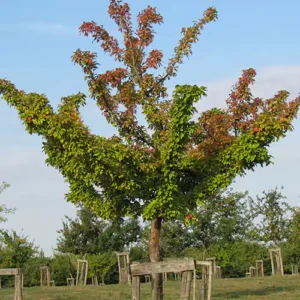
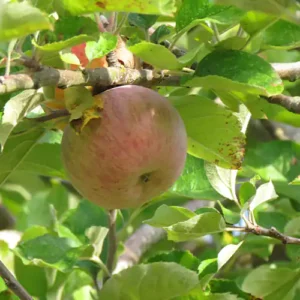
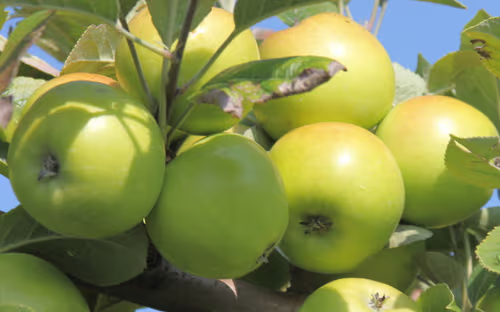
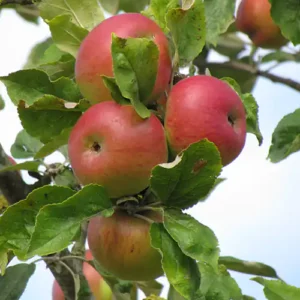
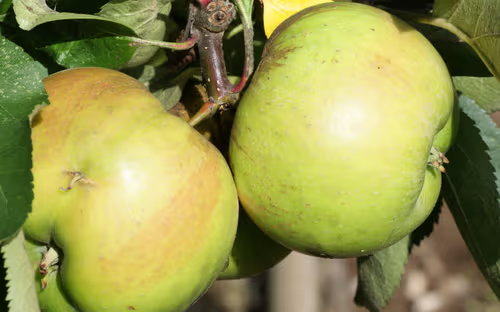
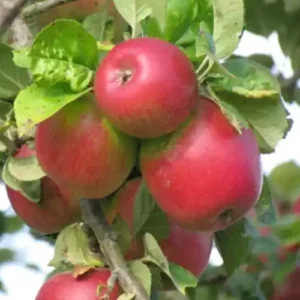
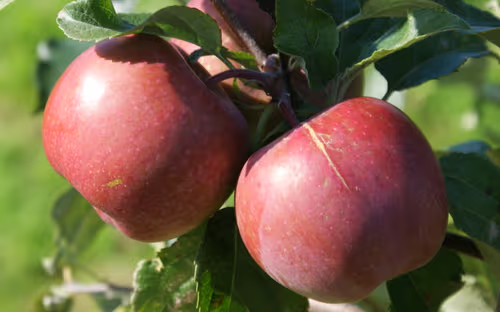
Dello cider apple tree, a sweet green cider apple of medium size, harvested in October and typical of the Thiérache region.
Apple trees
Apple trees
Apple trees
Apple trees
Apple trees
Apple trees
Apple trees
Apple trees
Apple trees
Apple trees
Apple trees
Apple trees
Apple trees
Apple trees
Apple trees
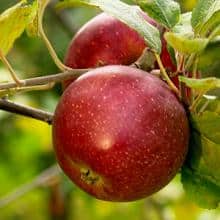
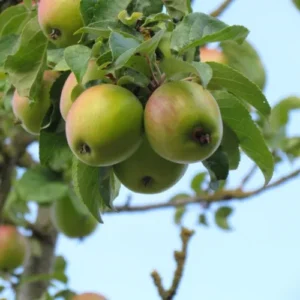
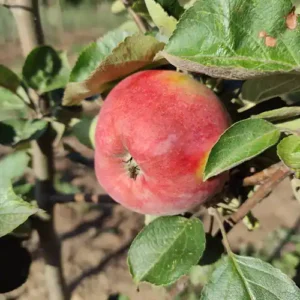
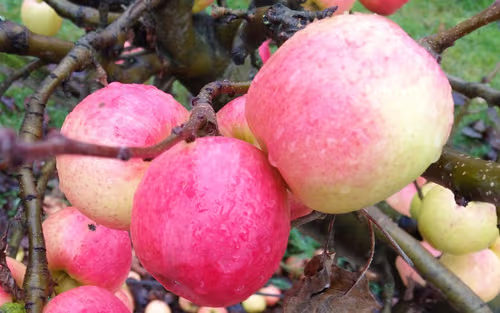
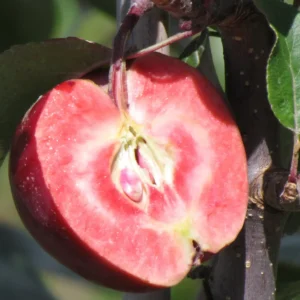
Rote Gardeteler red-fleshed apple tree, with flat, fully red apples, blackcurrant notes and good winter storage.
Apple trees
Apple trees
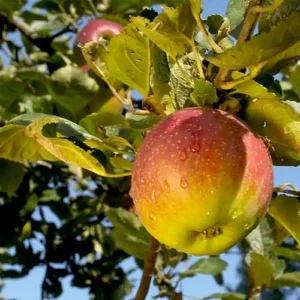
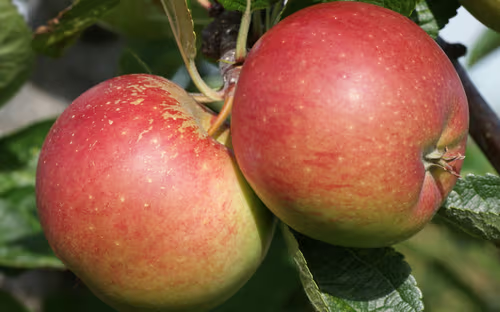
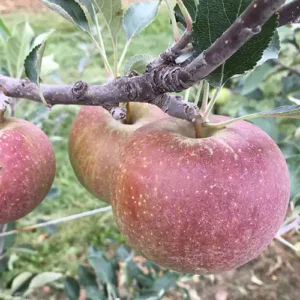
Zommerood red-fleshed apple tree, a sweet, strongly aromatic summer apple, picked in mid-August.
Apple trees
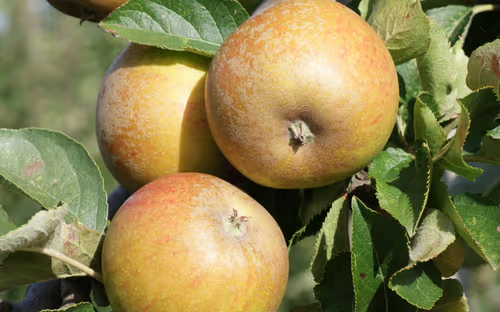
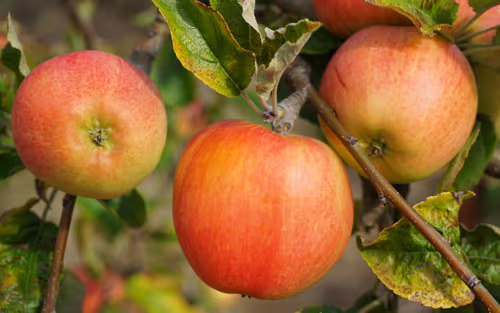
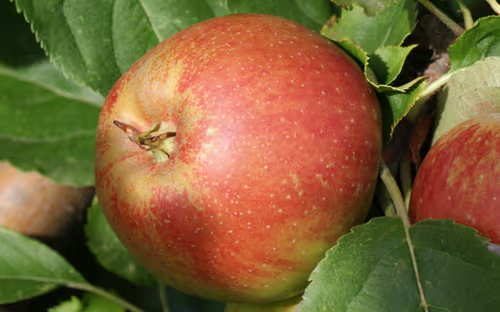
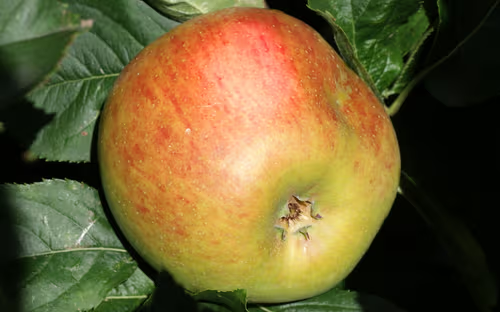
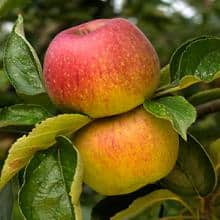
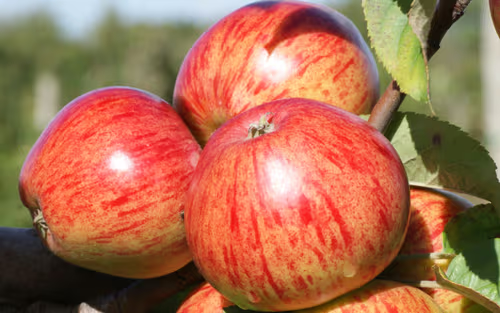
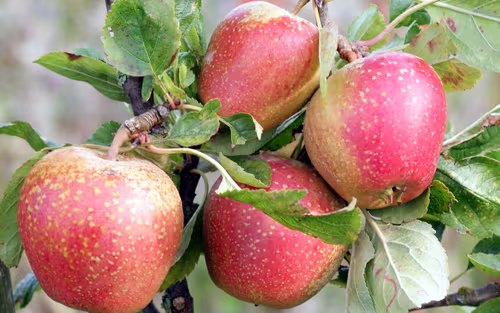
À Côtes apple tree, a strongly flavoured sweet-sharp apple, picked in late September and stored until January.
Apple trees
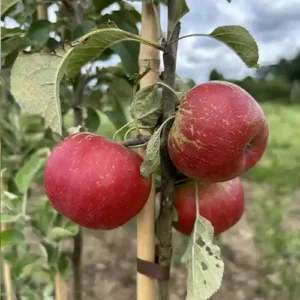
Apple trees
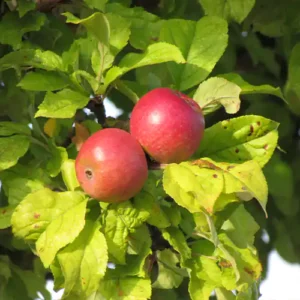
Apple trees
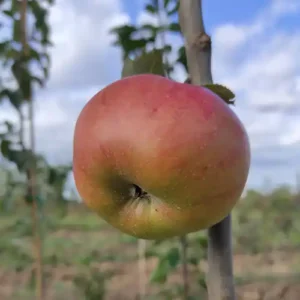
Apple trees
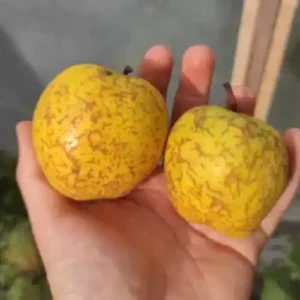
Apple trees
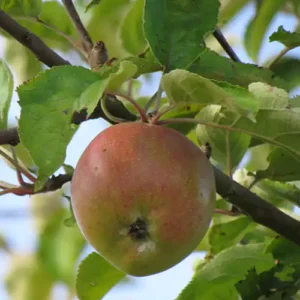
How should you choose an apple tree?
Choosing an apple tree involves much more than selecting a fruit
with an appealing flavour. Harvest season, eating period, storage life,
intended use, pollination, disease resistance, rootstock
and the space available must all be considered.
Our collection includes heritage and regional apples,
dessert, cooking and cider cultivars, red-fleshed apples
and more recent selections bred for fruit quality
or improved disease resistance.
A good choice is not necessarily the most famous cultivar.
It is the variety whose characteristics suit the local climate,
the intended use of the fruit and the way the tree will be grown.
Use the catalogue filters and individual product information
to compare flowering period, pollination, harvest date,
eating period, vigour, disease behaviour, tree form and rootstock.
Choose apple varieties according to their intended use
Dessert apples
Dessert apples offer an exceptional range of textures and flavours:
crisp or melting, sweet or sharp, juicy, aromatic,
spicy, nutty or strongly perfumed.
Some cultivars are at their best immediately after picking.
Others require several weeks of storage before their acidity softens
and their full aroma develops.
Fruit quality also depends on the growing conditions.
A cultivar described as sweet in a warm climate
may remain firmer and more acidic in a cool summer,
while good exposure and controlled crop load
generally improve sugar content and flavour.
Cooking and processing apples
Cooking apples are selected for qualities that are not always obvious
when the fruit is eaten raw. Their acidity, aroma and texture
may become particularly valuable after heating.
Some cultivars retain distinct pieces when cooked,
while others collapse quickly into a smooth puree.
This difference matters when choosing apples for pies,
baked fruit, sauces or compote.
Apples intended for juice, jelly or drying may be selected
for their acidity, juice yield, aroma or sugar concentration
rather than for their fresh-eating texture alone.
Cider apples
A balanced cider is generally produced by combining apples
with complementary characteristics rather than relying on a single cultivar.
Sweet apples provide fermentable sugars,
sharp apples contribute acidity,
while bitter and bittersweet cultivars supply tannins,
structure and length.
The classifications used in France, Britain and other European cider regions
are not always identical. The most useful approach is to consider
the actual sugar, acidity, tannin level and aroma of each cultivar
when planning an orchard or blend.
Red-fleshed apples
Red-fleshed apple trees produce fruit whose flesh may be lightly pink,
streaked with red or strongly coloured throughout.
The fruit can be eaten fresh or used to make naturally coloured juice,
compote, jelly, cider and baked products.
Red flesh does not by itself guarantee good flavour.
Cultivars differ considerably in sweetness, acidity,
texture, disease resistance and harvest season,
so they should be assessed like any other apple variety.
Extend the apple harvest season
Planting cultivars with different ripening periods
prevents the entire crop from becoming ready at once.
An orchard can include an early apple for late summer,
several September cultivars and later apples
intended for autumn or winter storage.
Harvest season and eating season are not necessarily the same.
Some apples are ready to eat directly from the tree,
while storage cultivars continue to develop their flavour
after picking.
A late apple harvested at the correct physiological stage
may initially be firm, acidic or starchy.
During storage, its starch is converted into sugar,
its texture changes and its aroma becomes more complex.
Picking too early reduces flavour and may cause shrivelling.
Picking too late shortens storage life and increases
the risk of fruit drop, internal breakdown or bruising.
View the apple harvest calendar
Harvest periods are indicative and may vary according to the country,
region, exposure, rootstock, crop load and weather conditions during the season.
Which rootstock should be chosen for an apple tree?
The rootstock strongly influences tree vigour,
mature size, time to first cropping, anchorage,
soil adaptation and the amount of support required.
It should be selected according to the available space,
soil depth and fertility, local rainfall,
desired tree form and intended management system.
Low-vigour rootstocks
Dwarfing and semi-dwarfing rootstocks suit small gardens,
trained forms and intensive orchards
where the fruit must remain easy to reach.
They generally begin cropping quickly,
but their roots explore a smaller volume of soil.
They therefore require careful weed control,
regular water during dry periods
and, in many cases, permanent staking or wire support.
A small tree is not necessarily a low-maintenance tree.
Its compact size is achieved partly through a restricted root system
that depends more heavily on good soil and regular care.
Medium-vigour rootstocks
Medium-vigour rootstocks provide a useful compromise
for gardens and traditional orchards.
They generally produce larger, more independent trees
than dwarfing rootstocks while remaining easier to manage
than full-sized standards.
Final size still varies according to cultivar vigour,
soil fertility, pruning and crop load.
Vigorous rootstocks
Vigorous rootstocks are suited to large gardens,
orchards, pasture plantings and more extensive systems.
They normally form durable trees with stronger anchorage
and a greater ability to explore the soil for water and nutrients.
They require more space, take longer to reach full production
and produce fruit at a greater picking height.
The rootstock cannot correct every soil problem.
Even a vigorous apple tree will struggle in permanently waterlogged,
severely compacted or very shallow ground.
Apple tree pollination
Most apple cultivars crop more reliably
when pollen is supplied by another genetically different apple tree
flowering at a compatible time.
A neighbouring apple or ornamental crab apple
may contribute pollen when it flowers at the correct period
and is sufficiently close for insects to move between the trees.
Cultivars described as self-fertile may produce some fruit alone,
but a compatible pollinator often improves fruit set,
fruit size and cropping regularity.
Flowering periods do not need to be identical.
A sufficient overlap between adjacent or nearby flowering groups
is normally adequate.
Triploid cultivars generally produce pollen of poor fertility.
They can receive compatible pollen and produce fruit,
but they should not be relied upon as the sole pollinator
for another cultivar.
When planting a triploid variety,
two additional compatible diploid cultivars provide
the most secure pollination arrangement.
Cold, wind and persistent rain during flowering
can reduce insect activity even when compatible cultivars are present.
Pollination information should therefore be used to reduce risk,
not interpreted as a guarantee of a heavy crop every year.
Choosing an apple tree with good disease resistance
Apple cultivars vary considerably in their susceptibility
to scab, powdery mildew, canker, fire blight
and other diseases.
In gardens and orchards where the aim is to minimise treatments,
selecting a cultivar with good overall disease behaviour
is one of the most important decisions.
Disease resistance is not the same as complete immunity.
A resistant cultivar may still show symptoms
under severe infection pressure or in an unsuitable position.
Some modern cultivars carry specific resistance genes,
particularly against apple scab.
These can be highly useful, although resistance based on a single gene
may be less durable where a pathogen population evolves
to overcome that particular mechanism.
Heritage and regional cultivars should not automatically
be described as resistant simply because they are old.
Some perform remarkably well in humid climates,
while others are highly susceptible to scab, canker or mildew.
Our nursery is located in northern France,
where humid conditions provide a useful indication
of how varieties behave under significant disease pressure.
We progressively add disease information to product pages
when sufficiently reliable observations or references are available.
Good site selection remains essential.
Sunlight, air circulation, balanced pruning,
removal of infected material and avoidance of excessive nitrogen
all contribute to a healthier tree.
Which form of apple tree should be chosen?
Depending on cultivar and availability,
our apple trees may be supplied as maiden trees,
bush or low-stem forms, half standards or standards.
Maiden apple trees
A maiden is a young, largely unformed tree.
It allows the grower to create a structure adapted
to the intended orchard system, available space
and preferred trunk height.
It requires formative pruning and training,
but offers the greatest flexibility.
Low-stem and bush trees
Low forms keep the main branches and fruit
within relatively easy reach.
They suit gardens and managed orchards
where pruning, thinning and harvesting
will be carried out from the ground
or with only a small ladder.
Half standards and standards
Taller trunks are useful in traditional orchards,
pasture plantings and areas where access beneath the canopy is required.
They eventually form larger trees,
require wider spacing and place more of the crop at height.
Tree form and rootstock must be considered together.
A tall trunk does not automatically mean that the tree
is grafted onto a vigorous rootstock.
Planting and establishing an apple tree
Bare-root apple trees are planted during dormancy,
generally from autumn to the end of winter,
whenever the soil is neither frozen nor waterlogged.
Prepare the planting area before the tree arrives.
Loosen the soil over a wide area,
remove perennial weeds and avoid creating
a small pocket of rich compost surrounded by compacted ground.
Position the root collar at the correct level
and keep the graft union clearly above the soil.
Spread the roots naturally without bending them sharply upwards.
Water thoroughly after planting,
even when the tree is dormant.
Keep the area around the trunk free from grass
and monitor moisture during the first growing seasons.
A young tree should be supported according to its rootstock and form.
Dwarfing trees may require permanent support,
while a vigorous free-standing tree normally needs a stake
only during establishment.
Why choose our apple trees?
Thomas Fruit Trees specialises in fruit trees
and offers a collection extending well beyond
the small number of cultivars commonly found in general garden centres.
We select apple trees for flavour, origin,
historical interest, culinary use, cider quality,
disease behaviour, unusual characteristics
and harvest or storage season.
Our range includes cultivars from France,
Britain, Belgium, the Netherlands,
Germany, central and eastern Europe
and other apple-growing regions.
Product pages progressively bring together
the information needed to compare cultivars:
origin, parentage, vigour, flowering period,
ploidy, pollination, disease susceptibility,
harvest season, eating period and storage potential.
The objective is not simply to offer the greatest possible number of names,
but to help each customer select trees suited
to their climate, soil, available space and intended use.
Frequently asked questions about apple trees
Do I need to plant two apple trees?
Not in every situation, but planting compatible cultivars
usually improves pollination and cropping regularity.
A suitable apple or crab apple in a nearby garden
may also provide pollen.
Can two trees of the same cultivar pollinate one another?
No. Trees carrying the same named cultivar are genetically identical.
Reliable cross-pollination requires a genetically different cultivar.
What is a triploid apple cultivar?
A triploid has three sets of chromosomes
and generally produces pollen of poor fertility.
It can produce apples when pollinated,
but is not a dependable pollinator for another cultivar.
When should a bare-root apple tree be planted?
Plant during dormancy, from autumn to late winter,
outside periods of frost and when the soil
is not saturated with water.
Which apple tree is suitable for a small garden?
Choose a cultivar grafted onto a low- or medium-vigour rootstock.
A low form, cordon, espalier or other trained system
can also reduce the space required.
Does a dwarf apple tree need support?
Many dwarfing rootstocks have limited anchorage
and require permanent staking or wire support.
Check the requirements of the particular rootstock.
Which apples are best for winter storage?
Late-ripening storage cultivars are the most suitable.
Check both harvest date and eating period,
as many are not at their best immediately after picking.
How far apart should apple trees be planted?
Spacing depends mainly on the rootstock,
tree form, soil and intended management system.
A dwarf tree requires much less space
than a half standard or full-sized orchard tree.
Are heritage apple varieties naturally disease-resistant?
Not necessarily. Some heritage cultivars are robust,
while others are highly susceptible to scab,
canker or powdery mildew.
Each cultivar should be assessed individually.
Can an apple be ripe for picking but not ready to eat?
Yes. Many storage apples should be picked
once physiologically mature
and then allowed to develop their flavour during storage.
Why does my apple tree flower but produce no fruit?
Possible causes include incompatible pollination,
frost damage, cold or wet flowering weather,
excessive vigour, biennial bearing
or a tree that is still too young.