Plum trees
Plum trees
Plum trees
Plum trees
Plum trees
Plum trees
Plum trees
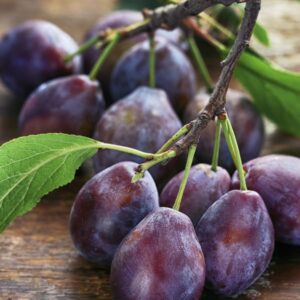
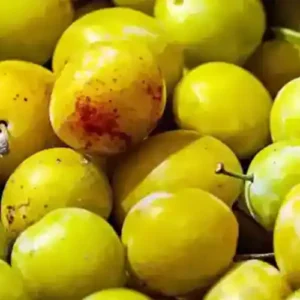
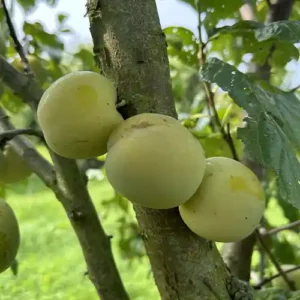
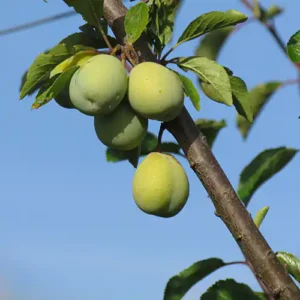
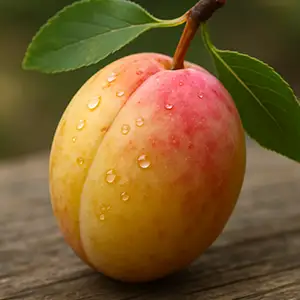
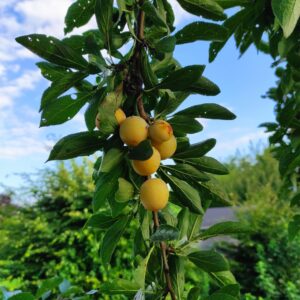
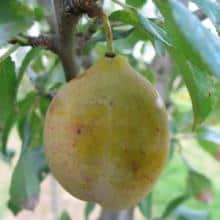
Sainte Catherine plum tree, a generous late-season variety with firm yellow-green plums for fresh eating and excellent cooking.
Plum trees
Plum trees
Plum trees
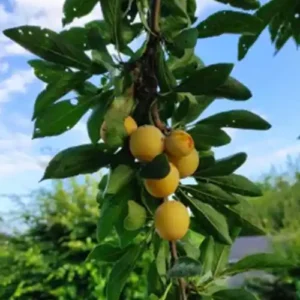
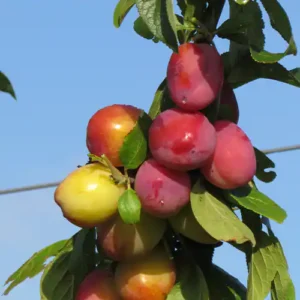
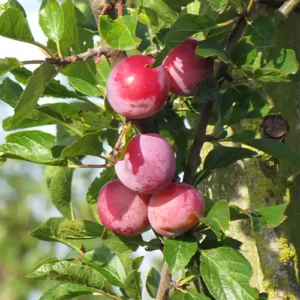
Badoual Mirabelle plum tree, an uncommon Breton mirabelle with mid-season flowering and fair disease resistance.
Plum trees
Plum trees
Plum trees
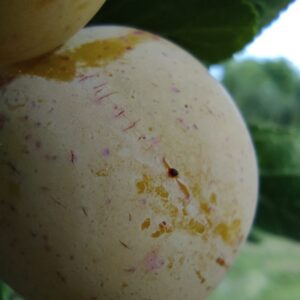
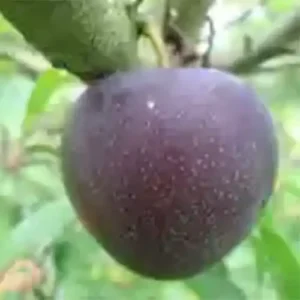
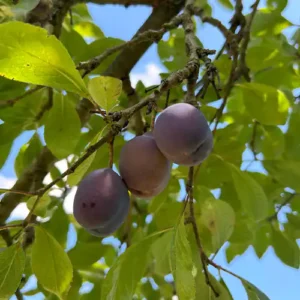
De Floyon plum tree, with small yellow plums that are juicy, very aromatic and slightly tart, harvested in early August.
Plum trees
Plum trees
Plum trees
Plum trees
Plum trees
Plum trees
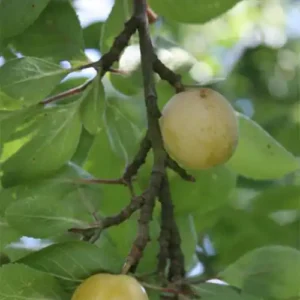
How should you choose a plum tree?
A plum tree should not be selected only according to fruit colour or size. Climate adaptation, flowering period, pollination, disease behaviour, rootstock, intended use and harvest season all influence whether the tree will produce reliably.
Our collection includes heritage and regional plums alongside cultivars selected for flavour, productivity, robustness or a particularly useful ripening period.
The range includes gages and reine-claudes, mirabelles, quetsches, damsons and other European plums intended for fresh eating, cooking, preserving, drying or processing.
A famous cultivar is not automatically the best choice for every garden. A less familiar plum that ripens reliably, remains healthy and suits the local soil may provide a much more satisfactory crop.
The principal types of plum
Gages and reine-claudes
Gages, known in France and several other European countries as reine-claudes, are valued for their exceptionally sweet, melting and aromatic flesh.
They are among the finest plums for eating fresh and are also excellent in tarts, preserves, compotes and desserts.
Fruit colour may be green, yellow, golden, violet or flushed with red. The name gage describes a traditional group and does not mean that every cultivar has identical flavour, productivity or pollination requirements.
Some gages are self-fertile, while others require compatible pollen. Flowering time and the availability of a suitable pollinator should therefore be checked before planting.
Mirabelles
Mirabelles produce small, usually yellow or golden fruit with concentrated sweetness and a distinctive aroma.
Their modest size is compensated by rich flavour, good productivity and excellent suitability for tarts, preserves, compotes, bottling and other processing.
Named mirabelle cultivars differ in ripening period, fruit size, flavour, freestone quality and cropping regularity. They should not be treated as a single interchangeable type.
Quetsches
Quetsches are generally elongated European plums with relatively firm flesh and a stone that separates readily when the fruit is mature.
They are eaten fresh but are particularly valued for tarts, preserves, drying, bottling and traditional fermented products.
The flesh normally retains its character well during cooking, making quetsches useful where a very soft dessert plum would collapse completely.
Damsons
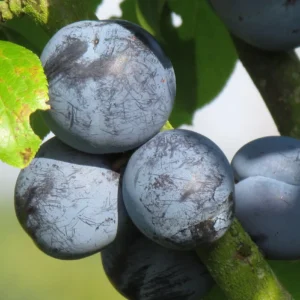
Damsons are generally smaller, darker and more acidic or tannic than dessert plums. The fruit may be too sharp for some people when eaten directly from the tree, but develops considerable depth after cooking.
They are particularly suitable for jam, jelly, sauces, pies, fruit cheese, syrups and flavouring spirits.
Damson trees are often robust and productive, although the exact habit, fruit quality and tendency to sucker vary between cultivars.
Japanese and interspecific plums
Japanese plums, mainly derived from Prunus salicina, often produce larger, rounder and particularly juicy fruit. They can differ from European plums in flowering time, growth habit, pollination and climatic requirements.
Interspecific hybrid plums combine several Prunus species to introduce larger fruit, distinctive aromas, earlier maturity or improved adaptation.
Pollination should be checked individually for these cultivars. A European plum should not automatically be assumed to be a suitable pollinator for a Japanese or complex hybrid plum, even when their blossom appears at a similar time.
Choose a plum according to its intended use
For eating fresh
Choose according to flavour, juiciness, texture, skin thickness and the balance between sugar and acidity rather than fruit size alone.
Gages and selected dessert plums may provide exceptional fresh-eating quality, but the fruit is often delicate and must be harvested close to full maturity.
For cooking and baking
A good cooking plum retains enough acidity to remain flavoursome after sugar is added and has a texture suited to the intended recipe.
Quetsches, damsons, mirabelles and many traditional European plums are particularly valuable for tarts, compotes, sauces and preserves.
For drying
Plums intended for drying should possess a sufficiently high sugar concentration, firm flesh and a stone that can be removed without excessive loss of fruit.
Several quetsche and prune-type cultivars are better suited to drying than very juicy, melting dessert plums.
For preserves and bottling
Fruit used for preserves should combine good flavour, sufficient acidity and a texture that responds well to cooking.
A cultivar that seems rather sharp when eaten raw may produce a more balanced jam than an extremely sweet plum with little acidity.
Extend the plum harvest season
Plum cultivars ripen over a long period. By combining early, mid-season and late cultivars, the harvest can extend through much of summer and into early autumn.
This prevents several trees from producing all of their fruit at the same time and allows delicate dessert plums to be eaten progressively.
A spread of harvest dates also makes picking, preserving and processing more manageable when several trees are planted.
Late cultivars require a sufficiently long and warm season. In cooler European regions, reliable early and mid-season cultivars are generally safer than a very late plum that may struggle to develop its full sweetness.
View the plum harvest calendar
Harvest periods are indicative and vary according to country, region, exposure, rootstock, crop load and seasonal weather.
Plum tree pollination
Self-fertility varies considerably between plum cultivars. Some trees can produce useful crops alone, while others require pollen from a compatible cultivar flowering at the same time.
Even a self-fertile plum may crop more regularly or carry more fruit when another compatible tree grows nearby.
Flowering overlap is essential, but it is not the only consideration. Genetic compatibility and the botanical group to which the cultivar belongs must also be taken into account.
European plums, Japanese plums and complex interspecific hybrids do not always cross-pollinate reliably. The pollination information for the individual cultivar should take priority over general assumptions based on the word plum.
Cold, wind and persistent rain during flowering may reduce insect activity. A compatible pollinator improves the potential for fertilisation but cannot guarantee a crop when blossom weather is severely unfavourable.
Winter hardiness and blossom frost are different
A dormant plum tree may tolerate considerable winter cold while its open flowers and newly formed fruit remain vulnerable to spring frost.
Early-flowering cultivars are exposed to a greater number of potentially damaging nights, especially in continental regions and frost pockets.
Choose a sunny position with good movement of cold air rather than planting at the bottom of a slope or inside a completely enclosed hollow.
A warm wall may improve ripening but can also advance flowering. In a frost-prone garden, the warmest possible position is not always the safest.
Regional cultivars that have cropped successfully under similar climatic conditions may offer a useful indication of adaptation, although no cultivar can guarantee a harvest after severe frost.
Which soil suits a plum tree?
Plum trees generally prefer reasonably deep and fertile soil that retains useful moisture without remaining permanently saturated.
They often tolerate heavier ground better than peaches and apricots, but this depends strongly on the rootstock.
Standing water and prolonged oxygen deprivation weaken the roots and increase the risk of collar disease, root rot and general decline.
Very light, sandy ground may also be difficult because drought reduces shoot growth, fruit size and the formation of future flower buds.
Do not plant in a deep hole filled with potting compost. Improve the wider area and the general movement of water rather than creating an isolated pocket that may remain wetter than the surrounding soil.
Choosing the right plum rootstock
The rootstock influences vigour, mature size, time to first cropping, anchorage, suckering and adaptation to soil.
A moderate-vigour rootstock is normally more suitable for a small garden and makes pruning, thinning and harvesting easier.
A vigorous rootstock suits larger orchards, traditional half standards and standards, poorer soils and situations where a larger permanent tree is required.
Some plum rootstocks tolerate clay and temporary moisture better than others, while different selections are better suited to dry, calcareous or less fertile ground.
The natural vigour of the cultivar must also be considered. Two cultivars grafted onto the same rootstock may still reach different sizes.
Which form of plum tree should you choose?
Depending on cultivar and availability, plum trees may be supplied as maiden trees, low-stem trees, half standards or standards.
A maiden tree allows the gardener to create a structure suited to the available space, but it requires formative pruning during the first years.
A low-stem tree keeps the main branches and fruit within easier reach and is suitable for most gardens.
A half standard or standard is more appropriate for a large garden, traditional orchard or grazed area where clearance beneath the crown is required.
Plum trees respond poorly to large corrective cuts, so it is important to choose an appropriate final form and spacing before planting.
Planting and establishing a plum tree
Bare-root plum trees are planted during dormancy, generally from autumn until late winter, whenever the soil is neither frozen nor waterlogged.
Prepare a broad weed-free area and loosen compacted soil before the tree arrives.
Position the root collar at the correct level and keep the graft union clearly above the ground.
Spread bare roots naturally without bending them sharply upwards, backfill with the original soil and water thoroughly after planting.
Keep grass and perennial weeds away from the tree during establishment. Dense turf competes strongly for water and can considerably delay growth.
Water throughout the first growing season whenever rainfall is insufficient. The tree may appear established above ground while still possessing only a limited new root system.
Prune plum trees lightly and at the correct time
Plum trees generally respond best to light, progressive pruning rather than severe cutting on mature branches.
Large wounds heal slowly and can provide entry points for silver leaf, bacterial canker and other wood diseases.
Form the main framework while the tree is young, removing competing leaders, weak forks and badly positioned branches before they become large.
Once established, remove dead, diseased, crossing or badly shaded wood while retaining a naturally open and balanced crown.
Where silver leaf is a concern, avoid major pruning during cold, wet winter weather. Corrective work is normally safer during dry weather while the tree is actively growing, often after harvest.
Do not attempt to keep a vigorous plum artificially small through repeated heavy pruning. A suitable rootstock and correct initial spacing are more effective.
Fruit thinning and biennial bearing
Some plum trees set considerably more fruit than they can mature properly.
Heavy crops produce small fruit, delay ripening, bend or break branches and may contribute to a light crop the following year.
Where clusters are exceptionally dense, remove part of the young fruit after natural fruit drop has finished.
Thinning is particularly useful on young trees, large-fruited cultivars and branches carrying fruit close together.
Supporting a heavily loaded branch may prevent immediate breakage, but balancing the crop is better for the long-term structure of the tree.
Important plum diseases and disorders
Brown rot and blossom blight
Brown rot fungi can infect blossom, shoots and ripening fruit. Affected plums develop expanding brown areas and may become covered with pale fungal cushions.
Remove mummified fruit and dead shoots, maintain an open crown and avoid leaving damaged fruit on the tree.
Bacterial canker and wood diseases
Cankers can develop around wounds, damaged buds and frost injuries, particularly during cold and wet weather.
Gum may appear around the lesion, but gummosis is a symptom rather than a diagnosis. Frost, injury, canker and root stress can all cause gum production.
Silver leaf
Silver leaf can cause foliage to develop a silvery appearance and may lead to progressive branch dieback.
The fungus enters mainly through wounds, which is another reason to avoid large winter pruning cuts and to remove affected branches back to healthy wood.
Fruit splitting
Some cultivars split after heavy rain, particularly when a dry period is followed by a sudden increase in water availability close to harvest.
Split fruit is rapidly colonised by brown rot, wasps and other microorganisms. Cultivar susceptibility and relatively regular soil moisture are important factors.
How can ripe plums be recognised?
Skin colour alone is not sufficient because many cultivars colour before the flesh has reached its best flavour.
A ripe plum develops the characteristic background colour of the cultivar, becomes slightly softer and detaches more easily from the tree.
The fruit should taste sweet and aromatic without a strongly green flavour close to the stone.
Dessert plums intended for immediate eating can remain on the tree until relatively advanced maturity, while fruit intended for transport or several days of storage should be picked slightly firmer.
The fruit on one tree does not always ripen simultaneously. Several picking rounds provide better quality than removing the entire crop at the first sign of colour.
Harvesting and storing plums
Pick during dry weather and hold each plum gently in the palm of the hand. Pressure from fingertips can bruise ripe fruit even when the damage is not immediately visible.
Place the fruit into shallow containers and avoid pouring or dropping one layer onto another.
Separate split, bruised, insect-damaged and overripe fruit for immediate use.
Most fully ripe dessert plums keep for only a short period. Refrigeration can extend their life by several days, but texture and aroma are generally best close to harvest.
Firmer quetsches and some later European plums may tolerate handling and short storage better than very soft gages or juicy Japanese plums.
For longer preservation, plums can be frozen, bottled, dried, cooked or transformed into preserves.
Why choose our plum trees?
Thomas Fruit Trees specialises in fruit trees and offers cultivars chosen for their genuine value in gardens and orchards.
Our range combines heritage and regional varieties with plums selected for flavour, productivity, harvest season, intended use or useful behaviour under European growing conditions.
Product pages progressively provide the information required to compare origin, vigour, flowering period, self-fertility, harvest season, use, fruit characteristics and rootstock.
Our objective is not simply to offer the best-known names, but to help customers choose plum trees suited to their climate, soil, available space and intended use.
Frequently asked questions about plum trees
Are two plum trees required?
It depends on the cultivar. Some plum trees are self-fertile, while others require a compatible pollinator. Cross