Mulberry trees
Mulberry trees
Mulberry trees
Mulberry trees
Mulberry trees
Mulberry trees
Mulberry trees
Mulberry trees
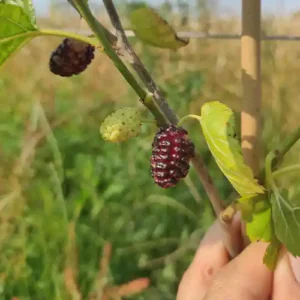
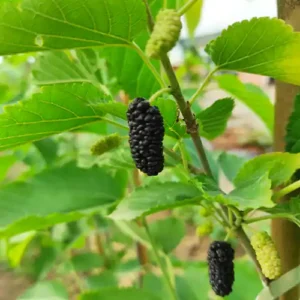
Gerardi's Dwarf mulberry tree, a compact productive variety with balanced sweet-tart fruit and late budbreak.
Mulberry trees
Mulberry trees
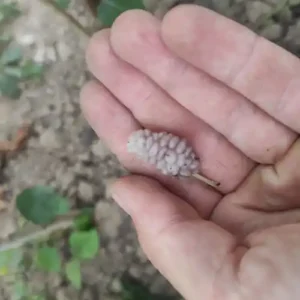
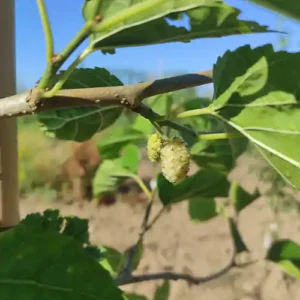
Lavendel mulberry tree, a very productive white mulberry whose large fruits turn lavender when fully ripe.
Mulberry trees
Mulberry trees
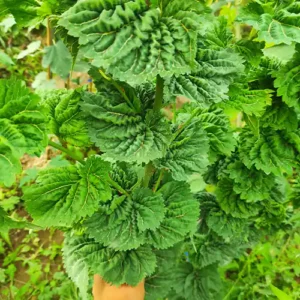
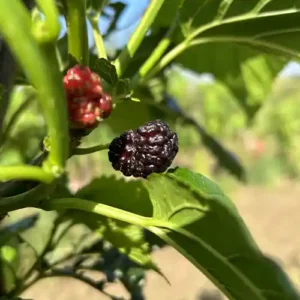
O'Ho mulberry tree, a Japanese Morus alba variety with very sweet black fruits and ornamental embossed foliage.
Mulberry trees
Rupp's Romanian mulberry tree, with very sweet, aromatic fruit and a long staggered harvest over 2 to 3 months.
Mulberry trees
Mulberry trees: choosing a cultivar that will ripen in your climate
Fruiting mulberries of the genus Morus produce compound fruits commonly called mulberries. They should not be confused with blackberries and other bramble fruits belonging to the genus Rubus.
Mulberries are true fruit trees, often vigorous, long-lived and capable of producing heavy crops when the cultivar, position and training method are suitable.
In cool European climates, winter hardiness is not normally the principal limitation for cultivars derived from Morus alba, Morus rubra or their hybrids.
More important considerations include the actual ripening season, the amount of summer warmth required, the vulnerability of young growth to late frost and the ability of the current season’s shoots to mature before winter.
A cultivar may survive extremely cold winters while still producing disappointing fruit because it ripens too late or requires more summer heat than the site can provide.
Fruit colour does not identify the species. Despite its common name, a white mulberry can produce white, pink, red, purple or almost black fruit.
Morus alba, Morus rubra and hybrid mulberries
Morus alba: an exceptionally variable species
Morus alba, the white mulberry, originated in eastern Asia and has been cultivated for centuries as a source of leaves for silkworms.
The species contains an exceptionally wide range of growth habits, leaf forms and fruit characteristics.
Some unselected forms produce small and extremely sweet berries with little acidity or aroma.
Selected fruiting cultivars can produce long, fleshy and strongly flavoured mulberries in colours ranging from cream and amber to dark purple-black.
Morus alba generally grows rapidly and adapts to a broad range of soils.
This adaptability does not mean that dry, compacted or infertile ground produces fruit of the highest quality.
Regular water during fruit development improves berry size, flesh texture and continuity of production.
Morus rubra: the North American red mulberry
Morus rubra is native to eastern and central North America, including regions with severe winter temperatures.
It grows naturally in deep, fertile and moisture-retentive soils that remain adequately drained.
Fruit from good selections is usually dark, juicy and capable of combining sweetness with useful acidity and a rich berry aroma.
This distinction depends more on the cultivar than on the species name alone.
True Morus rubra is less common in cultivation than labels sometimes suggest.
The species hybridises readily with Morus alba, and many trees sold or recorded as red mulberries possess mixed ancestry.
Morus alba × Morus rubra hybrids
Hybrids between white and red mulberries can combine the vigour, fertility and adaptability of certain Morus alba forms with the fruit quality and cold hardiness of selected Morus rubra material.
Well-known cultivars such as ‘Illinois Everbearing’ are generally considered to belong to this hybrid group.
Repeated hybridisation and introgression make precise botanical identification difficult, even when leaves, bark and fruit are examined.
For fruit production, the documented performance of the named cultivar is therefore more useful than an excessively categorical species label.
Fruit colour does not indicate the mulberry species
The common names white mulberry and red mulberry refer to species rather than dependable fruit colours.
A cultivar of Morus alba may produce almost black fruit, while another cultivar of the same species produces cream or pale pink mulberries.
Fruit of Morus rubra commonly changes from red to dark red, purple or nearly black when fully ripe.
Colour also provides limited information about flavour.
Pale mulberries are often exceptionally sweet and honeyed, but may possess little acidity.
Dark fruit frequently develops a richer, more vinous or berry-like character, although excellent and mediocre cultivars exist in every colour group.
Choose according to the documented cultivar rather than assuming that the darkest fruit must possess the best flavour.
Useful characteristics when comparing mulberry cultivars
Ripening season
In cool climates, the ability to ripen fruit completely is more important than the lowest winter temperature the dormant tree can withstand.
Very late cultivars and selections originating from regions with long, hot summers may crop successfully in favourable years but remain weakly flavoured during cool seasons.
For northern, maritime, elevated or otherwise cool sites, choose an early or mid-season cultivar already proven under reasonably comparable conditions.
A warm position improves sugar and aroma but cannot transform a genetically late cultivar into an early one.
Flavour
Mulberry flavour may be intensely sweet, honeyed, floral, vinous, spicy, sharply fruity or relatively mild.
For eating directly from the tree, look for fleshy and aromatic fruit with enough acidity to balance the sugar.
For jam, coulis, juice, syrup or fermentation, a productive dark-fruited cultivar with concentrated flavour and useful acidity is often particularly valuable.
Maximum sweetness alone does not necessarily provide the most interesting eating quality.
Fruit length and size
The longest mulberries are visually impressive but are not automatically the best cultivars for a cool European garden.
Some exceptionally large-fruited selections require substantial heat, possess very delicate flesh or crop irregularly in cooler conditions.
A slightly shorter fruit that ripens completely, develops a strong aroma and crops abundantly can be much more satisfactory.
Final berry size also depends on water availability, leaf health, sunlight and crop load.
Fruit firmness
All ripe mulberries are relatively delicate and have a short storage life.
Softer cultivars should be eaten or processed almost immediately after picking.
Firmer flesh makes handling easier, but firmness should not be confused with immaturity.
A mulberry picked before it detaches readily may remain firm because it has not completed sugar and aroma development.
Length of the harvest period
Some cultivars produce a concentrated crop, while others ripen progressively over several weeks.
An extended harvest is convenient for regular fresh eating but requires frequent collection because ripe fruit falls readily.
A more concentrated harvest can be useful for jam, juice, drying and larger processing batches.
Tree vigour
A normally vigorous mulberry can eventually exceed 8 metres in height and form a broad crown.
The dimensions of the young nursery plant provide little indication of the space the tree may occupy after several decades.
For a small garden, selecting a genetically compact cultivar is more reliable than repeatedly cutting back an exceptionally vigorous tree.
Choose a sunny and warm position
Plant mulberry trees in full sun, preferably in an open position facing south or west while receiving some protection from cold and drying winds.
Sunlight is required not only for general tree growth but also for sugar accumulation, aroma development and proper maturation of young wood before winter.
Good exposure also allows leaves to dry more rapidly after rain.
Mulberries generally begin active growth later than many early-flowering fruit trees, which reduces part of the spring-frost risk.
A sufficiently late frost can nevertheless damage young leaves, tender shoots and developing inflorescences.
This vulnerability of active growth should not be confused with the winter hardiness of fully dormant wood.
A frost pocket at the bottom of a slope can therefore remain unsuitable even for a cultivar described as highly winter hardy.
Do not plant a large mulberry above a terrace or vehicle
Ripe mulberries detach and fall readily, particularly during wind, rain or bird activity.
Dark fruit can stain paving, garden furniture, clothing and vehicles intensely.
Fallen berries also attract birds, wasps and other animals.
A large fruiting mulberry should therefore not be positioned directly above a terrace, driveway, parking space or frequently used path.
A grassed area or orchard floor allows fallen fruit to be collected more easily and provides room for a clean sheet or harvesting net to be spread beneath the crown.
Pale-fruited cultivars generally stain less conspicuously but still produce soft fruit that can create a slippery surface.
Soil, drainage and water supply
Mulberries tolerate clay, loam, sandy and moderately calcareous soils where the roots remain sufficiently aerated.
The best crops are obtained in deep, fertile and biologically active soil containing a useful water reserve without remaining saturated during winter.
Morus alba generally tolerates imperfect soils and summer drought more successfully once established.
Morus rubra normally expresses its full potential in deeper, richer and more moisture-retentive ground.
These broad tendencies do not replace cultivar-specific information.
Moist soil should not be confused with waterlogged soil.
A deep and structured clay retaining useful summer moisture can be highly suitable, while a compact hollow in which water remains around the roots causes weak establishment and progressive decline.
Work heavy soil only after it has drained sufficiently and no longer adheres as a wet and compact mass.
Drought tolerance does not guarantee high-quality fruit
An established mulberry can survive dry conditions that would weaken many other fruit trees.
Survival under drought does not mean that the tree will continue producing large, tender and juicy fruit.
Water shortage during berry development reduces fruit size, shortens the harvest period and can cause premature fruit drop.
A young tree requires particular attention because its roots still occupy a limited volume of soil.
Deep watering during dry periods is more useful than frequent superficial applications that moisten only the soil surface.
An organic mulch applied to already moist soil reduces evaporation and grass competition.
Keep the mulch slightly away from the trunk and graft union.
Planting a young container-grown mulberry
In regions exposed to late frost, plant actively growing container-grown mulberries during spring after the principal frost risk has passed.
A mature dormant tree may withstand substantial winter cold, while a young nursery plant carrying soft leaves can be damaged by a comparatively light frost.
This distinction is especially important where the plant has begun growing under greenhouse or tunnel conditions.
Prepare a broad area of soil rather than a narrow hole filled with potting compost.
Loosen and cultivate the ground only once it has drained sufficiently and begun warming during spring.
Remove couch grass, bindweed, docks and other perennial weeds carefully before planting.
Position the root collar at soil level and keep the graft union clearly above the finished soil surface where one is visible.
Backfill mainly with the original garden soil, improved across a broad area with a reasonable quantity of mature compost where necessary.
A concentrated mass of rich compost or manure within the planting hole does not provide durable improvement to the surrounding soil.
Water thoroughly after planting to settle soil around the roots.
Maintain a weed-free area and continue watering throughout the first growing season whenever rainfall is insufficient.
Watering should not stop several weeks after planting, as summer drought can interrupt rooting and prevent young shoots from maturing properly before winter.
Seedling, cutting or grafted mulberry?
Seedling mulberries
A tree grown from seed does not reproduce the characteristics of the fruiting parent reliably.
Tree vigour, sexual expression, maturity date, fruit colour, berry size and flavour can all differ substantially.
Some seedlings may be male and never produce a fruit crop.
Others remain juvenile for an extended period before their fruiting ability can be assessed.
A seed collected from an excellent cultivar should therefore not be considered a reliable method of reproducing that variety.
Own-root mulberries
Cuttings and other vegetative propagation methods produce a tree genetically identical to the selected cultivar.
An own-root tree has no graft union and any shoot arising from its roots belongs to the cultivar itself.
Some mulberry cultivars root readily, while others are difficult to propagate successfully by cuttings.
Grafted mulberries
Grafting allows cultivars that root poorly to be reproduced accurately and can provide earlier fruiting than an unselected seedling.
Both grafted and own-root clonal plants can make excellent fruit trees when the cultivar is correctly identified.
On a grafted tree, remove every shoot emerging from beneath the graft union because it belongs to the rootstock and can eventually dominate the fruiting cultivar.
Does one mulberry tree produce fruit?
The sexual organisation of mulberries is complex and differs according to species, cultivar and sometimes individual tree.
A mulberry may carry only male flowers, only female flowers or both male and female flowers on the same plant.
Pollination is carried mainly by wind.
It is therefore inaccurate to state that every Morus alba is self-fertile or that every Morus rubra necessarily requires a second tree.
The ability to crop when planted alone must be verified for the individual cultivar.
Many named fruiting cultivars have been selected because they produce reliably as isolated trees.
This characteristic cannot be extended to unidentified seedlings or unnamed mulberries.
Planting several cultivars may improve pollen availability where their flowering periods overlap, but it cannot turn a male clone into a fruiting female tree.
For a small garden, a named cultivar known to fruit alone is the simplest and safest choice.
Rootstocks and mature tree size
Many grafted fruiting mulberries are propagated onto seedlings of Morus alba or closely related mulberry rootstocks.
Unlike apple and pear trees, mulberries do not have a widely available and clearly classified European range of dwarfing, semi-vigorous and vigorous rootstocks.
The rootstock may influence soil adaptation, water uptake, anchorage and general tree behaviour.
The natural vigour of the cultivar and the way the tree is trained remain highly important.
A young tree grafted onto an unidentified mulberry seedling should not be described confidently as dwarfing.
For a compact tree, choose a cultivar whose own growth habit is known to be moderate or naturally compact rather than relying on an assumed rootstock effect.
Which wood carries mulberry fruit?
Mulberry inflorescences can appear on new shoots formed during the current growing season and on short laterals arising from older branches.
The precise balance depends on the cultivar and the vigour of the tree.
Regular production requires healthy young growth, but this does not mean that severe annual pruning is necessary.
A tree cut back heavily may produce numerous long and vigorous shoots at the expense of an accessible and balanced crown.
Some cultivars can still flower on the resulting current-season growth, while others lose a substantial part of their potential crop.
Pruning should therefore be adapted to the known behaviour of the cultivar rather than based on one rule applied to every mulberry.
Training a mulberry tree
During the first years, form a relatively low and open framework so that the fruit remains accessible.
Select several strong branches distributed around the trunk and avoid narrow forks likely to split as the crown becomes heavier.
Remove competing leaders and badly positioned shoots while they remain small.
A low crown facilitates harvesting with a sheet or net and reduces the quantity of fruit falling from an inaccessible height.
Do not raise the crown too rapidly, as temporary lower branches help strengthen and shade the young trunk.
Where a large shade tree is desired, a taller clear trunk may be formed progressively, provided that the eventual position of falling fruit has been considered.
How should a mulberry tree be pruned?
Once the principal structure has been formed, pruning should remain moderate.
Remove dead wood, broken branches, strongly crossing growth and shoots that genuinely obstruct access or completely close the crown.
Repeated severe cutting stimulates vigorous regrowth and often makes the tree more difficult to manage rather than permanently smaller.
Mulberries can bleed sap when pruned during the period of active sap movement.
Complete necessary work from late summer into early winter, outside periods of severe frost, and favour small cuts.
Avoid removing large framework branches from an established tree wherever possible because major wounds close slowly and may develop internal decay.
Where an old tree requires substantial reduction, spread the work over several seasons.
Can a mulberry be pollarded?
Mulberry trees tolerate hard cutting better than many fruit trees and have traditionally been pollarded where leaves, shade or a restricted crown were the principal objectives.
Pollarding is not automatically the best system for fruit production.
It creates vigorous annual shoots, requires regular repeated cutting and may reduce or delay the crop depending on the cultivar’s fruiting habit.
A cultivar known to flower on current-season growth may continue cropping after relatively hard pruning, while another variety may produce much less fruit.
Where fruit is the priority, a naturally compact cultivar trained as a low open tree is generally easier to manage than a vigorous variety maintained by permanent severe cutting.
Mulberry harvest season
Mulberry cultivars differ considerably in the date at which their first fruit ripens and in the length of their harvest period.
Actual dates vary according to cultivar, country, exposure, soil moisture, tree vigour and seasonal temperatures.
The calendar is intended mainly for comparing varieties rather than predicting one exact picking date for every garden.
Harvest periods are indicative and may vary according to the region, exposure, rootstock and the season’s weather conditions.
How can a ripe mulberry be recognised?
A mulberry does not develop its best flavour after being picked too early.
The fruit should have reached the characteristic colour of the cultivar, feel soft and detach with almost no resistance.
For white, cream and amber cultivars, colour change may be subtle.
Softness, aroma, sweetness and ease of detachment are more useful indicators than waiting for the fruit to become dark.
A ripe dark-fruited mulberry normally changes from red or purple to the final deep colour and becomes noticeably more tender.
Fruit that requires a strong pull is usually not ready, even when it already appears almost black.
The fruit on one tree does not ripen simultaneously, so several harvesting rounds are normally necessary.
Harvesting mulberries without crushing them
Pick mulberries individually into shallow containers without pressing or stacking them deeply.
The soft fruit leaks juice readily and the lower layers are quickly crushed beneath their own weight.
For a larger tree, spread a clean sheet or fruit-collecting net beneath the crown and allow naturally ripe berries to fall onto it.
The branches can be moved gently, but violent shaking also removes immature fruit and may break heavily laden shoots.
Collect fallen fruit promptly before it becomes contaminated by soil, insects or bird droppings.
Harvest during dry weather where possible and process very soft fruit immediately.
Storage and uses
Fresh mulberries have a very short storage life and tolerate transport poorly.
They should be eaten, cooled, frozen, dried or processed soon after harvest.
Do not wash the fruit until shortly before use because additional moisture accelerates leakage and deterioration.
Mulberries are suitable for fresh eating, jam, jelly, coulis, juice, syrup, sorbet, pastries, fruit leather, drying and fermented preparations.
Pale sweet cultivars can be excellent for eating directly and drying.
Dark cultivars with stronger colour and acidity are particularly useful for jam, juice and syrup.
For freezing, spread the fruit in one layer and transfer it to a container once firm.
Should mulberry fruit be thinned?
Manual fruit thinning is not normally practised on mulberry trees.
A very heavy crop can nevertheless produce smaller berries, particularly when the soil becomes dry during fruit development.
The priority is to maintain adequate water, healthy foliage and a branch structure capable of carrying the crop.
Long ageing branches can become brittle or bend under the combined weight of foliage and fruit.
Balanced formative pruning while the tree is young reduces this risk.
On an old tree, supporting a heavily laden branch may be safer than removing a large framework limb abruptly.
Important mulberry diseases and problems
Fungal leaf spots
Mulberries are generally robust but can develop brown leaf spots, yellowing and premature leaf fall during humid summers.
Repeated early defoliation is most damaging to a young tree still establishing its crown and root system.
Maintain an open structure, avoid repeatedly wetting the foliage during irrigation and remove heavily affected fallen leaves where disease is recurrent.
Bacterial leaf and shoot diseases
Bacterial disease can cause dark angular leaf spots, lesions on tender stems and occasional shoot dieback.
Remove clearly affected wood during dry weather and clean pruning tools between trees.
Avoid excessive nitrogen because it encourages very soft and susceptible growth.
No cultivar should be described as completely immune under every climatic condition.
Root decline
A young mulberry declining in wet ground may be suffering from root suffocation rather than a disease of the leaves.
Compacted soil, planting too deeply and prolonged water stagnation can produce weak shoots, yellow foliage and branch dieback.
Check the planting depth and drainage before applying additional fertiliser.
Late frost
A late frost can blacken newly emerged leaves and tender shoots without killing the mature trunk.
Young trees normally produce replacement growth where their roots and graft union remain healthy.
On a grafted tree, verify that new shoots arise above the graft union before retaining them.
Birds
Birds can consume a substantial proportion of the fruit and frequently begin feeding before the berries reach their best eating maturity.
Netting a large tree is difficult and can be dangerous to wildlife when the mesh is loose or poorly monitored.
Keeping the crown accessible and harvesting frequently is generally more realistic than attempting to cover a mature mulberry completely.
Which mulberry tree should you choose?
For a cool European climate, prioritise an early or mid-season cultivar known to ripen reliably and produce worthwhile fruit under similar conditions.
For an isolated tree, choose a named cultivar documented as capable of fruiting alone.
For eating directly from the tree, prioritise flavour, tender flesh and a maturity period appropriate to the site.
For jam, juice and syrup, look for productivity, strong fruit colour and sufficient acidity.
For drying, a very sweet cultivar with relatively firm fruit can be particularly suitable.
For a small garden, choose a genuinely compact cultivar rather than relying on severe annual pruning.
For a large garden, orchard or park, a vigorous mulberry can become both a highly productive fruit tree and an impressive shade tree.
Do not choose only from a photograph showing exceptionally long fruit grown in a hot climate.
The best cultivar is one that completes ripening in your conditions, develops a balanced flavour and remains accessible at the size you are prepared to maintain.
Frequently asked questions about mulberry trees
Are mulberries the same fruit as blackberries?
No. Mulberries grow on trees of the genus Morus, while blackberries grow on brambles belonging to the genus Rubus.
Does a white mulberry produce only white fruit?
No. Cultivars of Morus alba can produce white, cream, pink, red, purple or almost black fruit.
Does a red mulberry remain red when ripe?
Not necessarily. Fruit of Morus rubra commonly becomes dark red, purple or almost black at full maturity.
Are mulberry trees suitable for cool climates?
Many cultivars derived from Morus alba, Morus rubra and their hybrids are sufficiently winter hardy. The principal limitation is often whether the fruit ripens completely during the local summer.
Does one mulberry tree produce fruit?
Many named fruiting cultivars produce when planted alone, but this must be checked for the individual variety. An unidentified seedling may be male and never produce fruit.
Are mulberries pollinated by bees?
Mulberries are pollinated mainly by wind. Their male and female flowers may occur on the same tree or on separate individuals according to the cultivar.
Why does my mulberry grow without producing fruit?
It may be a juvenile seedling, a male tree, an incorrectly identified cultivar, a variety requiring pollen or a tree growing in insufficient light. Severe pruning and frost damage to young growth can also reduce cropping.
How long does a mulberry take to produce fruit?
A grafted or cutting-grown cultivar can begin cropping relatively young when establishment is successful. A seedling is much more variable and may take considerably longer.
Can a mulberry tree grow in clay soil?
Yes, where the clay remains structured and adequately drained. Deep moisture-retentive clay can be favourable, while compacted and permanently saturated ground weakens the roots.
Do mulberry trees tolerate calcareous soil?
Many cultivars tolerate moderately calcareous soil, particularly those derived from Morus alba. Deep soil, drainage and summer water availability remain important.
Does a young mulberry require watering?
Yes. Even a drought-tolerant adult cultivar requires regular watering during establishment because its young root system occupies only a limited volume of soil.
Can a mulberry be planted in a lawn?
An established tree can grow within grass, but a young plant competes poorly with dense lawn. Maintain a broad weed-free area during the first years.
Can a mulberry be kept small by pruning?
A naturally compact cultivar can be maintained at a manageable size. A vigorous variety responds to severe cutting with strong regrowth and is difficult to confine permanently.
Can mulberry trees be pollarded?
They tolerate pollarding, but the effect on fruiting differs between cultivars. It is more suitable for leaf or shade production than as a universal method for obtaining an accessible fruit crop.
When should a mulberry tree be pruned?
Complete necessary pruning from late summer into early winter, outside severe frost. Avoid major cutting during active sap movement and keep wounds as small as possible.
How can a ripe mulberry be recognised?
The fruit should possess its mature colour, feel soft, smell aromatic and detach almost without resistance.
Do mulberries ripen after picking?
No. Fruit picked too early does not develop its full sweetness and aroma after harvest.
Why do ripe mulberries fall from the tree?
Natural detachment is part of normal maturity. Spread a clean sheet or harvesting net beneath the tree and collect ripe fruit regularly.
How long do fresh mulberries keep?
They keep for only a short period and should be eaten, refrigerated, frozen, dried or processed very quickly.
Where should a mulberry not be planted?
A dark-fruited cultivar should not be planted immediately above a terrace, driveway, parking area or frequently used path because fallen fruit stains and creates a slippery surface.
Can mulberries be grown in containers?
A compact cultivar can be grown for a period in a very large container, but it requires regular watering, feeding and root management. Vigorous mulberries are much better planted in open ground.