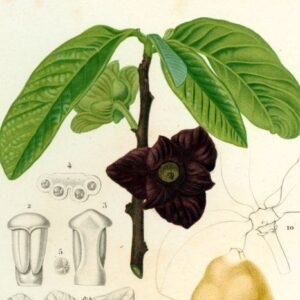
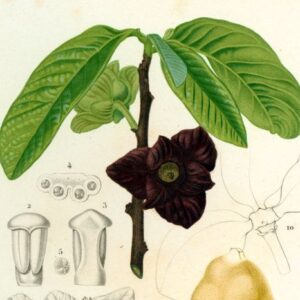
Pawpaw trees
Pawpaw trees
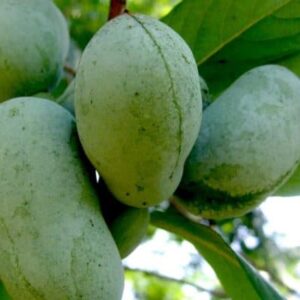
Georgia pawpaw tree, self-fertile with aromatic 200–400 g fruits, few seeds and a grouped harvest in September.
Pawpaw trees
Pawpaw trees
Pawpaw trees
Pawpaw trees
Pawpaw trees
Susquehanna pawpaw tree, with large, very sweet aromatic fruits, few seeds and harvest from late September to mid-October.
Can American pawpaw produce fruit in a cool European climate?
American pawpaw, Asimina triloba, is the only widely cultivated winter-hardy member of a botanical family otherwise associated principally with tropical and subtropical plants.
Despite its exotic-looking leaves and custard-like fruit, a dormant and established pawpaw tree can tolerate winters considerably colder than those experienced across much of northern and western Europe.
Winter survival is therefore not normally the principal difficulty.
Reliable fruit production depends more on the length and warmth of the growing season, successful pollination and careful establishment of the young tree.
Differences in ripening season between cultivars are substantial.
A late cultivar can form large fruit that remains firm, green and weakly flavoured when autumn temperatures decline, while an earlier cultivar reaches complete maturity in the same garden.
For northern, maritime, elevated or otherwise cool regions, choose early or mid-season cultivars already proven under reasonably similar conditions.
Actual ripening date is normally more important than the maximum fruit size advertised for the variety.
American pawpaw is not papaya
The name pawpaw can cause confusion because it is also used for papaya, Carica papaya, in several English-speaking countries.
The fruit trees offered in this category are American pawpaws belonging to the species Asimina triloba.
They are deciduous trees native to eastern North America and require a genuine winter dormancy.
Papaya is a frost-sensitive tropical plant with completely different growing requirements.
The American pawpaw is also sometimes called the Indiana banana, prairie banana or custard apple, although the latter name is shared with several other fruits belonging to the Annonaceae family.
Choose a grafted cultivar rather than an unselected seedling
A pawpaw grown from seed is a new genetic individual and does not reproduce the characteristics of the fruit from which the seed was collected.
Seedling fruit may be excellent, but it may also remain small, contain a large proportion of seeds, ripen too late or possess an unpleasant aftertaste.
The tree also normally remains juvenile for longer before its first meaningful crop can be assessed.
A grafted pawpaw reproduces a selected cultivar accurately.
Its approximate ripening period, flavour profile, average fruit size and proportion of edible flesh are therefore much more predictable.
A grafted tree can also begin flowering and cropping several years before an ordinary seedling.
For dependable fruit quality, two different grafted cultivars are generally a safer choice than two unidentified seedlings.
Early ripening and early cropping are not the same characteristic
Two forms of earliness are frequently confused.
An early-ripening cultivar produces mature fruit relatively early within the harvest season.
A tree described as early to bear begins flowering and cropping at a comparatively young age.
In a cool climate, fruit maturity is usually the more important characteristic.
A cultivar may begin flowering only a few years after planting but remain unsuitable if its fruit requires a long and warm autumn to develop sufficient sugar and aroma.
Harvest dates recorded in a warmer region should not be transferred directly to northern Europe.
The same cultivar can ripen several weeks later where summer temperatures and accumulated heat are lower.
Useful characteristics when comparing pawpaw cultivars
Ripening season
Early and mid-season cultivars provide greater security in cool European climates.
Late varieties should generally be reserved for warm, sunny and sheltered positions with a long frost-free autumn.
Fruit flavour
Pawpaw flavour varies considerably between cultivars and stages of maturity.
The flesh may suggest banana, mango, pineapple, melon, vanilla or custard, sometimes with stronger floral, resinous or slightly bitter notes.
A cultivar described only as sweet may be less interesting than one combining sweetness with a distinct and balanced aroma.
Flesh texture
Some pawpaws possess firm and dense flesh, while others are exceptionally creamy, soft or almost melting when fully ripe.
Texture affects both fresh eating and the ease with which the pulp can be separated from the skin and seeds.
Seed proportion
Total fruit weight does not reveal the quantity of edible flesh.
A very large pawpaw containing numerous large seeds may provide less useful pulp than a slightly smaller cultivar with a low seed-to-pulp ratio.
Fruit size
Large fruit is convenient to prepare and visually impressive, but should be compared with maturity date, seed proportion and flavour.
Fruit size also depends on pollination, crop load, water supply and the vigour of the supporting branch.
Number of fruit per cluster
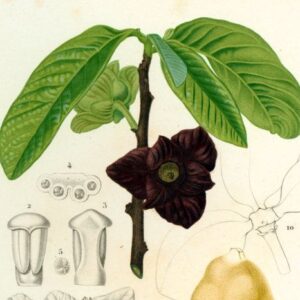
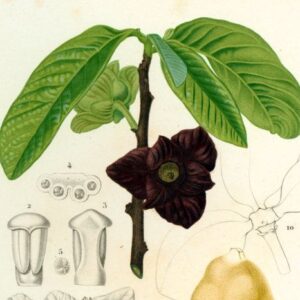
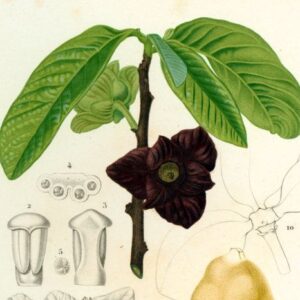
One flower contains several ovaries and can develop into a cluster of multiple fruit.
Very large clusters restrict individual fruit size and place considerable weight on slender branches.
A cultivar producing fewer fruit per cluster can sometimes be easier to manage.
Length of the harvest period
Fruit on one tree does not necessarily ripen simultaneously.
A progressive harvest extends fresh consumption but requires several picking rounds and makes commercial handling more difficult.
Plant two genetically different pawpaw cultivars
American pawpaw is generally self-incompatible or only weakly self-fertile.
For regular fruit set, plant at least two genetically different cultivars whose flowering periods overlap.
Two trees grafted with the same named cultivar are clones and do not form a genuine cross-pollinating pair.
Several shoots arising from the roots of one tree are also genetically identical and cannot replace a second genotype.
‘Sunflower’ is frequently described as self-fertile, but this reputation should not be used as a reason to plant it deliberately alone.
Even where some self-pollination occurs, fruit set is generally more dependable when compatible pollen from another cultivar is available.
For a small garden, two distinct grafted varieties remain the safest arrangement.
They can be planted several metres apart and do not need to stand immediately beside one another.
Pawpaw flowers are designed to favour cross-pollination
Pawpaw flowers are protogynous.
The female parts become receptive before pollen from the same flower is released.
By the time the anthers reach their mature male stage, the stigma of that flower is generally no longer at its most receptive.
This sequence reduces self-pollination and favours the movement of pollen between different flowers and trees.
Flowering can continue over an extended period, with flowers at female and male stages present on different parts of the trees.
Successful pollination depends on enough overlap between two cultivars and on pollen being transferred from a flower in its male stage to another flower in its female stage.
Flies and beetles pollinate pawpaw flowers
Pawpaw flowers are visited principally by small flies, beetles and other insects attracted to their dark colour and distinctive scent.
Honeybees are not normally the principal pollinators.
Natural insect activity can be irregular, particularly in an isolated garden or during cold, wet and windy flowering conditions.
Two compatible cultivars can therefore flower heavily without producing a substantial crop when too little pollen is moved between them.
Before concluding that the cultivars are incompatible, observe whether insects visit the flowers and whether male and female flower stages overlap.
Hand pollination can be used as a diagnostic and practical method where natural fruit set remains poor.
How can pawpaw flowers be hand-pollinated?
Collect pollen from a flower in its male stage, when the mass of anthers has become brown, loose and capable of releasing yellow pollen.
Transfer this pollen with a small soft brush to the green and glossy stigmas of a flower belonging to another cultivar and still in its female stage.
It is not necessary to pollinate every flower.
A small number of well-positioned flowers on each principal branch can produce a substantial family crop.
Excessively systematic hand pollination can create clusters containing too many fruit.
The resulting weight bends young branches and can cause breakage.
Hand pollination is therefore best used selectively rather than as a routine attempt to fertilise every flower on the tree.
Thin heavily set fruit clusters
One pawpaw flower can form a cluster containing several fruit.
Where five, six or more fruit remain together, individual size is reduced and the branch is subjected to considerable mechanical stress.
On a young tree or after successful hand pollination, reduce exceptionally large clusters to one or two well-positioned fruit.
Retain the best-formed fruit with enough space to expand and remove damaged, misshapen and distinctly smaller fruit first.
Thinning improves final size and reduces the risk of a recently planted tree devoting excessive resources to its first crop.
During the early years, building a durable root system and branch framework is more important than retaining the maximum possible number of fruit.
Temporary shade for a young tree, sunlight for an adult tree
American pawpaw grows naturally as an understorey tree, which sometimes leads gardeners to plant it permanently in deep shade.
It can survive and produce attractive foliage in shade, but flowering and fruit maturity are generally much better in a sunny position.
Adult trees require good light to form flower buds, support fruit development and complete ripening.
A newly planted pawpaw is more sensitive to intense sunlight because its root system is not yet able to replace water lost through the large leaves.
Strong afternoon sun can scorch young foliage and increase transplant stress during the first growing season.
Plant the tree in its permanent sunny position and provide temporary light shade during establishment.
A shade cloth, slatted crate or screen placed on the afternoon-sun side can be removed once the tree has developed a stronger root system.
Permanent deep shade should not be used as the long-term solution.
Establishment is the most delicate stage
Pawpaw develops a deep primary root accompanied by fleshy and brittle secondary roots with relatively few fine root hairs.
It therefore tolerates disturbance of the root system poorly.
A container-grown plant transplanted with its root ball intact generally establishes more reliably than a bare-root tree or a sucker dug from beside a mature pawpaw.
Do not break apart the root ball or attempt to straighten every root aggressively.
Prepare a planting hole broad enough to receive the root system without compression while keeping the root collar at its natural level.
Shoot growth can remain limited during the first or second season while the tree invests in root development.
This initial slowness is not necessarily a sign of failure.
Once properly established, annual shoot growth can increase substantially.
Planting a container-grown pawpaw tree
Spring is generally the safest planting period in cold and moisture-retentive European regions.
It allows the root system a complete growing season in which to establish before winter.
Where the plant has already produced leaves under protection, wait until the principal late-frost risk has passed or provide temporary protection.
Prepare a broad area of finely cultivated soil after the ground has drained sufficiently and begun warming.
Remove couch grass, bindweed and other perennial weeds carefully before planting.
Water the root ball before removing the container and handle it without breaking the fleshy roots.
Position the surface of the root ball approximately level with the surrounding soil.
Backfill principally with the original soil rather than enclosing the plant within a narrow pocket of potting compost.
Water thoroughly after planting and provide temporary support where wind could move the root ball.
A deep, moisture-retentive but aerated soil
Pawpaw prefers deep, fertile and moisture-retentive soil with a slightly acidic to approximately neutral reaction.
Its natural habitats frequently provide a reliable supply of moisture throughout the growing season.
Moist soil should not be confused with permanently saturated ground.
Pawpaw roots suffer where they remain without oxygen for extended periods.
In heavy soil, improve drainage across the wider planting area or plant slightly above the surrounding level.
Filling one deep hole with loose compost can create a basin in which water remains around the root ball.
A mulch applied to already moist soil reduces evaporation and grass competition.
Keep the material several centimetres away from the trunk so that the bark remains aerated.
Pawpaw trees should not be allowed to dry out
Despite excellent winter hardiness, pawpaw is not particularly drought tolerant.
Its large leaves lose a substantial quantity of water, while the root system of a young plant explores only a limited volume of soil.
Regular watering is essential during at least the first two growing seasons whenever rainfall is insufficient.
The soil should remain evenly moist at depth without being continuously saturated.
Water shortage restricts shoot extension and delays establishment.
On an older fruiting tree, drought during fruit enlargement reduces size and can cause premature fruit drop.
Deep and reasonably spaced applications are more useful than small daily quantities wetting only the soil surface.
Maintain a broad weed-free area because grass competes strongly for water around a young pawpaw.
Rootstocks and suckers
Named pawpaw cultivars are generally grafted onto seedling rootstocks of Asimina triloba.
There is currently no widely standardised range of dwarfing, semi-vigorous and soil-specific pawpaw rootstocks comparable with those available for apples.
Seedling rootstocks are genetically variable and can influence vigour, anchorage and the tendency to produce root shoots.
Suckers can appear at some distance from the trunk.
On a grafted tree, these shoots normally belong to the seedling rootstock rather than the selected fruiting cultivar.
Remove them where a single-trunk tree is required or where they begin competing with the grafted crown.
A sucker arising from one root system is genetically identical to that rootstock and does not provide a second pollinating genotype.
Training and pruning a pawpaw tree
Pawpaw naturally forms a relatively small pyramidal tree with a central leader.
A central axis with well-spaced branches corresponds closely with its natural habit.
During the first years, remove competing leaders, very narrow forks and badly positioned branches while they remain small.
Retain enough foliage because severe pruning delays establishment and can stimulate vigorous vertical regrowth.
On an adult tree, pruning is generally limited to dead wood, crossing branches, rootstock suckers and growth that has become exceptionally low or obstructive.
Where a branch carries an excessive number of fruit, thinning the clusters is usually more useful than removing substantial amounts of fruiting wood.
A naturally robust fruit tree
Pawpaw generally suffers from relatively few serious pests and diseases in European gardens.
It does not normally require the level of plant-health intervention associated with highly susceptible peaches, apples or pears.
This general robustness does not mean that leaves and fruit remain perfectly clean under every condition.
Prolonged humidity can encourage various leaf spots.
Sooty blotch, flyspeck-like marks and other superficial blemishes can also develop on the fruit skin.
Some remain cosmetic, while deeper cracks and lesions can encourage secondary rots.
A bright and aerated position, adequate spacing and removal of severely affected fruit or branches reduce favourable conditions.
In gardens, poor establishment, drought, lack of a second genotype and excessively late cultivars are much more frequent causes of failure than destructive disease.
Pawpaw harvest season
Early cultivars can mature several weeks before the latest varieties.
Actual harvest dates vary according to cultivar, country, exposure, crop load, soil moisture and accumulated summer temperatures.
The calendar is intended principally for comparing cultivars rather than promising one fixed date for every garden.
Harvest periods are indicative and may vary according to the region, exposure, rootstock and the season’s weather conditions.
How can a ripe pawpaw be recognised?
Skin colour alone is not a reliable indicator because many cultivars remain predominantly green when ready to eat.
A ripe pawpaw begins to yield slightly under gentle pressure and develops a pronounced fruity aroma.
The skin may become paler or develop several small brown marks.
The texture of the fruit becomes similar to that of a ripe avocado, peach or custard-filled fruit according to the cultivar.
A completely hard and very immature fruit does not necessarily develop full quality after picking.
Wait for the first signs of softening, then harvest carefully before the fruit falls and becomes bruised.
Fruit within one cluster and on different parts of the tree does not ripen simultaneously.
Several selective picking rounds are therefore normally required.
Pawpaw fruit has an exceptionally short storage life
Ripe pawpaw is extremely delicate.
Its thin skin bruises readily and the soft flesh deteriorates rapidly after harvest.
A fully ripe fruit keeps for only a very short period at room temperature.
Refrigeration can provide several additional days, but pawpaw remains a fruit intended principally for rapid local consumption.
Fruit harvested slightly before complete softness can be refrigerated and then allowed to finish ripening at room temperature.
Inspect it regularly and avoid stacking fruit in deep containers.
For longer preservation, remove the skin and seeds and freeze the pulp.
The pulp is particularly suitable for ice cream, sorbet, chilled desserts, smoothies and preparations involving little heat.
Prolonged cooking can weaken or alter its most delicate aromas.
Which pawpaw cultivar should you choose?
For a cool European climate
Choose an early or mid-season cultivar with documented performance in a reasonably comparable climate.
Do not choose primarily according to maximum fruit weight.
For the greatest proportion of edible flesh
Compare seed-to-pulp ratio rather than fruit size alone.
A moderately sized cultivar with few seeds may provide more usable flesh than an exceptionally large but heavily seeded fruit.
For eating directly
Prioritise a balanced flavour, creamy texture and maturity period suited to the garden.
The most productive cultivar is not automatically the most aromatic.
For planting only one position
Plant two different cultivars within the same general area rather than relying on a variety described as partly self-fertile.
For a young garden
Choose container-grown grafted plants, preserve the root balls during planting and provide temporary shade followed by full light after establishment.
For processing or freezing
Choose a productive cultivar with abundant flesh, relatively few seeds and a flavour that remains attractive after freezing.
Frequently asked questions about pawpaw trees
Are American pawpaw and papaya the same fruit?
No. American pawpaw is the winter-hardy deciduous species Asimina triloba. Papaya is the frost-sensitive tropical species Carica papaya.
Are two pawpaw trees required?
Yes in the great majority of situations. Plant two genetically different cultivars whose flowering periods overlap.
Will two trees of the same cultivar pollinate one another?
No. Grafted trees carrying the same cultivar are genetically identical clones and do not form a dependable cross-pollinating pair.
Is ‘Sunflower’ completely self-fertile?
It may produce some fruit alone, but cross-pollination with another cultivar normally provides a more regular and substantial crop.
Why does my pawpaw flower without producing fruit?
Common causes include lack of a second genotype, poor overlap between flower stages, low activity of flies and beetles, frost or a tree that is still too young.
Can pawpaw flowers be pollinated by hand?
Yes. Transfer mature pollen from a flower in its male stage to the receptive stigmas of a female-stage flower belonging to another cultivar.
Should every flower be hand-pollinated?
No. Pollinating too many flowers can create excessively heavy clusters. A limited number of well-positioned flowers is normally sufficient.
Should pawpaw fruit be thinned?
Thin exceptionally large clusters, especially on young trees. Reducing them to one or two fruit improves size and reduces branch breakage.
Should a pawpaw be planted in shade?
A young plant benefits from temporary light shade during establishment, but an adult tree normally flowers and ripens fruit better in full sun.
Why is my young pawpaw growing slowly?
Initial growth is often devoted to root establishment. Root disturbance, drought, grass competition and excessive sunlight on a newly planted tree can prolong this phase.
Can a pawpaw be transplanted easily?
No. Its fleshy and brittle roots tolerate disturbance poorly. A container-grown plant moved with its root ball intact is the safest option.
Can a sucker be dug up and replanted?
Success is often poor because suckers may remain attached to a distant root and possess few independent roots.
Does a root sucker provide a second pollinator?
No. A sucker belongs to the same rootstock genotype and is not genetically independent from the tree that produced it.
Can pawpaw grow in clay soil?
Yes, where the clay is deep, structured and adequately drained. Permanent winter saturation and root suffocation must be avoided.
Does pawpaw tolerate drought?
Poorly when young. Regular moisture is essential during establishment and remains important during fruit enlargement.
How long does a grafted pawpaw take to fruit?
A grafted cultivar can begin flowering several years after planting, although the delay depends strongly on establishment, growth and pollination.
Why do my pawpaw fruit remain hard?
The cultivar may be too late for the climate, the position may lack sunlight or warmth, or the tree may carry an excessive crop.
How can a ripe pawpaw be recognised?
The fruit becomes slightly soft under gentle pressure and develops a strong aroma. Skin colour alone is not sufficient because many ripe cultivars remain green.
Do pawpaws ripen after picking?
Physiologically mature fruit can continue softening after harvest. Fruit picked completely hard and immature may never develop full flavour.
How long does ripe pawpaw keep?
Only a few days. Refrigeration slows deterioration, but the fruit should still be eaten or processed quickly.
Can pawpaw pulp be frozen?
Yes. Remove the skin and seeds before freezing. The pulp is well suited to chilled desserts, ice cream, sorbet and smoothies.
Are pawpaw seeds edible?
No. The seeds and skin should not be eaten. Use only the ripe flesh.
Does pawpaw require heavy pruning?
No. Form a balanced central leader, remove competing or damaged branches and keep later pruning light.
How large does a pawpaw tree become?
Size depends on cultivar, rootstock and soil, but pawpaw normally forms a small to medium-sized tree rather than a dwarf shrub.