Pre-orders are open No payment today. Stock will be checked during the inventory in early August, then you will receive a payment link for the available trees.
Choosing the right persimmon tree

Persimmons do not all ripen or taste in the same way. Some remain astringent until completely soft, while others can be eaten firm. In cooler European climates, harvest season and rootstock are often as important as the winter hardiness of the tree.

View harvest calendars Choose a rootstock

Persimmon trees

Persimmon trees

Chuchupaka

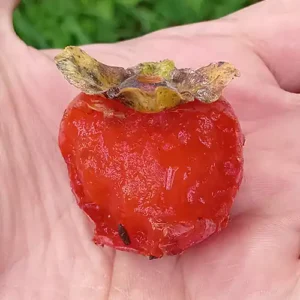
Chuchupaka persimmon tree, a very early hardy astringent variety with sweet, date-like fruit ripening from late September.
From 38,00 

Persimmon trees

Čibača

An early hardy astringent persimmon variety producing attractive rounded fruit similar to Tipo.
From 38,00 

Persimmon trees

Diospyros virginiana

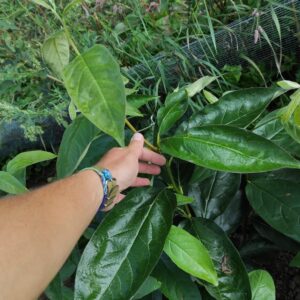
Diospyros virginiana rootstock, a vigorous American persimmon for kaki grafting in cold regions, with excellent cold hardiness.
From 8,00 

Persimmon trees

Farmacista Cicilia

A dwarf weeping persimmon variety producing sweet astringent fruit, ideal for small gardens.
From 38,00 

Persimmon trees

Fuyu

Fuyu is one of the most widely-grown self-fertile non-astringent Asian or Japanese persimmons.
From 38,00 

Persimmon trees

Hana Fuyu

An early non-astringent persimmon variety producing sweet fruit that can be eaten firm and crisp.
From 38,00 

Persimmon trees

Hiratanenashi

A late astringent Japanese persimmon variety producing sweet seedless fruit, excellent for drying and hoshigaki.
From 38,00 

Persimmon trees

Ineho

From 38,00 

Persimmon trees

Jiro

A popular self-fertile non-astringent Asian persimmon, with a bright orange skin and sweet soft flesh.
From 38,00 

Persimmon trees

Kasandra

An early-ripening modern hybrid persimmon, suitable for northern climates.
From 38,00 

Persimmon trees

Lehman Delight

An American persimmon with large fruits, one of the best for colder climates.
From 38,00 

Persimmon trees

Mecta

A compact hardy astringent persimmon variety producing sweet rounded fruit from October.
From 38,00 

Persimmon trees

Mikatani Gosho

Mikatani Gosho persimmon tree, a hardy early astringent variety with large sweet fruit, ripening gradually in October.

From 38,00 

Persimmon trees

Nikita’s Gift

An early-ripening modern hybrid persimmon, a good choice for northern climates.
From 38,00 

Persimmon trees

Pakistan Seedless

An early hardy astringent persimmon variety, regarded as reliable in cooler northern climates.
From 38,00 

Persimmon trees

Russian Beauty

Russian Beauty is a cold-hardy hybrid persimmon with large orange fruits.
From 38,00 

Persimmon trees

SAA Pieper

A very hardy American persimmon variety producing many small fruit with a distinctive rum-like aroma.
From 38,00 

Persimmon trees

Saijo

Saijo persimmon tree, a very early astringent kaki with soft, melting flesh, ripening from September to October.

From 38,00 

Persimmon trees

Sheng

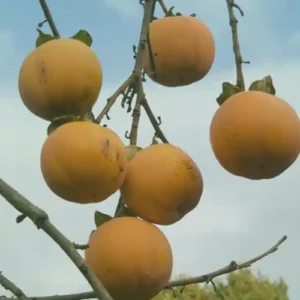
Sheng persimmon tree, a rare early astringent kaki with very fruity aroma, ripening from October.
From 38,00 

Persimmon trees

Tam Kam

Tam Kam persimmon tree, a rare early non-astringent kaki with sweet fruity flavour, ripening from October.

From 38,00 

Persimmon trees

Tone Wase

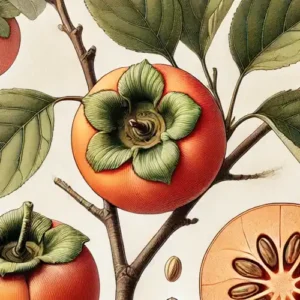
Tone Wase persimmon tree, a rare early astringent variety with sweet, full-flavoured fruit ripening from October.
From 38,00 

Persimmon trees

Zengi Maru

An early hardy persimmon variety producing Fuyu-like fruit, to be eaten fully soft, dried or after astringency removal.
From 38,00 
Autumn 2026

Persimmon trees

Diospyros lotus

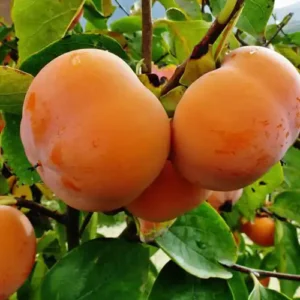
Diospyros lotus rootstock, a hardy seedling rootstock for kaki, persimmon and kaki × virginiana hybrids.
From 5,00 

Persimmon trees

Early Jewel

A very early American persimmon variety producing sweet aromatic fruit, ideal for colder climates and short seasons.
From 28,00 

How should you choose a persimmon tree?

A persimmon tree should not be chosen solely according to fruit size, colour or the lowest winter temperature quoted for the cultivar.

It is equally important to understand its astringency type, harvest season, ability to produce without pollination, mature tree size and compatibility with the rootstock.

Two persimmons that appear almost identical can require completely different eating stages.

One may be eaten firm and crisp, while another must become exceptionally soft and almost translucent before its soluble tannins cease to produce a dry and unpleasant sensation in the mouth.

In cool European climates, earliness is often the first selection criterion.

A tree may survive severe winter cold but still fail to produce satisfactory fruit because the cultivar requires a longer and warmer autumn than the site can provide.

The complete combination of cultivar, rootstock, exposure and local growing season should therefore be considered rather than treating every persimmon tree as interchangeable.

Asian, American or hybrid persimmon?

Asian persimmon, Diospyros kaki

Asian persimmons, also widely called kaki fruit in Europe, generally produce the largest fruit.

The species includes traditional astringent cultivars that must become very soft and non-astringent cultivars that can be eaten while the flesh remains firm.

Winter hardiness varies considerably between cultivars.

An established trunk may withstand a substantial winter frost while a young tree, graft union or shoot that has not matured properly before winter suffers damage at a much higher temperature.

In cool climates, fruit maturity is frequently a greater limitation than winter cold.

Late cultivars may remain yellow, firm and low in sugar when temperatures decline too quickly during autumn.

American persimmon, Diospyros virginiana

The American persimmon is considerably more winter hardy than most Asian persimmons.

Its fruit is generally smaller, but selected cultivars can be exceptionally sweet, aromatic and well suited to cold climates.

Most American persimmons remain strongly astringent until completely ripe.

At full maturity, the flesh becomes very soft, rich and concentrated, with flavours that may suggest dates, caramel, dried apricots, honey, spice or rum.

Early American cultivars can be especially useful where late Asian persimmons fail to complete ripening reliably.

Some American cultivars require pollination, while others are capable of producing seedless fruit without a male tree. This should be checked for each named cultivar.

Asian–American hybrid persimmons

Interspecific hybrids combine genetic material from Diospyros kaki and Diospyros virginiana.

The aim is generally to combine the fruit size and quality of Asian persimmons with the winter hardiness of the American species.

The characteristics of individual hybrids vary substantially.

Some resemble a large-fruited American persimmon, while others are closer to Asian cultivars in fruit size, flesh texture and appearance.

American ancestry does not automatically guarantee early ripening.

Winter hardiness and the date at which the fruit reaches maturity must be assessed separately for every hybrid.

An astringent persimmon is not simply an unripe non-astringent persimmon

Persimmon astringency is caused principally by soluble tannins that react with proteins in the saliva.

The result is an immediate dry, rough and puckering sensation throughout the mouth.

In an astringent cultivar, orange skin does not prove that the fruit is ready to eat.

A persimmon can be deeply coloured, relatively sweet and still remain intensely astringent.

During normal ripening or a controlled deastringency process, the soluble tannins become insoluble and no longer produce the same sensation.

In traditional astringent cultivars, this transformation is usually associated with a considerable softening of the flesh.

The fruit may eventually become almost gelatinous while remaining perfectly healthy and exceptionally sweet.

This soft texture is normal for many cultivars and should not automatically be mistaken for decay.

Persimmons do not need frost before they can be eaten

Frost is not required to remove persimmon astringency.

The belief probably developed because many traditional cultivars ripen late in autumn, after the first cold nights have occurred.

A mature astringent fruit can soften and lose its astringency on the tree or after harvest without being frozen.

A severe frost may instead damage the skin and cells of the fruit.

Frozen fruit can become watery, translucent, irregularly brown or susceptible to rapid decay after thawing.

Cold weather and natural ripening should therefore not be confused with actual freezing injury.

The four persimmon groups based on astringency and pollination

The technical classification of Asian persimmons distinguishes four main groups.

These groups explain why seed formation changes the colour and eating quality of some cultivars but has little effect on others.

PCNA: Pollination-Constant Non-Astringent

PCNA cultivars lose their astringency naturally while the flesh remains firm.

They can therefore be eaten crisp or allowed to soften further according to personal preference.

The presence or absence of seeds does not fundamentally change their astringency type.

‘Fuyu’ and ‘Jiro’ are well-known examples of this group.

The principal advantage is their convenient eating texture and greater tolerance of handling.

They must still reach sufficient maturity. A PCNA fruit harvested too early may be non-astringent and firm but lack sugar, colour and aroma.

PCA: Pollination-Constant Astringent

PCA cultivars remain astringent while firm, whether or not seeds are present.

They must be allowed to soften completely or undergo an appropriate deastringency treatment before consumption.

Once ripe, their flesh can become exceptionally sweet, rich and creamy.

‘Hachiya’ and ‘Rojo Brillante’ belong to this group.

PCA cultivars frequently provide more intense flavour than many persimmons selected primarily for firm eating.

PVNA: Pollination-Variant Non-Astringent

In PVNA cultivars, seed formation causes the surrounding flesh to turn brown and lose its astringency.

This is commonly described as chocolate-coloured or cinnamon-coloured flesh.

A well-pollinated fruit containing enough seeds may become non-astringent while remaining firm.

A seedless fruit from the same tree can remain orange and astringent until it softens.

The effect depends on the number and distribution of the seeds.

One part of the fruit may become brown and sweet while another part remains orange and astringent.

PVA: Pollination-Variant Astringent

In PVA cultivars, pollination and seeds can cause some browning of the flesh.

This effect is normally insufficient to remove astringency from the complete fruit while it remains firm.

The persimmon must still soften or undergo deastringency before it can be eaten comfortably.

This group demonstrates why descriptions such as firm persimmon or apple persimmon are often too imprecise to explain the real behaviour of a cultivar.

“Apple persimmon” is a commercial description

An apple persimmon is not a hybrid between an apple and a persimmon and does not represent a separate botanical species.

The expression normally describes a non-astringent persimmon that can be eaten with firm flesh.

PCNA cultivars correspond most closely with this use.

Their flesh is nevertheless different from that of an apple: it is denser, more melting and becomes progressively softer as maturity advances.

A genetically astringent fruit treated professionally to remove astringency while still firm may also be sold as a firm-eating persimmon.

For the gardener, the PCNA, PCA, PVNA or PVA classification is therefore more informative than the general expression apple persimmon.

Earliness is essential in cooler European climates

Persimmon trees normally begin growth and flower relatively late, providing better protection from ordinary spring frost than almonds, apricots or peaches.

The fruit then requires a long growing period before reaching complete maturity.

In cool, maritime, northern or elevated regions, early and mid-season cultivars are normally the most reliable.

They have a greater chance of accumulating enough sugar, developing their mature colour and losing their astringency before strong autumn frosts.

A late cultivar may perform successfully in a warm urban garden, on a well-exposed slope or against a sunny wall.

The same cultivar may remain immature in an open, shaded or frost-prone position only a short distance away.

A warm microclimate can improve maturity but cannot transform an exceptionally late cultivar into a genuinely early one.

A mature persimmon can continue softening after picking, but fruit harvested far before physiological maturity may never develop its full sweetness and aroma.

Persimmon harvest season

Early American and hybrid persimmons can begin ripening substantially sooner than late Asian cultivars.

Actual harvest dates vary according to cultivar, country, exposure, rootstock, tree vigour, crop load and seasonal temperatures.

The calendar is intended principally for comparing cultivars rather than predicting one exact harvest date for every garden.

Available Available on backorder Currently unavailable

Harvest periods are indicative and may vary according to the region, exposure, rootstock and the season’s weather conditions.


Is a pollinating cultivar required?

Many cultivars of Diospyros kaki produce principally or exclusively female flowers.

They can nevertheless form fruit without fertilisation through parthenocarpy.

One tree can therefore often produce seedless persimmons without a male-flowering cultivar nearby.

The presence of pollen can improve fruit set and reduce part of the natural fruit drop in certain cultivars.

Pollination is not always desirable because it produces seeds and can alter flesh colour and astringency in PVNA and PVA cultivars.

For a PVNA cultivar, pollination may be required to obtain the characteristic brown, firm and non-astringent flesh.

For a PCNA cultivar, pollination may improve fruit retention but is not required to remove astringency.

The decision therefore depends on the objective: seedless fruit, improved fruit set or deliberate production of pollination-affected brown flesh.

Male and female flowering can vary between cultivars

Persimmon flowers may be female, male or occasionally bisexual, depending on species and cultivar.

Some cultivars that normally produce female flowers can form a limited number of male flowers under particular conditions or on particular branches.

A cultivar described as a pollinator should be known to produce sufficient viable pollen during the flowering period of the principal cultivar.

Simply planting two persimmon cultivars does not guarantee pollination when both produce only female flowers.

For American persimmons, some cultivars require a separate male tree while others can form parthenocarpic fruit.

The flowering and fertility information must therefore be checked for each named cultivar rather than inferred solely from the species.

Why does a persimmon tree drop young fruit?

Persimmon trees naturally shed part of their young fruit after flowering and may experience another period of fruit drop during early summer.

Parthenocarpic seedless fruit is often more likely to fall than fruit containing seeds.

This helps explain why a cultivar capable of cropping alone may retain fruit more regularly when compatible pollen is present.

Excessively vigorous growth, poor light within the crown, too much nitrogen, drought and waterlogged soil can increase fruit drop.

A sudden interruption of water supply during early fruit development is particularly stressful.

Young grafted trees may flower before their branch structure and root system are capable of supporting a complete crop.

Heavy fruit drop during the first productive years does not therefore prove that the cultivar is defective.

Thin heavy crops to prevent branch breakage

Persimmon wood can be brittle and mature fruit becomes increasingly heavy as harvest approaches.

A branch carrying several large persimmons near its end can bend severely or break.

After the principal natural fruit drop, remove malformed, damaged or tightly grouped fruit and persimmons carried by weak shoots.

Allow the remaining fruit enough space to develop without pressing continuously against one another.

Thinning improves final size, colour and airflow around the crop.

It also reduces the risk that an exceptionally heavy crop will be followed by a year with very few flowers.

On a young tree, retain a modest and evenly distributed crop rather than allowing the first fruiting to deform the developing framework permanently.

Which rootstock should be chosen for a persimmon?

The rootstock influences root hardiness, vigour, soil adaptation, anchorage, establishment and the long-term compatibility of the graft.

It does not determine every characteristic of the complete tree.

The grafted cultivar retains its own shoot hardiness, fruit maturity date and astringency type.

A very hardy rootstock cannot make the fruit of an exceptionally late cultivar mature several weeks earlier.

Diospyros lotus

Diospyros lotus, the date-plum, is one of the traditional rootstocks used for Asian persimmons in Europe and Mediterranean regions.

It normally provides useful vigour and performs well in drained soils.

It also possesses reasonable tolerance of winter cold and summer drought once established.

Seedling rootstocks remain genetically variable.

The principal limitation is cultivar compatibility.

Some Asian persimmons, including several PCNA cultivars, can show weak growth, poor graft affinity or delayed incompatibility on Diospyros lotus.

A graft that begins growing normally does not always prove that the combination will remain healthy for several decades.

Diospyros virginiana

Diospyros virginiana is particularly valuable for cold climates and a broad range of soil conditions.

Its root system generally tolerates cool and moisture-retentive ground more successfully than Diospyros lotus, although prolonged waterlogging remains undesirable.

It normally provides useful compatibility with many Asian persimmons and interspecific hybrids.

It can also support strong growth and a long-lived tree.

Seedlings are variable, so two trees of the same cultivar may differ in vigour, time to first cropping and productivity when their rootstocks are genetically different.

Diospyros virginiana can produce shoots from its roots.

These suckers belong to the rootstock and should be removed when only the grafted cultivar is required.

Diospyros kaki seedlings

A rootstock belonging to the same species normally offers excellent compatibility with Asian persimmon cultivars.

It is used principally in regions with relatively favourable winters and suitable soils.

Its root hardiness and adaptation to cold or difficult ground may be less suitable than those of Diospyros virginiana for northern European conditions.

As with other seedling rootstocks, individual trees remain genetically variable.

Read our guide to fruit-tree rootstocks

Which soil is suitable for persimmon trees?

Persimmon trees adapt to several soil types but produce best in deep, fertile and adequately drained ground that retains useful moisture during summer.

Serious drought during fruit growth increases fruit drop and restricts final size.

Continuously saturated soil deprives the roots of oxygen and can cause progressive decline.

Deep structured clay can be suitable when water can move through it and the chosen rootstock is adapted to the conditions.

A compact hollow in which water remains visible for prolonged periods is unsuitable.

Diospyros virginiana is generally the more versatile rootstock for cool or moisture-retentive soils.

Diospyros lotus performs particularly well in drained ground and warmer conditions.

Rootstock choice extends the range of possible soils but cannot compensate for permanent root suffocation.

Choose a warm, sunny position

Persimmon trees require abundant light to ripen fruit and mature their current-season shoots before winter.

Choose a sunny position with a southern or western aspect where possible.

A warm wall, sheltered courtyard or well-exposed slope can be valuable for Asian cultivars in cool regions.

Avoid deep shade, enclosed frost pockets and the bottom of slopes where cold air accumulates.

Some shelter from cold winds is useful, especially for young trees, but the position should retain enough airflow for foliage and fruit to dry after rain.

The mature dimensions depend on cultivar, rootstock, soil and pruning.

A vigorous persimmon on Diospyros virginiana requires substantially more space than the small nursery tree suggests.

Planting a young persimmon tree

Dormant bare-root trees should be planted between leaf fall and early spring whenever the ground is neither frozen nor waterlogged.

In cold or wet regions, late-winter or early-spring planting may be safer than leaving a newly planted tree in saturated soil throughout winter.

Container-grown persimmons that have already begun producing leaves are considerably more vulnerable to frost than dormant established trees.

Plant actively growing trees after the principal frost risk has passed or provide temporary protection during cold nights.

Prepare a broad area of soil after it has drained sufficiently and developed a fine workable structure.

Remove couch grass, bindweed, docks and other perennial weeds before planting.

Do not create a narrow hole filled entirely with potting compost or fresh manure.

Backfill mainly with the original soil, improved across a broad area with mature compost where necessary.

Keep the graft union clearly above the final soil level.

Water thoroughly after planting and support the tree with a suitable stake where wind movement could damage the developing roots.

Water throughout the first growing season

A young persimmon requires regular water while its root system is establishing.

Watering should not stop several weeks after planting.

A tree that begins growing successfully during spring may still suffer severe stress during its first dry summer.

Apply enough water to moisten the developing root zone rather than wetting only the soil surface.

Allow air to return to the soil between applications and adjust frequency according to weather and soil texture.

Maintain a broad weed-free area because dense grass competes strongly with a young tree for water.

An organic mulch reduces evaporation but should not remain piled against the trunk or graft union.

How should a persimmon tree be trained?

A persimmon can be trained with a central leader and several well-spaced main branches.

This creates a strong framework while allowing light to reach the interior of the crown.

Correct narrow branch angles while the tree is young because the increasing weight of the fruit can later split weak forks.

Remove competing leaders and badly positioned shoots before their diameter becomes excessive.

Do not raise the crown too rapidly.

Temporary lower branches help strengthen the trunk and can be removed progressively once the main framework has developed.

Fruit may require support where a young branch is carrying an unexpectedly heavy crop.

Which wood carries persimmon fruit?

Persimmons are carried on current-season shoots that develop from buds formed on wood produced during the previous growing season.

Removing a large proportion of this one-year-old wood therefore reduces the number of shoots capable of flowering and fruiting.

The tree must maintain a regular supply of healthy young growth without becoming excessively vigorous.

Fruit is often concentrated towards the outer parts of the crown where the shoots receive the most light.

A dense and shaded tree gradually becomes less productive within its centre and carries increasingly heavy fruit loads at the ends of long branches.

How should an adult persimmon be pruned?

Pruning should remain relatively light once the framework has been established.

Remove dead or damaged wood, strongly crossing branches and excessive growth that prevents light from entering the crown.

Retain enough one-year-old wood to produce the following crop.

Severe cutting removes future fruiting positions and stimulates long vertical shoots.

This vegetative reaction can delay cropping and increase natural fruit drop.

A tree that has become too large should be reduced gradually over several seasons rather than topped abruptly.

Large wounds close slowly and can create weak points within the future framework.

Are persimmon trees resistant to disease?

Persimmons are generally robust fruit trees and usually require less protection than highly susceptible peaches or apples.

They are not completely free from disease.

Leaf spots and anthracnose

Several fungal diseases can cause leaf spots, lesions on young shoots and premature defoliation during humid weather.

Severe early leaf loss reduces sugar accumulation, fruit maturity and the reserves available for winter.

Maintain a well-lit crown, avoid excessive nitrogen and remove severely affected fallen leaves where disease is recurrent.

Fruit rots and Alternaria

Fruit rots can develop around wounds, cracks and damaged areas beneath the calyx.

Some infections remain hidden until the persimmon begins ripening or enters storage.

Handle fruit carefully and remove affected specimens promptly.

Crown gall

Crown gall can enter through wounds and produce rough swellings around the roots or base of the tree.

Diospyros lotus is considered more susceptible than certain alternative rootstocks.

Avoid damaging the root collar and do not plant visibly infected material.

Root decline

Yellowing, weak growth and branch dieback can result from waterlogged soil, compacted ground or planting too deeply.

These problems should not automatically be treated as nutrient deficiencies.

Check the root collar, drainage and planting depth before applying additional fertiliser.

In cooler climates, the most frequent difficulties are often insufficient fruit maturity, poor establishment, winter injury to inadequately matured shoots and physiological fruit drop rather than epidemic disease.

How should persimmons be harvested?

Cut persimmons with secateurs while retaining a short section of stalk and the complete calyx.

Pulling directly on the fruit can tear the skin, detach the calyx or break the fruiting shoot.

PCNA cultivars can be harvested once they have developed their characteristic mature colour while the flesh remains firm.

Their sugar and aroma normally continue improving while weather conditions allow them to remain on the tree.

Astringent cultivars can be picked when fully coloured and physiologically mature but still firm, then allowed to soften indoors.

They are ready to eat only when no dry or rough sensation remains.

A healthy astringent persimmon that has become almost liquid is not necessarily rotten.

This can represent the normal eating stage of a traditional cultivar.

Recognising frost damage on persimmon fruit

A light frost does not automatically destroy a mature fruit, but prolonged or severe freezing can damage its cells.

Symptoms include unnaturally translucent skin, watery areas, abnormal browning and rapid collapse after thawing.

This deterioration differs from the uniform, aromatic and gelatinous softening of a normally ripened astringent persimmon.

Where strong frost is forecast, harvesting mature fruit and allowing it to finish softening indoors is generally safer than leaving the crop exposed.

Fruit that remains far from physiological maturity before frost may not complete normal ripening after an early harvest.

Storing persimmons after harvest

Firm persimmons must be handled carefully because their skin marks easily and bruising encourages uneven softening and decay.

Astringent fruit can be stored while firm and brought into warmer conditions progressively.

This allows consumption to be spread over time rather than allowing the complete crop to become soft simultaneously.

Non-astringent cultivars generally store more successfully when harvested firm, although sensitivity to cold-storage disorders varies by cultivar.

Some persimmons develop internal browning, abnormal softness or reduced flavour after inappropriate storage.

For household use, a cool room combined with frequent inspection is often more useful than prolonged storage without monitoring.

Remove fruit showing mould, fermentation or leaking skin before it affects neighbouring persimmons.

Which persimmon should you choose?

For firm and crisp fruit

Choose a PCNA cultivar that ripens sufficiently early for the local climate.

Late Fuyu-type cultivars can be excellent in warm conditions but may remain low in sugar and colour in a cool position.

For exceptionally soft and sweet flesh

Choose an astringent PCA cultivar and allow the fruit to become completely soft before eating.

These cultivars often develop a richer and more concentrated flavour than many firm-eating persimmons.

For a cold climate

Choose an early American persimmon, a proven interspecific hybrid or a sufficiently early and hardy Asian cultivar.

A tree grafted onto Diospyros virginiana normally provides the safest root system for cold and variable European conditions.

For large seedless fruit

Choose a cultivar capable of reliable parthenocarpic cropping.

Avoid planting a male-flowering pollinator nearby when seed formation is undesirable and when pollination is not required for regular fruit set.

For brown “chocolate” flesh

Choose a PVNA cultivar and provide a compatible pollen-producing persimmon.

The degree of browning and loss of astringency will depend on the number of seeds formed within each fruit.

In every case, compare real harvest dates observed in a similar climate rather than relying only on general descriptions of hardiness.

A smaller early fruit that ripens fully is normally more valuable than an impressive late persimmon that remains pale, hard and weakly flavoured.

Frequently asked questions about persimmon trees

Are two persimmon trees required?

Not always. Many Asian persimmons produce seedless fruit without fertilisation. Pollination may improve fruit retention or alter the flesh of PVNA and PVA cultivars.

What is the difference between Asian and American persimmons?

Asian persimmons generally produce larger fruit and include both firm non-astringent and soft astringent cultivars. American persimmons are normally more winter hardy and produce smaller, highly aromatic fruit.

Are hybrid persimmons always earlier than Asian persimmons?

No. American ancestry generally improves hardiness, but every hybrid must still be assessed individually for its harvest season.

Why is my orange persimmon still astringent?

Colour alone does not remove astringency. An astringent cultivar must continue ripening until the soluble tannins become insoluble, normally as the flesh becomes very soft.

Does a persimmon need frost before it can be eaten?

No. Loss of astringency results from ripening and tannin transformation. Severe frost can damage rather than improve the fruit.

What does PCNA mean?

It means Pollination-Constant Non-Astringent. These cultivars become non-astringent while still firm, whether or not seeds are present.

What does PCA mean?

It means Pollination-Constant Astringent. The fruit remains astringent while firm and must soften or undergo deastringency before consumption.

Why do some persimmons have brown flesh?

In pollination-variant cultivars, seeds cause the surrounding flesh to turn brown and alter its astringency.

Is an apple persimmon a hybrid with an apple?

No. It is a commercial description generally applied to a persimmon that can be eaten while firm.

Why does my persimmon tree drop young fruit?

Some natural fruit drop is normal. It can be increased by lack of pollination, drought, waterlogging, excessive vigour, shade, too much nitrogen or the young age of the tree.

Should persimmons be thinned?

Thinning is useful when a branch carries many large fruit. It improves size and colour and reduces branch breakage and alternate bearing.

Which rootstock is best for a cold climate?

Diospyros virginiana is generally the safest option because of its winter hardiness and broad soil adaptation.

Why can Diospyros lotus be unsuitable?

It performs well in many drained soils, but some Asian cultivars, particularly certain PCNA varieties, can develop weak growth or delayed graft incompatibility.

Does a hardy rootstock make a late cultivar ripen earlier?

No. The rootstock can improve root hardiness and establishment, but the grafted cultivar retains its own fruit maturity period.

Can persimmons grow in clay soil?

Yes, where the clay remains structured and adequately drained. Diospyros virginiana is generally preferable for cool and moisture-retentive ground.

Can persimmons tolerate drought?

An established tree can tolerate moderate drought, but severe water shortage increases fruit drop and reduces fruit size and shoot growth.

When should a container-grown persimmon be planted?

Where the plant is already in leaf, spring planting after the principal frost risk is safest. Tender nursery growth is less hardy than dormant mature wood.

How should a persimmon tree be pruned?

Form a strong and well-spaced framework, then prune lightly. Preserve enough one-year-old wood to produce the following season’s fruiting shoots.

Why should a persimmon not be cut back severely?

Severe pruning removes future fruiting wood and stimulates vigorous shoots that delay cropping and can increase fruit drop.

How can a ripe non-astringent persimmon be recognised?

It should possess its mature colour, sufficient sweetness and the characteristic flavour of the cultivar. It may still remain firm.

How can a ripe astringent persimmon be recognised?

The flesh is normally exceptionally soft and no dry or puckering sensation remains when it is tasted.

Is an almost liquid persimmon rotten?

Not necessarily. This can be the normal eating stage of an astringent cultivar, provided that the fruit remains aromatic and has no mould or unpleasant fermentation smell.

Can persimmons ripen after picking?

Physiologically mature fruit can continue softening and losing astringency after harvest. Fruit picked far too early may never develop satisfactory sweetness and flavour.

How should persimmons be harvested?

Cut the stalk with secateurs and retain the calyx. Pulling directly on the fruit can tear its skin or break the fruiting shoot.

How can frost-damaged fruit be recognised?

Frost damage can produce translucent skin, watery flesh, irregular browning and rapid collapse after thawing.

Are persimmon trees susceptible to disease?

They are generally robust, although leaf spots, anthracnose, fruit rots, crown gall and root decline can occur. In cool climates, maturity and establishment problems are often more significant.