Almond trees
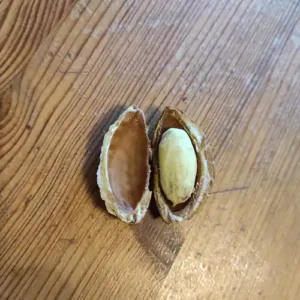
Avijor almond tree, a self-fertile, very productive sweet almond with late flowering and harvest in late September.

Almond trees
Almond trees
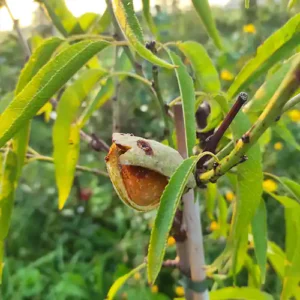
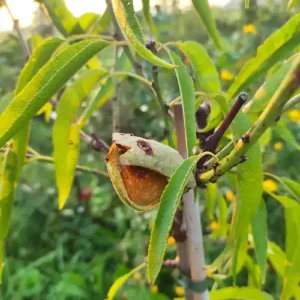
Palatina almond tree, a self-fertile sweet almond with soft shell, mild flavour, very late flowering and early harvest in late August.
Almond trees
Almond trees
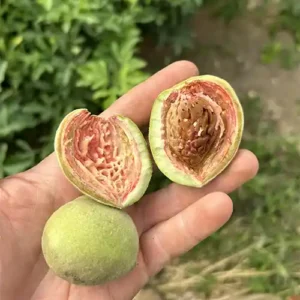
Tuono almond tree, a self-fertile Italian variety with excellent-flavoured almonds, late flowering and very early harvest.
Can almond trees be grown in cool European climates?
Almond trees are often presented as exclusively Mediterranean, but this is too restrictive. A dormant almond tree can tolerate the winters experienced across much of western and central Europe. The main limitations are usually the timing of flowering, weather during blossom, the ability of the nuts to ripen before autumn and the suitability of the root system for soils that may remain wet in winter.
Modern breeding has considerably expanded the areas in which almonds can be grown. Late- and very-late-flowering cultivars are now available, including self-fertile varieties capable of ripening sufficiently early for cooler regions.
These cultivars can produce reliable crops in areas where traditional early-flowering Mediterranean almonds would have been exposed repeatedly to spring frost.
In a sunny position and suitable soil, an almond tree may even prove easier to maintain than a peach tree. It requires less annual renewal of fruiting wood, the edible kernel is protected by a shell and several cultivars show good overall disease tolerance.
Almond blossom tolerates more frost than is often assumed
Early flowering remains the principal climatic risk associated with almond trees, but an open flower is not automatically destroyed as soon as the temperature falls slightly below freezing.
Trials involving numerous cultivars have found that, during full bloom, temperatures causing the loss of approximately half the flowers were often around −4 to −4.5°C. Initial damage may nevertheless appear at approximately −2.5 to −3.5°C, depending on the cultivar, duration of the frost, humidity and conditions before the cold night.
This helps explain why an almond tree may retain a crop after a frost that initially appeared worrying. Only part of the blossom needs to remain viable because the tree normally produces far more flowers than the number of nuts it can carry to maturity.
Cold tolerance decreases as development progresses. A closed flower bud generally tolerates more cold than an open flower, while newly formed young almonds become particularly vulnerable after petal fall.
A frost occurring shortly after fruit set can therefore cause greater crop loss than a similar temperature during the earlier stages of flowering.
Late flowering and frost-tolerant flowers are different characteristics
A late-flowering cultivar reduces frost risk by remaining dormant during some early cold events. This does not necessarily mean that its open flowers are more frost-resistant than those of an earlier cultivar.
Conversely, a cultivar may have relatively frost-tolerant flowers but open too early and consequently be exposed to a greater number of freezing nights.
The most useful profile for a cool region therefore combines late flowering with good inherent tolerance of the flower once it has opened.
Cultivar differences can be substantial. Comparative work has identified cultivars including ‘Vairo’, ‘Tarraco’, ‘Lauranne’, ‘Marinada’, ‘Tuono’ and ‘Penta’ as showing relatively good tolerance during full bloom under the conditions of the trials.
No cultivar can guarantee a crop after a severe frost. Flowering date, planting position, duration of the cold and the conditions preceding each event remain as important as the cultivar name.
Choose a cultivar that ripens sufficiently early
In northern and cooler regions, late flowering should not be considered without also examining the harvest date. A cultivar that flowers very late but also ripens very late may encounter insufficient autumn warmth and prolonged wet weather before the hull and shell have dried correctly.
The objective is to find a balance between flowering late enough to avoid part of the frost risk and ripening early enough for the outer hull to split and the shell to dry before autumn conditions deteriorate.
Modern breeding programmes have specifically targeted this combination: late or very late flowering, self-fertility and reasonably early maturity.
This profile is usually more valuable in cooler European climates than either an early-flowering traditional cultivar or an exceptionally late-ripening variety requiring a long, hot season.
View the almond harvest calendar
Harvest periods are indicative. Ripening varies according to the cultivar, region, exposure, rootstock, crop load and the temperatures accumulated during summer.
Are almond trees genuinely disease-resistant?
Almond trees should not be described as immune to disease, but some cultivars are notably robust. In a garden, they may appear considerably healthier than peach trees, particularly when they avoid the severe annual defoliation caused by peach leaf curl.
The fungus responsible for peach leaf curl can also infect almonds, but its importance varies with cultivar and conditions. The absence of symptoms in one season does not mean that the species is completely resistant.
In humid climates, the principal concerns include Monilinia blossom blight, bacterial or fungal cankers, shot hole disease, leaf spots and collar or root rots.
Disease behaviour must be assessed cultivar by cultivar. Some selections have been chosen partly for their tolerance of blossom blight or wood diseases, while others may crop well in dry climates but become more vulnerable during cold and rainy flowering periods.
Monilinia blossom blight during wet flowering weather
Monilinia fungi can infect almond blossom from the pink-bud stage until petal fall. Flowers turn brown and the short shoots carrying them may subsequently die back. Gum may appear near the base of the affected tissue.
Fully open flowers are particularly susceptible. A long flowering period accompanied by rain, fog or persistent humidity greatly increases infection risk.
Almond trees nevertheless have one advantage over peaches: the harvested product is a seed protected by a shell rather than a fleshy fruit that must remain intact and juicy until maturity.
Fruit rots are consequently less often the dominant difficulty for a gardener, although young nuts and their hulls can still be affected.
A well-lit and ventilated crown, removal of dead shoots and mummified fruit and moderate pruning all help reduce sources of infection.
Cankers, gummosis and wood diseases
Like other trees in the genus Prunus, an almond tree may respond to injury, infection or stress by producing gum. Gummosis is not itself a specific disease, but a symptom whose cause should be investigated.
Bacterial and fungal cankers exploit pruning wounds, frost cracks, broken branches and periods of cold, wet weather.
They may kill part of a shoot, a main branch or, more rarely, a young tree.
Correct formative pruning during the early years is preferable to severe cutting once the tree has become too large.
Diseased branches should be removed back to healthy wood during dry weather using clean tools.
Soil is often more important than winter temperature
Almond trees are naturally adapted to aerated soils that may be relatively poor, stony or calcareous. They are much less tolerant of oxygen-starved roots, particularly when grafted onto almond or peach-almond rootstocks.
In cool and wet regions, the greatest danger is therefore not always insufficient summer heat. Heavy soil that remains saturated throughout winter can cause more serious decline than a period of cold weather.
Avoid low areas where water collects and do not plant the tree in a deep hole filled with potting compost. A loose pocket surrounded by compact soil may retain water around the roots rather than improving drainage.
On a damp site, slightly raised planting, improvement of the general movement of water and selection of a suitable rootstock are more effective than attempting to drain only the bottom of the planting hole.
Which rootstock should be chosen for an almond tree?
The rootstock influences vigour, anchorage and tolerance of lime, drought, excess moisture and several soil-borne diseases.
Peach-almond hybrid rootstocks
Rootstocks such as GF 677 and Garnem generally produce vigorous trees and perform well in alkaline, calcareous and properly drained soils.
They are useful where iron chlorosis is a risk, but are poorly suited to ground that remains saturated for long periods.
Plum and myrobalan-related rootstocks
Rootstocks with Prunus cerasifera or other plum ancestry generally tolerate heavy soil, reduced oxygen around the roots and certain soil-borne diseases better than peach-almond hybrids.
They may also moderate vigour, but compatibility is not identical with every almond cultivar. Rootstock choice should not therefore be based on soil moisture alone.
Peach rootstocks
Peach rootstocks may suit fertile, light and well-drained soils, but usually perform less well in highly calcareous ground than rootstocks containing almond ancestry.
Self-fertility and almond pollination
Many traditional almond cultivars are self-incompatible and require pollen from another compatible variety flowering at the same time.
A large proportion of modern cultivars comes from breeding programmes that deliberately selected for self-fertility. ‘Tuono’ has played an important role as a source of the genetic self-compatibility trait.
Self-compatibility should nevertheless be distinguished from effective natural self-pollination. A self-compatible flower can accept its own pollen, but this does not guarantee that enough pollen will reach the stigma in the absence of insects or where flower structure limits contact.
When planting only one tree, choose a cultivar whose self-fertility has been demonstrated under orchard conditions rather than only through controlled laboratory pollination.
Even a self-fertile cultivar benefits from visits by bees and other insects. Cold, windy or continuously wet weather during flowering can reduce fruit set without indicating a fault in the cultivar.
Where should an almond tree be planted?
Choose a bright and sufficiently warm position to allow the nuts to ripen. Avoid low areas where cold air accumulates during frost events.
A gentle slope is often preferable to a hollow enclosed on all sides because cold air can move downhill towards lower ground.
A south-facing wall provides additional warmth, but it can also accelerate the end of dormancy and advance flowering.
In a frost-prone region, a sunny position that does not warm excessively during late winter may provide a better compromise than the hottest available wall.
Good air movement also helps blossom, leaves and branches dry more quickly after rain, reducing conditions favourable to disease.
Almond fruiting wood requires less annual renewal than peach
Peach trees fruit mainly on shoots produced during the previous season. Depending on the cultivar, almond trees bear on one-year-old shoots but also extensively on short fruiting spurs.
These spurs can remain alive and productive for several years. An almond tree therefore does not require the same vigorous annual renewal pruning as a peach tree.
Once the main framework has been established, pruning mainly consists of maintaining light within the crown, removing dead or diseased wood and gradually renewing areas that have become unproductive.
Excessive pruning stimulates strong vegetative growth and may delay cropping. It also creates unnecessary wounds on a tree that can be vulnerable to canker diseases.
Hard-shell or soft-shell almonds?
Soft-shell cultivars are easier to crack and generally provide a higher proportion of kernel in relation to the total weight of the nut.
A hard shell provides greater protection against birds, some insects and damp conditions. This may be useful in a family orchard where the nuts remain on the tree for an extended period.
Shell hardness does not directly indicate eating quality. Kernel weight, shape, oil content, flavour, the frequency of double kernels and ease of shelling should also be considered.
When should almonds be harvested and dried?
An almond is mature when the green, fleshy outer hull splits and begins separating from the shell. Splitting often starts in the upper and best-exposed parts of the tree before extending through the rest of the crown.
It is not necessary to wait until every almond is completely dry on the tree. In a humid region, it is preferable to harvest once most hulls have opened and before a prolonged period of rain.
Remove the hull, then dry the nuts in their shells in a dry, ventilated place protected from rain.
The kernel should become firm and crisp before the crop is placed into storage.
An early-ripening cultivar is particularly valuable in a cool climate because it provides more time to complete drying before autumn weather becomes persistently damp.
Frequently asked questions about almond trees
Is an almond tree easier to grow than a peach tree?
It can be in some situations. Almond trees require less annual renewal of fruiting wood and may be less severely affected by leaf curl. Successful cropping still depends on flowering conditions, drainage and sufficiently early nut maturity.
Does almond blossom tolerate frost?
Flowers can often tolerate several degrees below freezing, with substantial differences between cultivars and stages of development. Newly formed nuts are usually more vulnerable than closed buds and flowers at the beginning of opening.
Are two almond trees required?
It depends on the cultivar. A self-incompatible variety requires a compatible pollinator, while a reliably self-fertile cultivar can crop alone. Activity by pollinating insects remains valuable in both cases.
What is the best soil for an almond tree?
Deep, aerated and well-drained soil is ideal. Almond trees often tolerate lime and moderate fertility, but perform poorly in standing water when the rootstock is not suited to heavy ground.
Why does my almond tree flower without producing nuts?
Possible causes include frost, a self-incompatible cultivar planted alone, poor flowering overlap, weather that prevents bee activity, blossom disease or a tree that is still too young.
Does an almond tree require heavy pruning?
No. The main objective is to create a strong framework during the early years. On a mature tree, light pruning to maintain good light and remove dead or diseased wood is normally sufficient.
How can a ripe almond be recognised?
The outer hull splits and gradually separates from the shell. After harvesting and removing the hull, the nuts must still be dried in a ventilated place before storage or consumption.
Is a late-flowering almond always suitable for a cool climate?
Not necessarily. It must also ripen early enough for the hull to split and the shell and kernel to dry before cool, wet autumn weather.
Are all modern almond cultivars self-fertile?
No. Self-fertility is common among modern selections, but it must be checked for each named cultivar.
Can an almond tree grow in clay soil?
It can where drainage is adequate and the rootstock is suitable. Slightly raised planting and a plum-related rootstock may be preferable in heavy ground.
Does a south-facing wall always provide the best position?
Not always. It provides warmth but may also advance flowering. In a frost-prone region, a sunny site with good cold-air drainage may be safer.
Why is gum appearing on the branches?
Gum may result from injury, frost, canker, excessive moisture or another stress. It is a symptom rather than a diagnosis and the surrounding bark and wood should be examined.