Pre-orders are open No payment today. Stock will be checked during the inventory in early August, then you will receive a payment link for the available trees.
Choosing the right cherry tree

Choose your cherry tree according to fruit type, flavour, pollination, harvest season and rootstock. These characteristics determine whether the tree will crop reliably, remain manageable and produce cherries suited to fresh eating or processing.

View harvest calendars Choose a rootstock

Cherry trees

Cherry trees
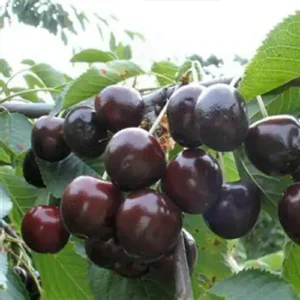
Blanche d’Harcigny

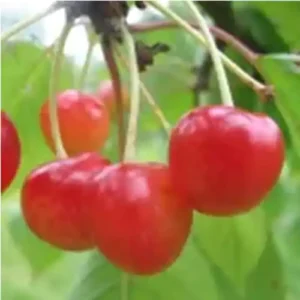
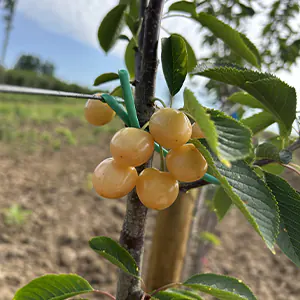
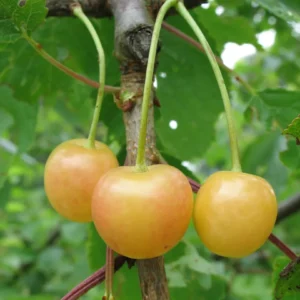
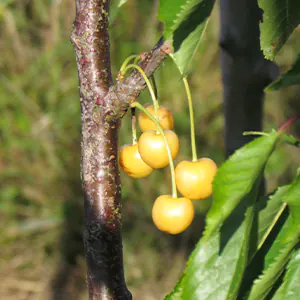
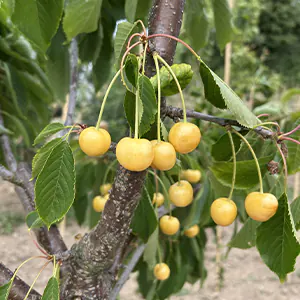
Blanche d'Harcigny is white sweet cherry from northern France, which ripens in late June / early July.
From 26,50 
Autumn 2026
A rare regional white cherry variety producing sweet, very juicy fruit that is less attractive to birds.
From 26,50 

Cherry trees

Burlat

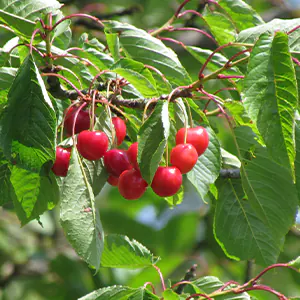
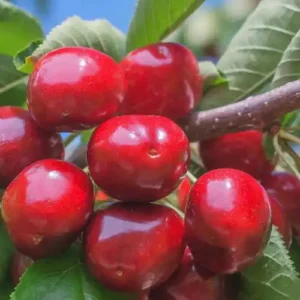
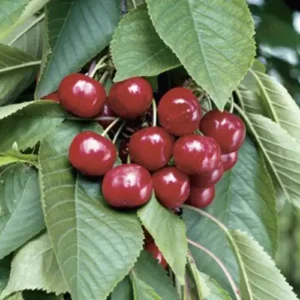
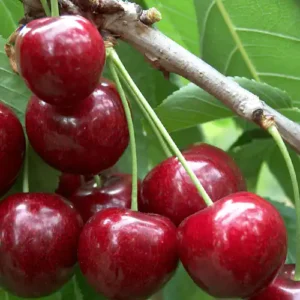
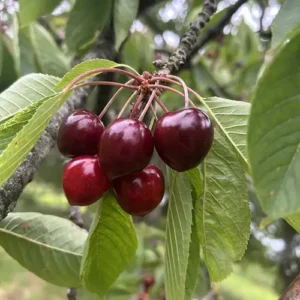
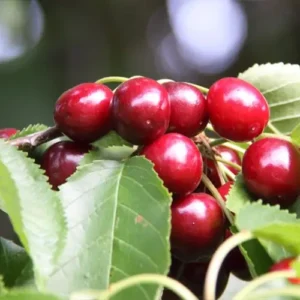
Burlat is a bright red sweet cherry, which ripens in late May / early June.
From 26,50 

Cherry trees

De La Toussaint

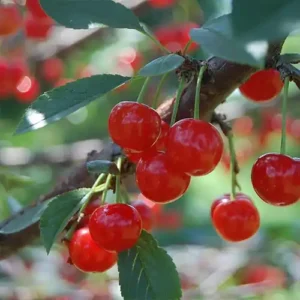
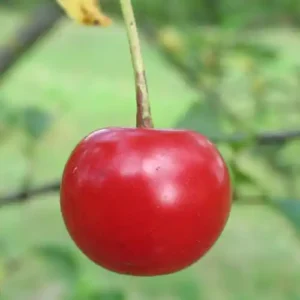
A remarkable everbearing sour cherry producing tart juicy cherries from July until the first frosts.
From 26,50 

Cherry trees

De Leme

De Lemé sour cherry tree, with small soft cherries, sweeter and less acidic than Montmorency, harvested late June to early July.

From 26,50 
Autumn 2026

Cherry trees

De Moncheaux

De Moncheaux cherry tree, a juicy, aromatic sour cherry for cooking and processing, harvested gradually in early to mid-July.

From 26,50 

Cherry trees

Early Rivers

One of the earliest-ripening cherries, ready to pick in early June in north-western Europe.
From 26,50 
Autumn 2026

Vieux-Condé sour cherry tree, with small aromatic tart cherries for cooking, jam and fruit brandy, harvested gradually in late June.

From 26,50 

Cherry trees

Kordia

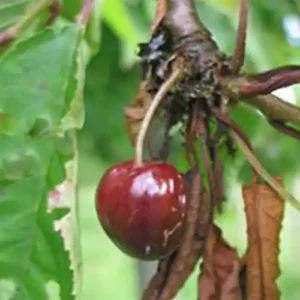
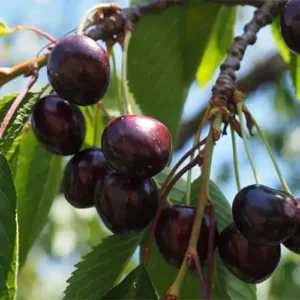
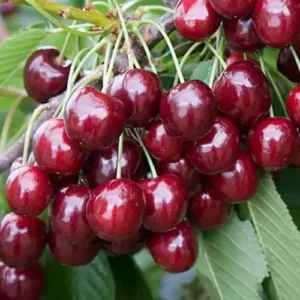
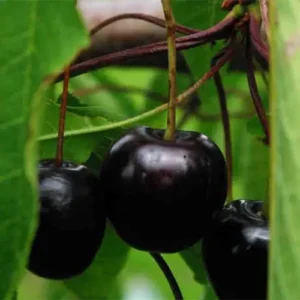
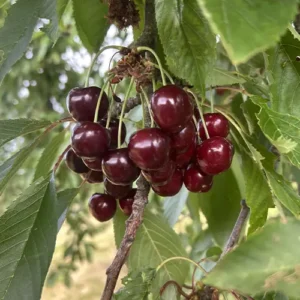
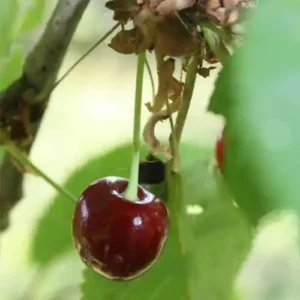
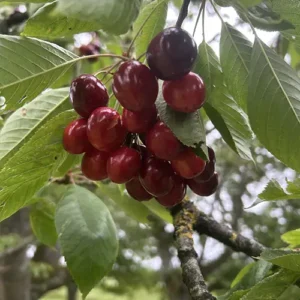
Kordia is a large late-season true black cherry variety with a good balanced cherry flavour.
From 26,50 

Cherry trees

Montmorency

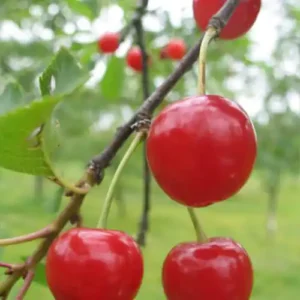
Montmorency is a self-fertile sour cherry, used for cooking, and ideal for making American-style cherry pie.
From 26,50 

Cherry trees

Napoleon

Napoleon Bigarreau is a traditional white cherry, with an excellent flavour and appearance.
From 29,25 

Cherry trees

Blanc Nez

A bigarreau -type white cherry from northern France.
From 26,50 
Autumn 2026

Cherry trees

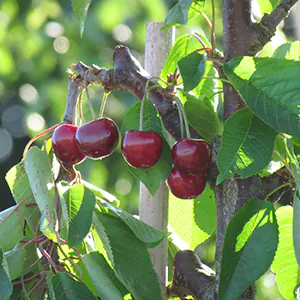
Cerise du Sars

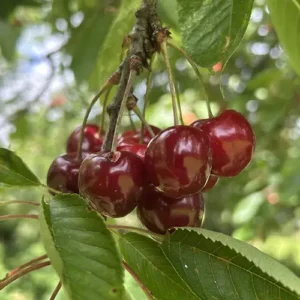
Du Sars cherry tree, with bicoloured cherries, soft flesh and a slightly tart flavour, harvested in mid-June.
From 26,50 

Cherry trees

Coeur de Pigeon

An old heart-shaped bigarreau cherry variety producing firm, crunchy and sweet fruit with pale yellow flesh.
From 26,50 
Autumn 2026

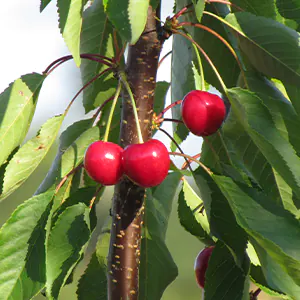
Gascogne Tardive de Seninghem cherry tree, with very sweet, semi-crisp cherries harvested from mid-July to August.
From 26,50 
Gros Bigarreau de la Groise is red sweet cherry from northern France, which ripens in late June / early July.
From 26,50 
Guigne Noire de Ruesnes is a dark red sweet cherry which ripens in early July.
From 26,50 

Guigne Noire du Pévèle cherry tree, a soft-fleshed cherry with coloured juice and a balanced sweet-tart flavour, harvested in mid-June.

From 26,50 

Cherry trees

Hedelfingen

An old late-season sweet cherry from Germany.
From 26,50 

Cherry trees

Lapins

An excellent modern sweet cherry. Easy to grow, with heavy crops of good-flavoured cherries.
From 26,50 

Cherry trees

Rainier

Rainier is a firm but juicy cherry with a good flavour.
From 26,50 

Cherry trees

Regina

Regina is a new late-season sweet black cherry, with a good flavour and resistance to splitting.
From 26,50 

Cherry trees

Sunburst

Sunburst is a large red mid-season cherry with a good sweet mild flavour, and easy to pick.
From 26,50 

Cherry trees

Verchocq

Verchocq is a traditional white cherry, maturing in early July.
From 26,50 

How should you choose a cherry tree?

Four characteristics are especially important when choosing a cherry tree: the type of cherry required, pollination compatibility, harvest season and rootstock vigour.

A poorly chosen cherry can become too large to harvest or protect, flower without setting fruit because no compatible pollinator is present or ripen during a period when rainfall repeatedly causes the cherries to split.

The cultivar and rootstock should therefore be selected together.

Our range includes firm-fleshed bigarreau cherries, tender and aromatic guigne cherries, sour cherries and cultivars selected for unusual colour, flavour, self-fertility or harvest period.

Fruit size alone should not determine the choice.

Flavour, firmness, resistance to cracking, stalk attachment, storage behaviour and the ability to ripen properly in the local climate can all be more important than maximum diameter.

Sweet cherries, sour cherries and intermediate types

Sweet cherries, Prunus avium

Most cherries intended for eating directly from the tree belong to the sweet cherry species, Prunus avium.

This group includes the firm-fleshed bigarreau cherries and the softer guigne cherries.

Sweet cherry trees are naturally vigorous, particularly when grafted onto wild cherry seedlings, and many cultivars require cross-pollination.

Sour cherries, Prunus cerasus

Sour cherries generally form smaller trees and produce fruit with more acidity and softer flesh.

They are particularly suitable for jam, preserves, juice, syrup, baking, sauces and fermented preparations.

Many sour cherry cultivars are self-fertile, although this should still be checked for the individual variety.

Duke and intermediate cherries

Some cultivars possess characteristics intermediate between sweet and sour cherries and are often associated with crosses between Prunus avium and Prunus cerasus.

They can combine noticeable acidity with a sweeter and more aromatic flesh than a conventional sour cherry.

Their pollination requirements and tree habit must be checked cultivar by cultivar rather than inferred from the general group.

Bigarreau, guigne or sour cherry?

Bigarreau cherries

Bigarreau cultivars normally produce firm, crisp, fleshy and sweet cherries.

They are the most familiar cherries for fresh eating and include many modern commercial cultivars.

Depending on the variety, the fruit may be bright red, dark red, almost black, yellow or bicoloured.

Size, firmness, flavour, stalk length and resistance to rain cracking vary considerably.

A very firm cherry is easier to handle and transport, but the best cultivar for a garden should also possess enough aroma and acidity to avoid a bland flavour.

Guigne cherries

Guigne cherries possess softer, more tender and generally juicier flesh than bigarreau cultivars.

Good varieties can develop exceptionally rich and complex aromas.

The fruit is less suited to prolonged transport and storage and should normally be eaten or processed soon after harvest.

Guigne cultivars are particularly interesting in a garden where eating quality is more important than maximum firmness.

Sour cherries

Sour cherries produce sharper fruit, generally with tender and highly coloured flesh or juice.

Their natural acidity makes them particularly valuable for preserves, pastries, compotes, syrups, juices, sauces and liqueurs.

Some cultivars become sufficiently sweet for fresh eating when fully ripe, while others retain pronounced acidity even at maturity.

They are more frequently self-fertile than sweet cherries and can be useful where space permits only one tree.

Yellow and bicoloured cherries

Yellow, pale and bicoloured cherries are not unripe versions of red cultivars.

Their mature colour is genetically determined and some varieties produce exceptionally sweet, fine and aromatic fruit.

Pale fruit can sometimes attract birds slightly later than dark red cherries, but this advantage is unreliable and does not replace physical protection where bird pressure is high.

Pollination should be checked before planting

Pollination is one of the principal difficulties when choosing sweet cherry cultivars.

Many varieties are self-incompatible and cannot produce a satisfactory crop using their own pollen.

A second cultivar must flower at a compatible time, but flowering overlap alone is not always sufficient.

Sweet cherries possess a genetic incompatibility system controlled by pollen alleles commonly known as S alleles.

Two cultivars carrying the same incompatible combination can flower together and still form an ineffective pollinating pair.

Where reliable information is available, the S alleles and compatible pollinators should be considered alongside the general flowering period.

A neighbouring ornamental cherry should not automatically be treated as a suitable pollinator.

It may flower at the wrong time, produce little viable pollen or belong to a genetically incompatible group.

What does self-fertile mean in a cherry tree?

A self-fertile cherry cultivar can use its own pollen to produce fruit and is therefore the simplest choice where only one tree can be planted.

Self-fertile sweet cherries can also pollinate many self-incompatible cultivars when their flowering periods overlap.

Self-fertility does not mean that fruit set is independent of weather or pollinating insects.

Cold, rain, frost and strong winds during flowering can reduce bee activity and damage flowers even on a self-fertile tree.

A second compatible cultivar may improve the quantity or regularity of the crop, but is not normally essential for a genuinely self-fertile variety.

Many sour cherries are self-fertile, but several intermediate and unusual cultivars still require cross-pollination.

Flowering overlap varies with climate

Flowering groups are comparative guides rather than fixed calendar dates.

The same cultivar can flower earlier in a warm urban garden than in a cold, exposed orchard.

Different cultivars can also react differently to an unusually mild or cold spring.

The safest pollinating combinations possess a substantial overlap rather than meeting for only one or two marginal days.

Where space permits, planting three compatible cultivars provides more security than relying on one narrowly matched pair.

Bees and other insects carry most cherry pollen between flowers.

Maintaining flowering plants nearby and avoiding unnecessary disturbance during blossom supports pollination, but cannot correct a genetically incompatible combination.

The rootstock determines much of the future tree size

The rootstock influences mature dimensions, vigour, anchorage, time to first cropping, soil requirements and the ease with which the tree can be harvested and protected.

The same cultivar can form a very large tree on a wild cherry seedling and a substantially more manageable tree on Gisela 6.

The rootstock does not change the genetic characteristics of the cherries.

Fruit colour, flavour, firmness and harvest season remain properties of the grafted cultivar.

Wild cherry seedling for a large and durable tree

Wild cherry, Prunus avium, is frequently called a seedling or standard rootstock.

It produces a vigorous, long-lived and strongly anchored tree suited to large gardens, meadows and traditional orchards.

The roots can explore a substantial volume of soil and the resulting tree normally tolerates grass competition better once established than a tree on a lower-vigour rootstock.

Consider the mature size before planting.

A large proportion of the crop can eventually become difficult to reach without ladders or specialised equipment.

Protecting the complete crown with netting is also rarely practical.

Gisela 6 for a more accessible tree

Gisela 6 restricts vigour substantially compared with wild cherry and usually encourages earlier cropping.

It facilitates formative pruning, harvesting and protection against birds.

It is well suited to gardens where the available space is limited, but should not be regarded as maintenance-free or extremely dwarfing.

Gisela 6 requires well-prepared soil, adequate fertility, regular moisture during establishment and limited competition from grass.

Heavy crops may need thinning or branch support while the framework is young.

Permanent or long-term staking can be useful according to the tree form and exposure.

Read our guide to fruit-tree rootstocks

Tree form does not replace rootstock choice

Cherry trees may be supplied as maidens, bushes, half-standards or standards according to cultivar and availability.

A maiden allows the gardener to construct the desired framework from a young unbranched or lightly branched tree.

A bush form keeps the crown relatively low and facilitates picking and netting.

Half-standard and standard forms provide greater clearance beneath the crown and suit larger gardens, grazing areas and traditional orchards.

The height at which the crown begins does not determine the final vigour of the tree.

A low-trained cherry grafted onto a vigorous wild cherry seedling still develops into a substantial tree.

Conversely, a higher stem on Gisela 6 remains influenced by the lower vigour of its root system.

Where should a cherry tree be planted?

Choose a sunny and reasonably open position.

Good light improves flower-bud formation, sugar accumulation, fruit colour and the ripening of young wood.

Air movement allows leaves, flowers and fruit to dry more rapidly after rain, reducing conditions favourable to brown rot and bacterial diseases.

Avoid enclosed frost hollows where cold air collects during flowering.

Cherry trees flower relatively early and open flowers can be damaged by late frost even when the dormant tree is fully winter hardy.

Allow enough space for the future crown from the beginning.

Trying to correct an unsuitable position later through severe pruning creates large wounds and vigorous regrowth.

Cherry trees require aerated and adequately drained soil

Cherry trees prefer deep, fertile and well-aerated soil that retains useful moisture during fruit development without remaining saturated.

Prolonged waterlogging deprives the roots of oxygen and encourages progressive decline.

Heavy clay can be suitable where it remains structured and water can move away from the root zone.

Compacted clay within a low-lying wet area is much more dangerous.

A layer of gravel placed beneath one planting hole does not correct an impermeable subsoil and can create a basin in which water accumulates.

Lower-vigour rootstocks such as Gisela 6 require better soil conditions and more careful water management than vigorous seedling rootstocks.

Severe drought during fruit swelling reduces size and can increase stress, but irregular watering immediately before harvest can also contribute to splitting in susceptible cultivars.

Planting a young cherry tree

Bare-root cherry trees should be planted during dormancy, from leaf fall until the end of winter, whenever the ground is neither frozen nor waterlogged.

Container-grown trees can be planted over a longer period, but active young growth requires regular water and protection from severe late frost.

Prepare a broad area of soil rather than filling one narrow hole with potting compost.

Remove couch grass, bindweed and other perennial weeds before planting.

Backfill principally with the original soil, improved over a broad area with mature compost where necessary.

Keep the graft union clearly above the finished soil level.

Water thoroughly after planting to settle the soil around the roots.

Install an appropriate stake and protect the trunk from rabbits, hares, deer, livestock and damage caused by mowers or brushcutters.

Maintain a broad weed-free area and water throughout the first growing season whenever rainfall is insufficient.

A mulch can reduce evaporation and grass competition but should remain away from the trunk and graft union.

Train the structure while the branches are young

Cherry trees respond better to gradual formative work than to the later removal of large branches.

Select a balanced framework suited to the rootstock and intended form.

Remove competing leaders, narrow forks and badly positioned branches before they become large.

Wide branch angles create a stronger structure and encourage earlier fruiting than extremely upright shoots.

A compact tree on Gisela 6 can be trained with a central leader or another controlled orchard form.

A vigorous tree intended for a meadow or traditional orchard requires a strong and durable framework capable of supporting a broad crown.

Do not raise the crown too rapidly, as temporary lower branches contribute to trunk growth and can be removed progressively.

Prune cherry trees lightly and during dry weather

Cherry trees tolerate large pruning wounds less successfully than apple trees.

Once the framework has been established, pruning should remain moderate.

Remove dead, damaged, crossing and badly positioned wood and prevent the crown from becoming completely closed.

Necessary pruning is preferably completed during dry weather in summer or shortly after harvest while the tree is actively capable of closing wounds.

Avoid heavy winter pruning, particularly in regions where bacterial canker and silver leaf are important.

Use clean and sharp tools and make cuts at the correct branch collar without leaving long stubs.

An adult tree that has become too large should be reduced gradually over several seasons rather than topped abruptly.

Severe cutting produces vigorous water shoots, large persistent wounds and a crown that becomes more difficult to manage.

Cherry harvest season

The cherry season is naturally short, but differences between cultivars allow harvesting to continue for several weeks.

Combining an early cultivar, a mid-season variety and a later cherry extends fresh consumption and distributes climatic risk.

Not every cultivar will then be exposed to the same episode of rain, bird pressure or unusually warm weather.

Actual dates vary according to cultivar, country, exposure, rootstock, crop load and seasonal temperatures.

The calendar is intended principally for comparing cultivars rather than predicting one exact date for every garden.

Available Available on backorder Currently unavailable

Harvest periods are indicative and may vary according to the region, exposure, rootstock and the season’s weather conditions.


Cherries develop very little after picking

Cherries are non-climacteric fruit and do not become substantially sweeter after harvest.

They should be picked once they have developed the colour, firmness, sweetness and aroma characteristic of the cultivar.

Fruit harvested too early may remain firm but will not develop the full eating quality it would have acquired on the tree.

Skin colour must be interpreted according to the cultivar.

A yellow or bicoloured cherry should not be left until it becomes red, while some dark cultivars require an almost black colour before reaching their best flavour.

Tasting several fruit from different parts of the tree remains the most reliable guide.

Harvest and store cherries carefully

Pick cherries with their stalks where they are intended for short-term storage or presentation.

Support the fruit and avoid pulling hard enough to damage the short fruiting spur.

Harvest during dry and cool conditions where possible.

Place the cherries in shallow containers because the lower layers bruise and leak when compressed beneath a deep pile.

Cool the crop promptly and avoid leaving harvested fruit in direct sunlight.

Fresh sweet cherries keep for only a limited period and should be eaten or refrigerated quickly.

Softer guigne and sour cherries are especially perishable and are often best processed soon after picking.

Wash cherries shortly before use rather than before storage, as additional surface moisture encourages decay.

Rain cracking can destroy fruit close to maturity

Rainfall shortly before harvest can cause cherries to split.

Water enters through the skin and stalk cavity while the fruit continues expanding, eventually creating cracks around the stalk, side or tip.

Split fruit becomes much more susceptible to brown rot and cannot be stored reliably.

Cultivars differ significantly in susceptibility.

Skin structure, fruit firmness, fruit shape, maturity period and the length of time ripe cherries remain on the tree all influence the damage.

No outdoor cultivar can be guaranteed never to split during prolonged heavy rain.

Choosing cultivars with useful tolerance, maintaining reasonably consistent soil moisture and harvesting promptly at maturity can reduce losses.

Diversifying harvest periods prevents the complete crop from being exposed to one damaging period of rainfall.

Brown rot affects flowers, shoots and fruit

Brown rot fungi can infect blossom, young shoots and ripening cherries.

Fruit becomes particularly vulnerable after splitting, bird damage, hail or contact with an infected neighbouring cherry.

Remove rotten and mummified fruit rather than leaving it attached to the tree.

Prune out clearly dead and infected shoots during suitable dry weather.

A well-lit and aerated crown dries more rapidly and reduces the duration of moisture around the flowers and fruit.

Dense clusters of touching cherries can allow rot to spread quickly once one fruit becomes infected.

Bacterial canker and dieback

Bacterial canker can cause sunken bark lesions, gum production, dead buds and progressive shoot or branch dieback.

Infection enters more readily through pruning wounds, frost cracks and other damaged tissue during cool and wet conditions.

Avoid unnecessary large cuts and complete essential pruning during a dry summer period.

Protect the trunk from mechanical injuries and remove severely affected wood using clean tools.

Gumming alone does not prove bacterial canker because cherries can release gum after physical damage, fruit splitting, insect injury or other stress.

The complete pattern of symptoms should be examined before attributing the problem to one disease.

Plan bird protection before the tree becomes large

Birds can consume a substantial proportion of the crop, sometimes before the cherries have developed their full eating quality.

Early cultivars can be particularly attractive because relatively few other fruits are available at the same time.

Netting is generally the most dependable protection for a garden tree.

It is much easier to install securely over a moderate-sized cherry on Gisela 6 than over a mature tree grafted onto wild cherry.

The rootstock therefore influences not only the space occupied by the tree but also whether the complete crop can realistically be harvested and protected.

Netting should be secured and inspected so that birds cannot become trapped within loose sections.

Which cherry tree should you choose?

For eating directly from the tree

Choose a sweet bigarreau or guigne cultivar according to the preferred balance between firmness, juiciness, sweetness and aroma.

A guigne may provide superior flavour but will normally require quicker consumption.

For cooking and preserves

Choose a sour cherry with pronounced acidity, abundant juice and good colour.

A self-fertile cultivar is especially convenient where only one tree can be planted.

For a small garden

Select a cultivar on Gisela 6 and verify its pollination before ordering.

Provide fertile soil, regular watering during establishment and enough access for pruning and netting.

For a meadow or traditional orchard

A cultivar grafted onto wild cherry can form a durable and strongly anchored tree.

Allow enough space and accept that part of the future crop may require ladders or harvesting equipment.

For planting only one tree

Choose a reliably self-fertile cultivar rather than depending on an unidentified neighbouring cherry.

For a humid climate

Compare resistance to cracking, brown-rot behaviour and harvest season.

Combining several maturity periods spreads the risk of heavy rain affecting every cultivar simultaneously.

For an extended harvest

Combine early, mid-season and late cultivars whose flowering periods and pollination groups are compatible.

Harvest season should not be considered separately from pollination.

Frequently asked questions about cherry trees

Are two cherry trees required?

Many sweet cherry cultivars are self-incompatible and require another compatible variety. A genuinely self-fertile cultivar can produce when planted alone.

Will any two cherry cultivars pollinate one another?

No. Their flowering periods must overlap and their S-allele incompatibility groups must permit cross-pollination.

Can a self-fertile cherry pollinate another cultivar?

Usually yes, provided that both trees flower at the same time and the self-fertile cultivar produces viable pollen.

Why does my cherry tree flower without producing fruit?

Possible causes include self-incompatibility, an unsuitable pollinator, poor flowering overlap, frost, prolonged rain, strong winds or low insect activity during blossom.

Are sour cherry trees self-fertile?

Many are self-fertile, but this should be checked for the individual cultivar, particularly for Duke and other intermediate cherries.

What is a bigarreau cherry?

It is a sweet cherry with firm, crisp and fleshy fruit, generally intended for fresh eating.

What is a guigne cherry?

It is a sweet cherry with softer and juicier flesh. Good cultivars can be exceptionally aromatic but are more delicate to handle.

Which cherry tree is suitable for a small garden?

A cultivar grafted onto Gisela 6 is generally more manageable than the same variety on wild cherry, provided that the soil is fertile and adequately watered.

Does Gisela 6 create a miniature tree?

No. It restricts vigour substantially compared with wild cherry but still forms a permanent fruit tree requiring space, pruning and suitable growing conditions.

Does a low-trained tree remain small?

Not necessarily. Tree form determines the height at which the crown begins, while the rootstock and cultivar largely determine final vigour.

Can cherry trees grow in clay soil?

Yes, where the clay remains structured and adequately drained. Permanently saturated or compacted ground creates a high risk of root decline.

When should a bare-root cherry tree be planted?

Plant during dormancy, generally between leaf fall and the end of winter, whenever the soil is neither frozen nor waterlogged.

When should a cherry tree be pruned?

Complete necessary pruning during dry summer weather or shortly after harvest. Avoid severe pruning and large winter cuts.

Can an old cherry tree be cut back heavily?

Severe reduction creates large wounds and vigorous regrowth. Where reduction is unavoidable, spread the work over several seasons.

Can cherry cracking be prevented completely?

No. Cultivar choice, consistent soil moisture and prompt harvesting can reduce losses, but prolonged rain close to maturity can split even relatively tolerant cherries.

Why are split cherries especially vulnerable to rot?

Cracks expose the flesh and allow water, fungi and microorganisms to enter directly.

Do cherries ripen after picking?

Very little. They should be allowed to develop their characteristic colour, sweetness, firmness and aroma on the tree.

How can ripe cherries be recognised?

Use the mature colour specified for the cultivar, ease of detachment, flavour and texture. Dark cultivars may need to become almost black, while yellow cultivars remain pale.

Should cherries be picked with their stalks?

Yes for fruit intended for storage or presentation. Support the fruit carefully to avoid damaging the short fruiting spur.

How long do fresh cherries keep?

They have a short storage life and should be cooled and eaten or processed quickly. Soft guigne and sour cherries are especially perishable.

What is the best protection against birds?

A securely installed net normally provides the most reliable protection. It is considerably easier to use on a moderate-sized tree than on a vigorous standard.

Why is gum appearing on the trunk or branches?

Gumming can result from bacterial canker, physical injury, frost damage, insect attack or another stress. It is a symptom rather than a diagnosis by itself.