Pre-orders are open No payment today. Stock will be checked during the inventory in early August, then you will receive a payment link for the available trees.

Medlar trees

Medlar trees

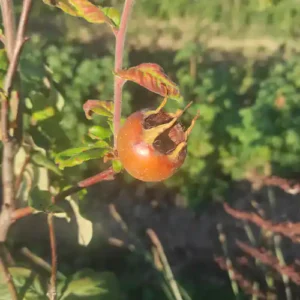
Belle de Grand Lieu

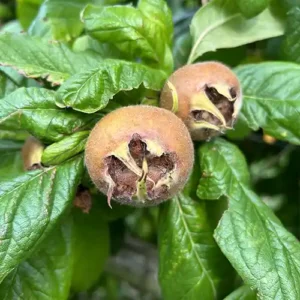
Belle de Grand Lieu medlar tree, with large sweet, creamy medlars over 4 cm, harvested from late October.
From 27,75 

Medlar trees

Delice des Vannes

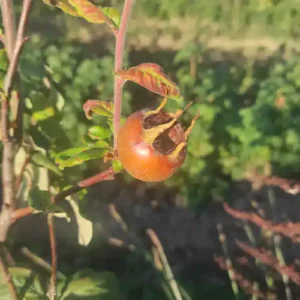
Délice des Vannes medlar tree, a French variety with abundant creamy, aromatic medlars, harvested from late October.

From 27,75 

Medlar trees

Dutch Giant

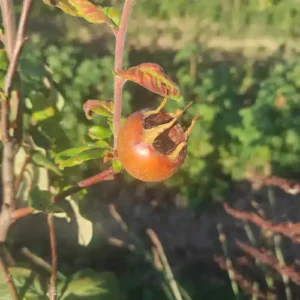
Large Dutch, or Flanders Giant, is one of the largest-fruited medlars, with attractive blossom and autum leaf colours.
From 27,75 

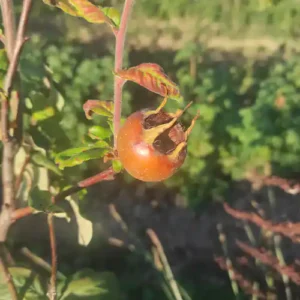
Monstrueuse d'Evreinoff medlar tree, with very large sweet, aromatic medlars, harvested from late October.
From 27,75 

Medlar trees

Nottingham

Nottingham is a popular English medlar, used mainly for cooking.
From 27,75 

Medlar trees: a hardy fruit tree worth rediscovering

The common medlar, usually known botanically as Mespilus germanica, is a small deciduous fruit tree belonging to the rose family and related to apples, pears, quinces and hawthorns.

It should not be confused with the loquat, Eriobotrya japonica, an evergreen tree from a much milder climate whose flowers appear during autumn or winter and whose fruit ripens during spring.

Despite the botanical name Mespilus germanica, the medlar probably did not originate in Germany. Its early natural range is associated more closely with the Caucasus, Crimea and western Asia, before cultivation and naturalisation spread it across much of Europe.

The name Mespilus germanica remains widely used in horticulture, although the species is sometimes placed close to the hawthorns and referred to as Crataegus germanica in alternative botanical classifications.

Medlar trees are particularly well suited to cool temperate European climates. They tolerate cold winters, flower relatively late and do not require an exceptionally hot summer to reach physiological fruit maturity.

The final quality of the crop nevertheless depends on the cultivar, rootstock, exposure, soil moisture and the stage at which the fruit is harvested and allowed to blet.

Choose a named cultivar rather than an unselected seedling

A medlar grown from seed can eventually produce fruit, but it does not reproduce the characteristics of the parent tree reliably.

Fruit size, flavour, tannin content, number of seeds, bletting behaviour, tree vigour and growth habit can all vary substantially between seedlings.

A grafted cultivar preserves the characteristics of a selected tree and normally begins cropping sooner than an unselected seedling.

Named cultivars differ in fruit diameter, shape, proportion of edible flesh, texture after bletting, aromatic intensity and mature tree size.

Very large-fruited cultivars provide more flesh per fruit and are convenient for jelly, chutney and other processing.

Fruit size should not be the only selection criterion. Some smaller medlars possess a more concentrated flavour, finer flesh and a better balance between sweetness, acidity and aroma.

For eating with a spoon, the quality of the bletted flesh is normally more important than the maximum diameter of the fruit.

Useful characteristics when comparing medlar cultivars

Fruit size

Large fruit is quicker to prepare and contains a greater quantity of flesh in relation to the time required for harvesting and removing the seeds.

Actual fruit size is also influenced by water availability, crop load, exposure and the vigour of the tree.

A cultivar capable of producing large medlars may still carry small fruit when planted in dry soil or allowed to bear an excessive crop.

Flavour after bletting

Medlars should be compared after complete bletting rather than while the flesh remains hard and astringent.

The best cultivars can develop flavours suggesting baked apple, pear, quince, dates, dried apricot, caramel or mild spices.

Some very large-fruited cultivars possess a relatively mild flavour, while smaller traditional selections may be considerably more aromatic.

Texture

Correctly bletted flesh should become soft, smooth and similar to a thick fruit purée.

Cultivars differ in the fineness of this texture and in the amount of fibrous material surrounding the seeds.

A fine and homogeneous flesh is particularly desirable when the fruit is eaten directly.

Number and size of seeds

Medlars normally contain several hard seeds that reduce the proportion of edible flesh.

This becomes especially noticeable in small-fruited cultivars.

Where fruit is intended mainly for jelly, the seeds are less inconvenient because the cooked fruit is strained.

Tree habit

Some cultivars form a relatively compact and rounded tree, while others develop a broad, spreading and eventually arching crown.

The rootstock, soil and training method also influence mature dimensions.

Tree form should be considered where access for harvesting or the available garden space is limited.

Ripening period

Medlar cultivars reach physiological maturity during autumn, but their precise picking period varies.

Earlier maturity can be useful in colder regions, while later fruit may remain on the tree until leaf fall in favourable conditions.

Harvest date and eating date are not identical because the firm fruit normally requires a further period of bletting.

A hardy tree with late flowers

Dormant medlar wood is very winter hardy and is well adapted to the conditions found across much of northern, western and central Europe.

This resistance of dormant branches does not mean that every part of the tree has the same frost tolerance.

The large white flowers appear relatively late, generally after those of pear trees and many apple cultivars.

This late flowering substantially reduces the risk of a complete crop failure caused by ordinary spring frost.

An exceptionally late frost can still damage open flowers, young fruitlets and tender extending shoots.

Cold or violent winds may also damage the large flowers and leaves.

In an exposed garden, choose a sunny position receiving some protection from the prevailing winds without enclosing the tree within a dense and poorly ventilated corner.

Where should a medlar tree be planted?

A medlar can grow in partial shade, but a sunny position normally improves flowering, fruit quality, ripening of the wood and autumn colour.

In cool European regions, choose full sun or a position receiving direct light for a substantial part of the day.

Training against a warm wall is not normally necessary.

An open position protected from the most violent winds is often more suitable because the naturally spreading crown requires space and balanced light.

Depending on cultivar, rootstock, soil and training, a medlar may reach approximately 3 to 6 metres in height and a similar width.

Avoid planting directly within a dense hedge or beneath established trees.

A medlar may survive in these conditions, but root competition, shade and restricted airflow reduce growth and cropping.

Soil, lime and moisture

Medlar trees adapt to a broad range of soils but prefer deep, fertile and moisture-retentive ground that remains adequately drained.

They tolerate heavier soil better than many stone-fruit trees, provided that water does not remain permanently stagnant around the roots.

Clay soil is not automatically unsuitable.

A deep and structured clay capable of holding moisture while retaining air can provide excellent growing conditions.

Compacted clay or ground saturated for much of the winter restricts root growth and can cause poor establishment or progressive decline.

Avoid planting or cultivating heavy soil while it is wet, sticky and easily compressed.

Medlar trees can grow in moderately calcareous ground, but their actual behaviour also depends on the rootstock.

A cultivar grafted onto quince does not respond exactly like the same variety grafted onto hawthorn or medlar seedling.

In shallow, highly calcareous or rapidly drying soil, the rootstock and water reserve are therefore more informative than the general lime tolerance attributed to the species.

Very dry soil produces smaller fruit, weak shoot growth and occasionally premature fruit drop.

An established medlar tolerates periods of moderate drought, but survival during drought should not be confused with optimum fruit production.

Planting a young medlar tree

Bare-root medlar trees should be planted during dormancy, from leaf fall until early spring, whenever the ground is neither frozen nor waterlogged.

Container-grown trees can be planted over a longer period, although autumn, frost-free winter weather and early spring generally provide the simplest establishment conditions.

A container-grown tree already carrying leaves is less frost-resistant than a dormant established medlar.

Where the plant has begun growing under protection, wait until the principal risk of frost has passed or protect the tender growth during cold nights.

This precaution concerns the young leaves and shoots rather than the general winter hardiness of the species.

Prepare a broad area of loosened and finely cultivated soil rather than a narrow hole filled with potting compost.

The ground should have drained sufficiently before cultivation and should be reasonably warm where planting takes place during spring.

Remove couch grass, bindweed and other perennial weeds before planting.

Position the root collar at soil level and keep the graft union clearly above the finished ground level.

Backfill principally with the original soil, improved across a broad area with mature compost where necessary.

A concentrated pocket of potting compost, fresh manure or fertiliser does not correct compacted or unsuitable surrounding ground.

Water thoroughly after planting to settle soil around the roots.

Maintain a weed-free area around the trunk and continue watering throughout the first growing season whenever rainfall is insufficient.

Care should not stop several weeks after planting, as summer drought can interrupt establishment and cause young fruit to fall.

Why does the medlar rootstock matter?

Named medlar cultivars are generally propagated by grafting onto quince, hawthorn or seedling medlar rootstocks.

Other compatible rootstocks used for related pome fruits are occasionally encountered, but their long-term behaviour may be less widely documented.

Quince rootstock

Quince is frequently used to moderate vigour and produce a comparatively compact medlar tree.

It can be useful in a garden where available space is limited and can encourage relatively early cropping.

Quince still requires correctly prepared soil with sufficient moisture and drainage.

Its tolerance of very dry, strongly calcareous or poorly aerated ground should not be overestimated.

Hawthorn rootstock

Hawthorn can produce a robust tree adapted to certain difficult soils.

Vigour and behaviour vary according to the hawthorn species, seed source and growing conditions.

Any shoots emerging from beneath the graft union belong to the rootstock and should be removed.

Medlar seedling rootstock

A medlar seedling normally produces a tree closer to the natural vigour and dimensions of the species.

It may establish more slowly than a tree on a vigour-controlling rootstock but can produce a strong and long-lived specimen where enough space is available.

Unlike apple trees, medlars do not possess a completely standardised range of rootstocks allowing one precise mature height to be guaranteed.

Final dimensions remain influenced by the cultivar, soil fertility, water supply, training and pruning.

Read our guide to fruit-tree rootstocks

One medlar tree is generally sufficient

Named fruiting cultivars of the common medlar are generally self-fertile.

A correctly identified tree can normally produce fruit without a second cultivar nearby.

The large flowers are visited by bees and other pollinating insects, whose activity assists effective fertilisation.

Other medlars and flowering plants belonging to the rose family may encourage pollinator activity within the garden, but are not normally essential to the cropping of a self-fertile cultivar.

Where an established medlar produces poorly, investigate shade, frost, strong winds during flowering, drought, excessive pruning or general tree health before assuming that another pollinating cultivar is required.

Which wood carries the medlar crop?

Medlar trees produce much of their fruit at the ends of short lateral shoots.

They can therefore be described as partly tip-bearing, in a similar way to certain apple cultivars.

This fruiting habit is important when pruning.

Systematically shortening every shoot removes a substantial proportion of the flower buds and reduces the following crop.

The objective is not to stimulate long new shoots continually, but to maintain a network of short, healthy and well-lit fruiting branches.

Light and selective pruning is considerably more suitable than annual shortening of every branch extension.

Training and pruning a medlar tree

During the first years, form a relatively low, open and balanced crown.

An open-centred form or a short central leader keeps the fruit accessible and allows light to enter the centre of the tree.

Select several well-spaced framework branches and remove competing shoots while their diameter remains small.

Avoid very narrow forks and branches growing directly above one another, as the crown becomes naturally broad and sometimes arching with age.

Once the framework has been established, pruning should remain limited.

Remove dead wood, broken branches, strong crossing shoots and growth that closes the centre completely.

Preserve the short terminal shoots carrying flower buds wherever possible.

Severe cutting stimulates vigorous vegetative regrowth and delays the reconstruction of productive wood.

Where an old tree has become too broad, reduce it progressively over several seasons rather than removing several large framework branches at once.

Medlar harvest season

Medlars normally reach physiological maturity during autumn, but the precise picking period varies according to cultivar, country, exposure, rootstock and seasonal weather.

The fruit is often harvested when mature but still firm and then allowed to complete its bletting under controlled conditions.

The calendar is intended mainly for comparing cultivars rather than predicting one exact picking date for every garden.

Available Available on backorder Currently unavailable

Harvest periods are indicative and may vary according to the region, exposure, rootstock and the season’s weather conditions.


Bletting is a form of ripening, not ordinary decay

A freshly picked medlar is normally firm, sharply acidic and strongly astringent.

This astringency results principally from the tannins present within the fruit.

Medlars become pleasant to eat after a particular post-harvest ripening process known as bletting.

During bletting, the flesh softens, tannins and acidity decline and the sugars and aromatic compounds become more perceptible.

The inside of the fruit becomes brown and develops a texture similar to a thick apple purée.

This brown appearance does not mean that a correctly bletted medlar is rotten.

A properly bletted fruit remains aromatic and homogeneous and has no mould, unpleasant fermentation smell or watery decomposed areas.

Does a medlar require frost before it can be eaten?

Frost is traditionally associated with the bletting of medlars, but freezing is not essential.

Cold weather can accelerate softening, particularly when mature fruit remains on the tree, but physiological maturity must still have been reached.

Firm mature medlars can be harvested before severe frost and allowed to blet successfully in a cool room.

Waiting for hard frost is not always desirable because fruit left outside becomes more exposed to birds, rain, splitting and decay.

Controlled bletting makes it easier to inspect the fruit and use each medlar at the correct stage.

How should medlars be bletted?

Harvest physiologically mature fruit carefully and reject specimens that are severely damaged, mouldy or deeply split.

Arrange the medlars in one layer without pressing them tightly against one another.

Keep them in a cool, dark, ventilated and frost-free place.

Traditional storage on straw is possible, but clean ventilated trays are easier to inspect and keep hygienic.

Check the fruit regularly because individual medlars do not all soften at the same rate.

Use each fruit once the flesh has become soft and brown almost to the centre.

Bruised or cracked fruit should be consumed or processed first because it deteriorates more rapidly.

Recognising a medlar ready to eat

A medlar ready for consumption should yield under gentle pressure and contain brown, soft and aromatic flesh.

There should be no pale, hard and strongly astringent area remaining around the centre.

Skin colour alone is not sufficient because the outside may darken before the flesh has completed bletting.

A partly firm medlar remains unpleasant even when its skin already appears brown.

A fruit that is exceptionally soft, watery, mouldy or strongly alcoholic in smell has passed normal bletting and begun to decay.

The seeds are hard and should not be eaten.

The soft flesh can be removed with a spoon or pressed through a sieve for processing.

Eating, processing and storing medlars

Fully bletted medlars can be eaten directly with a spoon, added to desserts or served with cheese.

Their naturally thick texture is suitable for fruit purées, compotes, chutneys, fruit pastes and fillings.

Medlars are particularly well known for jelly because the fruit contains useful pectin and develops complex flavours during cooking.

For jelly, fruit at several stages of bletting can be combined so that the preparation retains acidity, pectin and mature aroma.

Once completely bletted, medlars have a short storage life.

Check the harvest frequently and process fruit progressively rather than waiting for every medlar to reach the same stage.

Bletted flesh can also be cooked and frozen for later use.

Important diseases and problems

Entomosporium leaf spot

Medlar trees are generally robust, but can be affected by diseases shared with related pome fruits.

Entomosporium leaf spot can produce brown or reddish marks on leaves and fruit during humid weather.

Severe infection may cause premature leaf fall and reduce the tree’s ability to fill fruit and store reserves.

Maintain an open crown and remove heavily affected fallen leaves where the problem is recurrent.

Brown rot

Brown rot can develop on fruit that is wounded, cracked or retained too long in wet conditions.

Remove rotten and mummified fruit from the tree and ground rather than allowing it to remain as a source of future infection.

Fruit damaged during picking should be used before sound specimens.

Fire blight

Medlar is a possible host of fire blight, caused by Erwinia amylovora.

Symptoms can include blackened flowers, rapidly wilting shoots and tips curving into a characteristic hook.

Fire blight is uncommon in many gardens but potentially serious and suspicious symptoms should be examined carefully.

Root problems

Weak growth and branch dieback can result from waterlogging, compacted soil, planting too deeply or damage to the root collar.

The problem should not automatically be attributed to a foliar disease when the planting position remains saturated or the graft union has been buried.

A medlar growing in sufficient light, with balanced nutrition and an aerated crown, is generally less vulnerable than a heavily shaded or excessively vigorous tree.

Excessive nitrogen is unnecessary and can produce tender growth more susceptible to frost and disease.

Which medlar tree should you choose?

For a small garden, choose a named cultivar grafted onto a rootstock of moderate vigour and form a low and accessible crown.

For an orchard, park or large garden, a more vigorous tree can develop into an attractive and productive specimen.

For eating directly with a spoon, prioritise fine flesh, balanced flavour and good bletting behaviour.

For jelly, chutney and fruit paste, a productive large-fruited cultivar reduces the time required for harvesting and preparation.

In strongly calcareous, wet or particularly poor soil, check the rootstock before ordering.

Two trees of the same cultivar can behave differently when grafted onto quince, hawthorn or seedling medlar.

The best cultivar is not necessarily the one producing the largest fruit.

Choose a coherent combination of flavour, proportion of flesh, mature dimensions, rootstock and adaptation to the planting site.

Frequently asked questions about medlar trees

Are medlar trees suitable for cool European climates?

Yes. Medlars are very winter hardy, flower relatively late and adapt particularly well to cool temperate regions. A sunny position sheltered from violent winds still improves fruit quality.

Are two medlar trees required?

Normally not. Most named fruiting cultivars are self-fertile and one tree can produce fruit. A correctly identified grafted cultivar is more predictable than an unknown seedling.

What is the difference between a medlar and a loquat?

The common medlar is a hardy deciduous tree whose autumn fruit is eaten after bletting. The loquat is an evergreen tree from milder climates whose fruit ripens during spring.

Do medlars have to freeze before they can be eaten?

No. Frost can encourage softening but is not essential. Mature firm fruit can be harvested and bletted in a cool, dark and ventilated room.

Is a bletted medlar rotten?

No. Bletting is a normal ripening process during which the flesh becomes brown, soft and less astringent. Mould, unpleasant fermentation odours and watery decomposition indicate actual decay.

Why do my medlars remain hard and astringent?

They may not have completed bletting or may have been picked before physiological maturity. Allow mature fruit more time in cool and ventilated conditions.

Can medlars blet naturally on the tree?

Yes, particularly during cool autumn weather. The fruit is then more exposed to birds, rain and decay, so harvesting followed by controlled bletting is often more reliable.

Can medlars grow in clay soil?

Yes, where the clay is deep, structured and adequately drained. Compacted or permanently saturated ground causes poor establishment and root decline.

Do medlar trees tolerate lime?

They tolerate moderately calcareous soil, but actual performance depends partly on the rootstock. Quince, hawthorn and medlar seedling do not behave identically in dry or highly calcareous ground.

Which rootstock produces the smallest medlar tree?

Quince is commonly used to moderate vigour, although mature dimensions still depend on cultivar, soil, water and pruning. No precise final height can be guaranteed from the rootstock alone.

Why should every branch not be shortened?

Medlar trees carry much of their fruit at the ends of short lateral shoots. Uniform shortening removes flower buds and stimulates excessive vegetative growth.

When should a medlar tree be pruned?

Complete formative pruning while the tree is young and keep later pruning light. Remove dead, broken and crossing branches while preserving productive terminal shoots.

When does a grafted medlar begin producing?

A grafted cultivar can begin fruiting relatively young where establishment is successful. The delay depends on rootstock, vigour, soil, watering and training.

When are medlars ready to pick?

Harvest when the fruit has reached full size and physiological maturity during autumn. It may still be firm and require further bletting before eating.

How can a medlar ready to eat be recognised?

The fruit should be soft under gentle pressure and contain brown, aromatic flesh without hard and pale areas around the centre.

How long do bletted medlars keep?

Once completely soft, they keep for only a short period. Inspect the fruit regularly and eat or process each medlar as it reaches the correct stage.

What can medlars be used for?

They can be eaten with a spoon or used for jelly, compote, chutney, fruit paste, desserts and accompaniments for cheese.