Dessert pear trees
Dessert pear trees
Dessert pear trees
Dessert pear trees
Dessert pear trees
Dessert pear trees
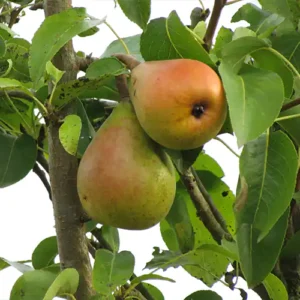
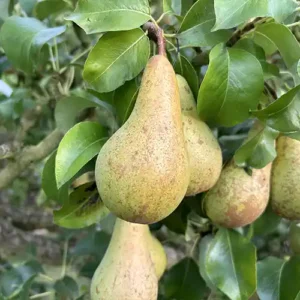
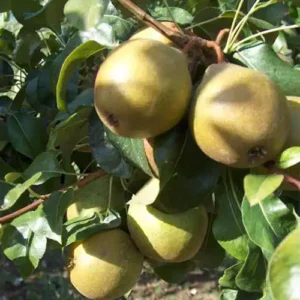
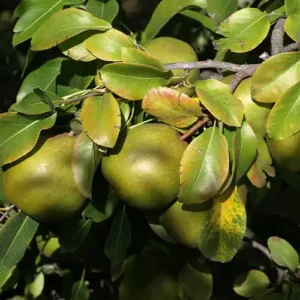
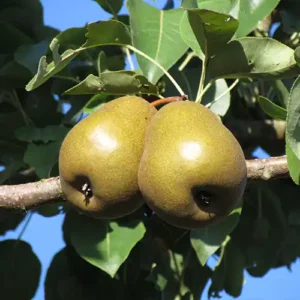
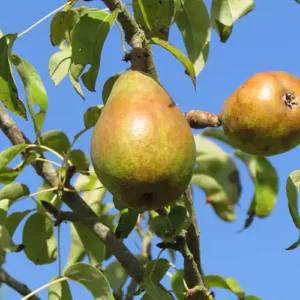
Comtesse de Paris pear tree, a low-disease storage pear picked in mid-October and eaten from December to February.
Dessert pear trees
Cooking pear trees
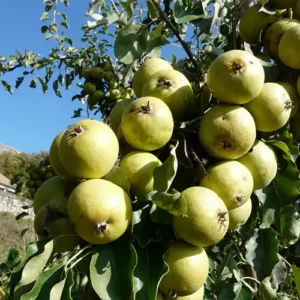
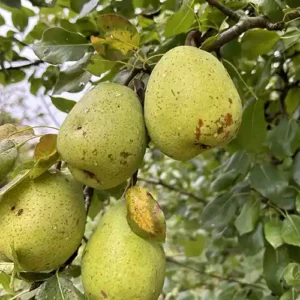
Grise Notre Dame pear tree, a hard cooking pear for candied pears or vinegar preparations, harvested in late September.
Dessert pear trees
Dessert pear trees
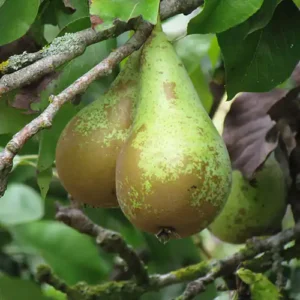
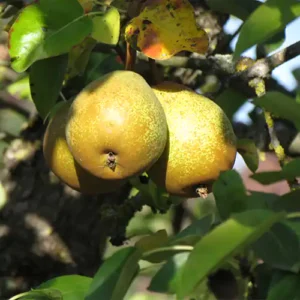
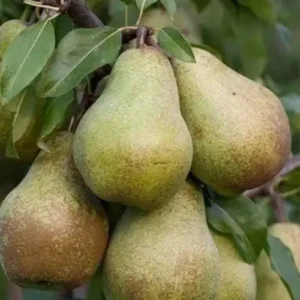
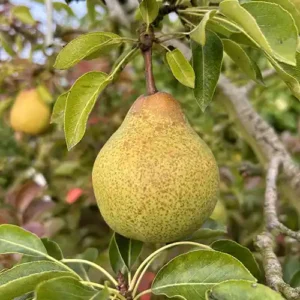
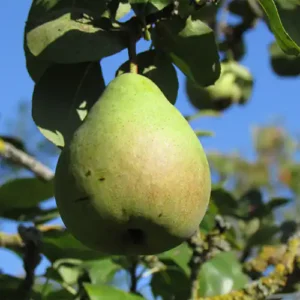
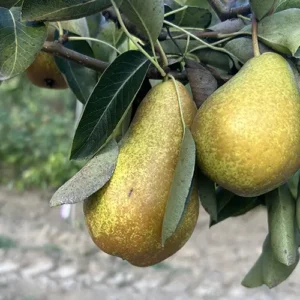
Packham's Triumph pear tree, with fine melting flesh similar to Williams, harvested in late September and keeping for a few weeks.
Dessert pear trees
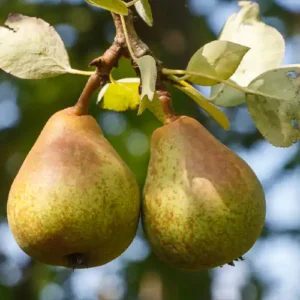
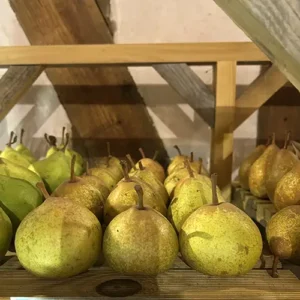
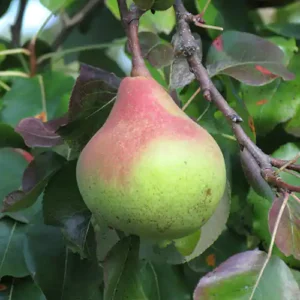
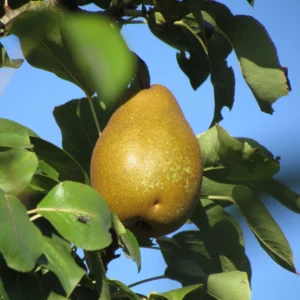
Passe Crassane pear tree, with fine melting juicy flesh, picked in October and kept for early winter eating.
Cooking pear trees
Poire à Côte d'Or pear tree, a large hard winter cooking pear, picked in October and eaten from November to January.
Dessert pear trees
Dessert pear trees
Bollwiller pear trees
Dessert pear trees
Dessert pear trees
Dessert pear trees
Dessert pear trees
Dessert pear trees

Pear trees
Dessert pear trees
Dessert pear trees
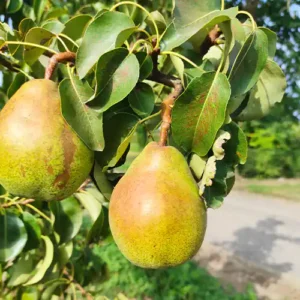
Cooking pear trees
Dessert pear trees
Pear trees
Dessert pear trees
Pear trees
Cooking pear trees
Jean Nicolas pear tree, a sweet Belgian cooking pear, picked in late September and best cooked with moisture.
Dessert pear trees
Dessert pear trees
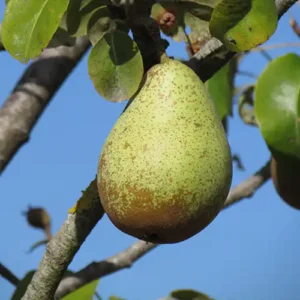
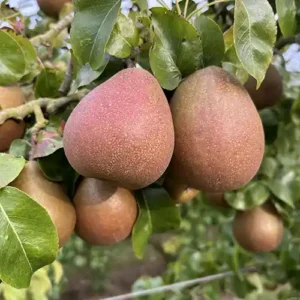
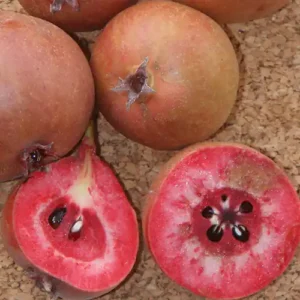
Kravnicka pear tree, a rare red-fleshed pear with small sweet, lightly juicy fruit and a distinctive spicy flavour.
Dessert pear trees
Dessert pear trees
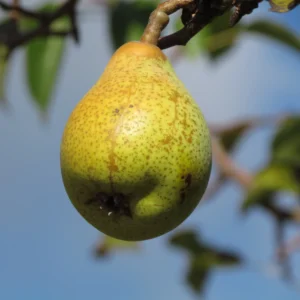
Dessert pear trees
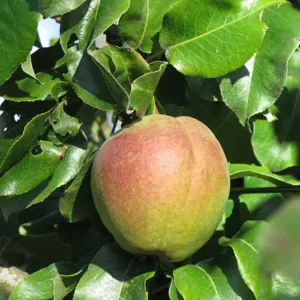
Dessert pear trees
How should you choose a pear tree?
Choosing a pear tree involves more than finding a famous cultivar or a fruit with an appealing flavour. Reliable cropping depends on climate adaptation, flowering period, pollination, disease behaviour, rootstock, soil, harvest season and the intended use of the fruit.
Our collection includes heritage and regional cultivars, dessert pears, cooking pears and perry pears, together with varieties selected for early ripening, storage life, fruit quality or useful behaviour in humid European climates.
A celebrated pear may prove disappointing when it is poorly suited to the local soil, flowers without a compatible pollinator or requires more summer warmth than the site can provide.
A less familiar cultivar that ripens reliably, remains reasonably healthy and produces regularly may be a much better choice for a garden or orchard.
Choose a pear according to its intended use
Dessert pears
Dessert pears offer a wide range of textures and flavours. Their flesh may be fine, melting, crisp, firm, juicy, sweet, sharp, musky, floral or spicy.
Most European dessert pears are not intended to become fully soft on the tree. They are normally picked while still firm and allowed to complete their ripening after harvest.
Some summer pears must be eaten soon after picking, while autumn and winter cultivars may keep for several weeks or months under suitable conditions.
Cooking pears
Cooking pears generally possess firmer flesh that retains its structure during heating or develops its best flavour only after cooking.
They can be used for baked pears, poaching, bottling, preserves, compotes, tarts, sauces and traditional regional recipes.
A cultivar that seems coarse, tannic or rather firm when eaten raw may become sweet, aromatic and melting after prolonged cooking.
Perry pears
Perry pears are selected for the composition of their juice rather than for eating quality.
They are often small, firm, acidic, bitter or strongly astringent, but these characteristics contribute sugar, freshness, tannins, aroma and structure after fermentation.
A balanced perry is frequently produced from several complementary cultivars rather than from a single type of fruit.
European pears and Asian pears ripen differently
Most cultivars in this category belong to the European pear, Pyrus communis. They should not be treated in the same way as nashi or Asian pears.
European pears generally develop their characteristic melting texture after harvest. Nashi pears are normally allowed to ripen more completely on the tree and retain a crisp, apple-like texture.
Leaving a European pear on the tree until it feels fully soft can produce internal breakdown, coarse flesh or browning around the core before the outside appears overripe.
Conversely, picking far too early may produce a pear that shrivels, remains hard and never develops its expected sweetness or aroma.
Extend the pear harvest and eating season
Planting several cultivars can spread the harvest from summer into autumn and provide fruit for consumption throughout winter.
Early pears generally ripen quickly and keep for only a short period. They should be eaten or processed soon after harvest.
Autumn cultivars may keep for several weeks and can be brought into a warm room progressively for ripening.
Winter pears are picked late but may not reach their best eating quality until they have experienced a period of cold storage followed by ripening at a milder temperature.
It is important to distinguish the picking period from the eating period. A pear harvested in September may not be ready to eat until October or later.
View the pear harvest calendar
Harvest periods are indicative and vary according to country, region, exposure, rootstock, crop load and seasonal weather.
Picking maturity and eating maturity are different
Picking maturity is reached when the pear has completed enough of its development on the tree to ripen normally after harvest.
At this stage, the fruit may remain firm, green and unsuitable for immediate eating.
Eating maturity is reached later, once the flesh has softened, the aroma has developed and the balance between sweetness, acidity and texture corresponds to the characteristics of the cultivar.
Between these stages, some pears require only a few days at room temperature, while others need several weeks or months of cold storage before they can ripen correctly.
The exact process depends on the cultivar. Summer, autumn and winter pears should not all be harvested or stored in the same way.
How can a pear be judged ready for picking?
No single sign is completely reliable. The usual harvest period of the cultivar should be combined with observations of background colour, ease of detachment, seed development, firmness and flavour.
Hold the pear in the palm of your hand, raise it towards a horizontal position and turn it gently. When picking maturity approaches, the stalk normally separates without a strong downward pull.
A pear that remains firmly attached may need more time, although ease of detachment varies between cultivars.
The background skin colour often becomes slightly lighter as maturity approaches, changing from dark green towards pale green or greenish yellow.
The seeds usually become darker, but seed colour alone is not sufficient because the timing differs between cultivars and seasons.
Taste representative fruit rather than relying on one pear from the warmest side of the tree. A pear intended for storage may still be firm, but should no longer have completely immature, grassy flesh.
Why should pears not be left to become soft on the tree?
Many European pears ripen from the inside out when left on the tree for too long.
The flesh around the core may become brown, coarse or overripe while the outer part of the fruit still feels relatively firm.
Late picking also reduces storage life and increases susceptibility to bruising, internal disorders and fungal decay.
For most dessert and storage pears, it is preferable to harvest at physiological maturity and complete the ripening process under controlled conditions.
This general rule does not eliminate cultivar differences. Some early pears can remain on the tree until close to eating maturity, while winter cultivars require much earlier picking relative to their final eating date.
How should pears be ripened after harvest?
Once the required storage period has been completed, move a small quantity of fruit into a room at a moderate temperature.
Check the pears daily because the change from firm to fully ripe may occur rapidly.
For many cultivars, slight softness near the neck around the stalk indicates that the flesh is approaching eating maturity.
Do not wait for the entire fruit to become very soft. By that stage, the centre may already be overripe.
Ripen only the quantity likely to be eaten within a few days and keep the remaining fruit in cold storage.
Pears release ethylene and may ripen more quickly beside ripe apples, bananas or other ethylene-producing fruit. This can be useful for a small batch but may cause an entire stored crop to advance too quickly.
Storing pears successfully
Only healthy, dry and undamaged fruit should be selected for storage.
Separate bruised, split, insect-damaged and stalkless pears for immediate use or processing.
Store the fruit in shallow trays or crates so that it is not crushed by the weight of several layers.
A cool, dark and ventilated environment with relatively high humidity but no persistent condensation is suitable for many cultivars.
A refrigerator provides consistent conditions for small quantities, while a cold cellar or fruit store may be suitable where temperatures remain low and stable without freezing.
Inspect stored pears regularly and remove any fruit that begins to soften, leak or develop rot.
Storage potential varies greatly by cultivar. A summer pear cannot be turned into a winter-storage pear simply by keeping it colder.
Pear tree pollination
Most pear trees crop more reliably when a genetically different cultivar flowers at a compatible time nearby.
Some cultivars are described as partially self-fertile and may produce fruit alone under favourable conditions, but cross-pollination normally improves yield and regularity.
Planting at least two compatible cultivars is therefore the safer option unless suitable pear trees already grow in neighbouring gardens or orchards.
Flowering periods must overlap sufficiently, but simultaneous flowering does not always guarantee complete genetic compatibility.
Some triploid cultivars produce pollen of limited fertility. They can receive pollen and produce fruit but should not be relied upon as the only pollinator for another tree.
Cold, wind and prolonged rain during flowering can reduce the activity of bees and other insects. Compatible cultivars cannot compensate completely for exceptionally poor flowering weather.
Choose a rootstock suited to the soil and available space
The rootstock influences vigour, mature dimensions, time to first cropping, anchorage, soil adaptation and the eventual form of the tree.
Quince rootstocks
Quince rootstocks generally produce smaller pear trees that begin cropping earlier than trees on pear seedling rootstocks.
They are particularly useful for gardens, low-stem trees, espaliers and other forms intended to remain accessible.
They normally perform best in reasonably fertile soil with adequate moisture and may require permanent support where their root system provides limited anchorage.
Tolerance of lime, drought and winter cold differs between individual quince rootstocks.
Pear seedling and vigorous pear rootstocks
Pear seedlings and vigorous clonal pear rootstocks produce larger, deeper-rooted and potentially longer-lived trees.
They are suitable for traditional orchards, large gardens, half standards and standards where sufficient space is available.
They generally take longer to begin cropping and are more difficult to contain through pruning once established.
Intermediate-vigour clonal pear rootstocks
Clonal pear rootstocks can provide an intermediate solution between quince and highly vigorous seedlings.
Depending on the selection, they may offer improved compatibility, anchorage, soil adaptation or resistance to particular problems.
The precise rootstock should be selected according to the cultivar, soil and required tree form rather than by vigour alone.
Some pear cultivars are incompatible with quince
Not every European pear cultivar forms a durable and productive graft union directly with quince rootstock.
An incompatible combination may grow poorly, form a weak graft union or decline after several years.
Where a cultivar is known to be incompatible, a short section of a compatible pear cultivar can be used as an interstem between the rootstock and the desired variety.
This allows the final tree to retain much of the size-controlling effect of the quince while avoiding direct incompatibility.
Compatibility is therefore part of the production method and should be considered alongside the advertised vigour of the rootstock.
Which soil suits a pear tree?
Pear trees generally prefer deep, fertile and well-structured soil with sufficient moisture during growth but without prolonged waterlogging.
Soil requirements vary with the rootstock. A vigorous pear rootstock may explore deeper ground and tolerate temporary drought better than a shallow-rooted quince rootstock.
Some quince rootstocks can develop iron chlorosis in highly calcareous soil, while other combinations tolerate lime more successfully.
Heavy clay may suit pears where it remains structured and drains adequately. Permanently saturated or severely compacted soil restricts oxygen and weakens the root system.
Very dry, shallow soil can reduce shoot growth, fruit size and the formation of future flower buds.
Improve the wider planting area rather than filling a narrow hole with potting compost that differs greatly from the surrounding ground.
Planting and establishing a pear tree
Bare-root pear trees are planted during dormancy, generally from autumn until late winter, whenever the ground is neither frozen nor waterlogged.
Prepare a broad weed-free area and loosen compacted soil before planting.
Position the root collar correctly and keep the graft union clearly above the final soil level.
Spread bare roots naturally, backfill primarily with the original soil and water thoroughly to settle the ground around the roots.
Stake the tree where necessary, especially on quince rootstock or in an exposed position.
Keep a broad area free from grass and perennial weeds during establishment. Dense turf competes strongly for water and nutrients.
Water throughout the first growing season whenever rainfall is insufficient, not only during the first weeks after planting.
Which form of pear tree should you choose?
Pear trees may be supplied as maiden trees, low-stem trees, half standards or standards depending on cultivar, rootstock and availability.
A maiden tree allows the gardener to create a shape suited to the available space, including a bush, central leader, espalier, cordon or other trained form.
A low-stem tree keeps the crown and fruit within easier reach and is suitable for most gardens.
A half standard or standard provides clearance beneath the crown and suits a large garden, meadow or traditional orchard.
Pears respond particularly well to trained forms because their branches can be guided while young and their fruiting spurs can remain productive for several years.
The final form should be planned together with the rootstock. A very vigorous tree cannot be kept permanently compact simply through severe pruning.
How should a pear tree be pruned?
Young pear trees often grow strongly upright. Formative pruning should create a well-spaced framework before the branches become large and rigid.
Spreading or tying suitably positioned young branches towards a wider angle can reduce excessive vertical growth and encourage earlier fruiting.
Pears produce on short spurs and on younger branches depending on the cultivar and training system.
Severe pruning stimulates numerous upright water shoots and can delay cropping by returning the tree to vigorous vegetative growth.
On an established tree, remove dead, diseased, crossing and badly shaded branches while maintaining sufficient young and well-lit fruiting wood.
Summer pruning may be useful on trained trees to control vigorous shoots and expose fruiting spurs to light, but it should not remove so much foliage that fruit quality and tree reserves are reduced.
Fruit thinning and crop regularity
A pear tree may set more fruit than it can develop to a useful size.
Heavy crops produce small pears, bend branches and may reduce flower-bud formation for the following season.
After natural fruit drop, thin excessively dense clusters while retaining the best-positioned and healthiest fruit.
Thinning is particularly valuable on young trees, large-fruited cultivars and branches carrying several pears from one spur.
A moderate and regular harvest is preferable to alternating between branches overloaded with small fruit and a season with almost no crop.
Choose a cultivar suited to local disease pressure
Pear cultivars differ considerably in susceptibility to scab, canker, fire blight, pear rust and other diseases affecting foliage, fruit and wood.
A cultivar known to perform well in a comparable climate may be more useful than a famous variety that repeatedly develops cracked fruit, severe scab or damaged branches.
Heritage cultivars should not automatically be described as disease-resistant. Some are notably robust, while others require careful management in humid climates.
A sunny, ventilated position and an open crown help foliage and fruit dry after rain but do not replace cultivar resistance.
Remove dead wood, mummified fruit and severely diseased shoots, and avoid applying excessive nitrogen that produces soft and densely shaded growth.
Pear scab
Pear scab produces dark marks on leaves, young shoots and fruit.
Severe infections can distort pears, cause skin cracking and create entry points for secondary rots.
Susceptibility varies greatly between cultivars, and symptoms are favoured by prolonged leaf wetness during suitable temperatures.
A cultivar that remains relatively clean in one dry region may behave differently in a humid coastal or northern climate.
Maintaining an open crown, avoiding excessive vigour and selecting a suitably tolerant cultivar are particularly valuable where scab pressure is regularly high.
Canker, fire blight and wood diseases
Cankers may develop around wounds, damaged buds and frost injuries, causing localised bark death and progressive branch dieback.
Fire blight can affect flowers, young shoots and branches, producing rapid blackening and a characteristic hooked shoot tip in severe cases.
A blackened shoot is not automatically fire blight. Frost, canker and physical injury may produce similar symptoms, so unusual rapid dieback should be identified correctly.
Remove confirmed diseased wood using clean tools and avoid large unnecessary wounds.
Rootstock and cultivar susceptibility, tree vigour, weather and the presence of nearby susceptible plants all influence the level of risk.
Which pear tree should you choose?
For eating fresh, compare flavour, texture, ripening behaviour and storage life rather than fruit appearance alone.
For winter consumption, choose a genuine storage pear and make sure suitable cold conditions are available.
For cooking, choose a cultivar whose flesh and flavour improve with heat and whose harvest period suits the intended recipes.
For perry, compare sugar, acidity, tannins, juice yield and maturity rather than fresh-eating quality.
For a small garden, choose a cultivar compatible with a lower- or moderate-vigour rootstock and consider a low-stem or trained form.
For a traditional orchard, a vigorous pear rootstock, half standard or standard can produce a large and potentially long-lived tree.
For a humid climate, prioritise cultivars with useful tolerance of scab, canker and other locally important diseases.
For a reliable harvest, make sure that compatible pollen is available and combine cultivars with different picking and eating seasons.
Frequently asked questions about pear trees
Are two pear trees required?
In most situations, two compatible cultivars improve pollination and crop regularity. A suitable pear tree growing nearby may provide the necessary pollen.
Can two trees of the same pear cultivar pollinate one another?
No. Trees carrying the same named cultivar are genetically identical and do not provide effective cross-pollination.
Can any two pear cultivars pollinate each other?
No. Their flowering periods must overlap and they must be genetically compatible. Some cultivars also produce pollen of limited fertility.
When should a bare-root pear tree be planted?
Plant during dormancy, generally from autumn to late winter, whenever the soil is neither frozen nor waterlogged.
Should pears become soft on the tree before picking?
Usually not for European pears. Most should be picked while firm and allowed to complete their ripening after harvest.
How can I tell when a pear is ready to pick?
Consider its usual season, background colour, ease of detachment, seed development and flavour. Gently lift and turn the fruit rather than pulling it downwards.
Why do my pears become brown around the core?
They may have remained on the tree too long, been stored for too long or suffered from a cultivar-specific internal disorder.
Why do my pears remain hard after picking?
They may have been harvested too early or may require a period of cold before they can ripen normally.
How should pears be ripened?
After any required cold-storage period, bring a small batch to a moderate room temperature and check it daily. Slight softening near the neck is a useful sign for many cultivars.
Which pear tree is suitable for a small garden?
Choose a cultivar on a lower- or moderate-vigour rootstock and consider a low-stem, cordon or espalier form.
Why is an interstem used on some pear trees?
Some pear cultivars are incompatible with quince rootstock. A compatible intermediate cultivar creates a durable connection between the rootstock and the desired pear.
Can pear trees grow in clay soil?
Yes, provided the ground retains sufficient structure and does not remain permanently waterlogged. Rootstock choice is particularly important.
Do pear trees tolerate calcareous soil?
Tolerance depends partly on the rootstock. Some quince rootstocks are vulnerable to iron chlorosis in highly calcareous ground, while suitable pear rootstocks may perform better.
Why does my pear tree grow strongly without producing fruit?
The tree may be young, over-fertilised, heavily pruned, shaded or planted on a vigorous rootstock. Upright growth and the absence of compatible pollen may also delay cropping.
Why does my pear tree flower without setting fruit?
Possible causes include incompatible pollen, frost, cold or wet flowering weather, a triploid or poor-pollen cultivar, or a tree that is still too young.
Should pear trees be pruned heavily?
No. Heavy pruning usually stimulates upright water shoots. Gradual formative pruning and light renewal are more effective.
Why are my pears small?
Possible causes include excessive crop load, drought, weak root growth, shade, poor nutrition or the natural characteristics of the cultivar.
How far apart should pear trees be planted?
Spacing depends on rootstock, cultivar vigour and tree form. A trained tree on quince requires far less space than a standard pear on a vigorous rootstock.