

Persimmon trees
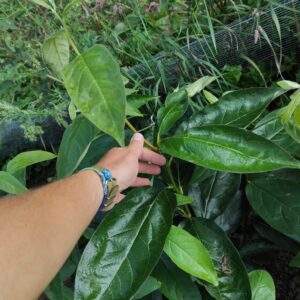
Diospyros virginiana rootstock, a vigorous American persimmon for kaki grafting in cold regions, with excellent cold hardiness.
Rootstocks for sale
Rootstocks for sale

Rootstocks for sale
Rootstocks for sale
Rootstocks for sale
Rootstocks for sale
Rootstocks for sale
Rootstocks for sale
Rootstocks for sale
Rootstocks for sale
Rootstocks for sale
Rootstocks for sale
Rootstocks for sale
Rootstocks for sale
Rootstocks for sale
Rootstocks for sale
Rootstocks for sale
Rootstocks for sale
Rootstocks for sale
Rootstocks for sale
Rootstocks for sale
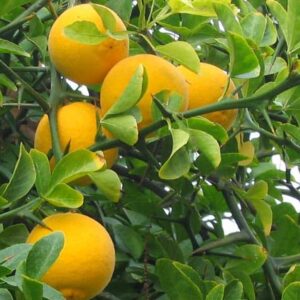
Citrus trees (cold hardy)

Rootstocks for sale
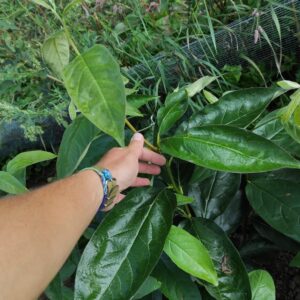
Persimmon trees
Diospyros lotus rootstock, a hardy seedling rootstock for kaki, persimmon and kaki × virginiana hybrids.
Feijoa
Rootstocks for sale
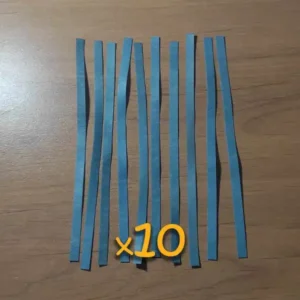
Flexiband grafting strips, pack of 10 elastic bands for holding and compressing grafts during healing.
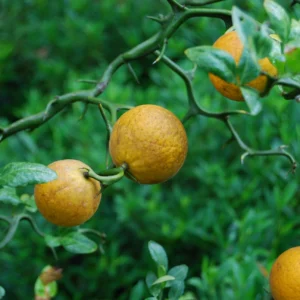
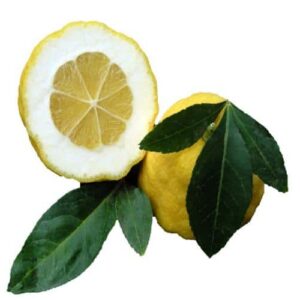
Citrus trees (cold hardy)

Rootstocks for sale

Rootstocks for sale

Rootstocks for sale

Rootstocks for sale

Rootstocks for sale

Rootstocks for sale

Rootstocks for sale

Morus alba rootstock, a one-year bare-root white mulberry seedling for grafting mulberry varieties.
Fruit tree rootstocks for grafting your own trees
We supply ungrafted fruit tree rootstocks for gardeners, collectors, orchard growers and professional nurseries wishing to produce their own trees.
The rootstock forms the roots and lower part of the future tree. It must subsequently receive a scion or bud from a botanically compatible fruit cultivar.
Choosing the rootstock is just as important as choosing the fruit variety.
It strongly influences tree vigour, mature size, time to first cropping, anchorage, longevity and adaptation to the soil.
A dwarfing or low-vigour rootstock produces a more compact tree that generally begins cropping earlier, but it normally requires more support and attention.
A vigorous rootstock produces a larger tree that is often better anchored and more independent once established, but requires considerably more space.
Which rootstock should you choose?
There is no single rootstock that is best for every situation.
The correct choice depends on the species to be grafted, the available space, soil type, wind exposure, drainage, water availability and the intended tree form.
The fruit species you intend to graft
Every rootstock accepts only a limited range of compatible species and cultivars.
An apple rootstock is intended principally for apple trees, while pear, plum, cherry, citrus and other fruit species require different rootstocks and compatibility considerations.
Several special combinations are possible between closely related species, but they should not be generalised.
Always verify compatibility before ordering, particularly for pears grafted onto quince and for the different groups of stone fruit.
Compatibility within one fruit species can also vary between individual cultivars and rootstocks.
Vigour and mature tree size
Dwarfing and low-vigour rootstocks are suited to small gardens, trained forms and intensive orchard systems.
They generally require fertile soil, regular water, careful weed control and permanent or long-term support.
Moderately vigorous rootstocks provide a compromise between tree size, ease of harvesting, anchorage and independence.
They are often suitable for family orchards and medium-sized gardens.
Vigorous rootstocks are intended for large gardens, traditional orchards, half-standards and standard trees.
They usually enter production more slowly but can form powerful, durable and well-anchored trees.
Soil conditions
The rootstock must be suited to the actual characteristics of the site.
Some rootstocks tolerate heavy, dry or moderately calcareous ground more successfully, while others require fertile, moisture-retentive and well-drained soil.
Soil depth, pH, summer water reserve and the presence of stagnant winter moisture are all important.
An unsuitable rootstock may remain weak, develop nutrient deficiencies, anchor poorly or decline prematurely.
A dwarfing rootstock should not be selected for difficult soil simply because a small tree is desired.
The level of maintenance you can provide
A tree on a low-vigour rootstock generally requires more staking, irrigation, feeding, weed control and crop management.
It should not be chosen solely because a compact tree appears easier to maintain.
A vigorous rootstock requires more space and greater attention to formative pruning during the first years.
Once established in suitable ground, the resulting tree often becomes more independent and better able to compete with surrounding vegetation.
Do not confuse the rootstock with the form of the tree
The rootstock largely determines the future vigour and potential dimensions of the tree.
Tree form describes the way an already grafted tree has been trained and presented, such as a maiden, bush, half-standard or standard.
The products in this category are rootstocks only.
They are not yet named fruit cultivars and will not produce the fruit you require until they have been grafted.
The height of the graft and the subsequent training system can be used to form a maiden, bush, low tree, half-standard or standard within the limits imposed by the vigour of the rootstock.
A high graft does not transform a dwarfing rootstock into a vigorous standard root system, and a low graft does not make a vigorous rootstock permanently compact.
Rootstocks supplied by specialist propagators
We do not propagate the majority of the rootstocks offered in this category ourselves.
Most are obtained from specialist growers equipped to produce the numerous clones and seedlings required for different fruit species.
We select and supply them in order to offer rootstocks for apples, pears, plums, cherries, citrus and other fruit trees, according to seasonal availability.
The rootstocks currently propagated directly within our own nursery include Citrumelo C4475 and several cultivars or selections of Poncirus, used principally for grafting cold-hardy citrus.
This difference does not alter their horticultural function.
Whether propagated by us or by another specialist nursery, every rootstock should be selected according to its identity, vigour, soil adaptation and compatibility with the intended scion.
Living plants with naturally variable size grades
Rootstocks are living young plants, so their diameter, height and root system vary according to species, propagation method and growing conditions during the season.
An exceptionally thick rootstock is not necessarily better than a finer one.
The stem diameter should principally suit the intended grafting method and provide an appropriate match with the scion wood.
Fine rootstocks are particularly suitable for whip-and-tongue grafting and other forms of bench grafting.
More developed plants may be suitable for cleft, side, bark or field grafting according to species, stem diameter and season.
Any diameter grade stated on the product page represents a range rather than an identical measurement for every plant.
When should rootstocks be planted and grafted?
Most of our rootstocks are supplied bare-root while dormant.
They should be planted promptly after delivery whenever the soil is neither frozen nor waterlogged.
If planting must be delayed, keep the roots moist and protected from wind and frost.
For storage lasting more than a few days, heel the plants temporarily into loose soil so that the complete root system remains covered and does not dry out.
A rootstock can be bench-grafted before planting when its diameter and the chosen technique are suitable.
It can also be planted first and grafted later after successful establishment.
The best method depends on the species, the available scion wood, the season and the grafting technique being used.
Where rootstocks are planted for summer budding, maintain a weed-free row and provide sufficient water throughout the first season.
Active growth is required for the bark to lift correctly during T-budding or similar techniques.
Preparing the planting area correctly
Prepare a sufficiently broad area of soil and remove couch grass, bindweed and other perennial weeds carefully.
Young rootstocks compete poorly with established vegetation for water and nutrients.
Spread the roots naturally without folding them upwards or forcing them into a narrow planting hole.
Backfill principally with the original soil after breaking it into a fine and workable structure.
Do not place fresh manure, concentrated fertiliser or a pocket of pure potting compost directly against the roots.
Water thoroughly after planting so that the soil settles around the root system.
Keep the row weed-free and continue watering throughout the first growing season whenever rainfall is insufficient.
A layer of mulch can reduce evaporation and weed competition but should not remain pressed against the stem.
Where several rootstocks are planted within a nursery row before grafting, provide enough space for cultivation, tying, sucker removal and the eventual lifting of the young trees without excessive root damage.
Planting depth and future graft position
Plant the rootstock at approximately the same depth at which it was growing in the nursery.
The root collar should not be buried deeply beneath the finished soil surface.
Where the rootstock has already been grafted before planting, keep the graft union clearly above ground level.
Deep planting can encourage the scion to produce its own roots and partially or completely bypass the influence of the rootstock.
It can also keep sensitive bark continuously wet and increase the risk of collar decay.
The final grafting height should be chosen according to the intended tree form, the grafting technique and the need to protect the future union from soil moisture and mechanical damage.
Successful grafting depends on cambial contact
Grafting success depends on fresh scion wood, suitable timing, precise cuts and close contact between the cambium of the rootstock and that of the selected cultivar.
The scion and rootstock do not have to possess exactly the same diameter.
Where their diameters differ, align the cambial layers accurately along at least one side rather than centring the scion mechanically.
Secure the graft firmly and protect the cut surfaces from drying.
Once growth begins, support the new shoot with a stake before it becomes vulnerable to wind damage.
Remove shoots appearing beneath the graft union regularly because they belong to the rootstock and compete with the selected cultivar.
A successful graft still requires careful watering, weed control, staking and protection from animals during the first growing seasons.
Bench grafting or grafting after establishment?
Bench grafting before planting
Bench grafting allows the rootstock and scion to be handled at a comfortable working height before the completed tree is planted.
Whip-and-tongue grafting is especially suitable where the two stems possess similar diameters.
The freshly grafted plant must then be handled carefully to prevent movement or breakage of the union during planting.
Temperature, humidity and protection from drying are important while callus tissue forms.
Grafting an established rootstock
Planting the rootstock first allows it to establish before being budded or grafted in the nursery row.
A well-rooted and actively growing plant can provide strong growth after the graft takes.
This method requires an additional growing period and careful labelling so that every rootstock and intended cultivar remain correctly identified.
Summer budding is especially dependent on adequate water and active bark movement.
Dwarfing rootstocks require suitable growing conditions
A dwarfing rootstock does not create a small tree independently of soil, water, support and pruning.
Its reduced root system normally makes the tree more dependent on fertile ground and regular moisture.
Permanent support may be required because reduced vigour can be accompanied by weaker anchorage.
Grass competition can restrict growth severely, particularly during establishment.
A dwarfing rootstock planted in poor, dry or compacted soil may produce a weak and unhealthy tree rather than a compact and productive one.
These rootstocks are most successful where their greater management requirements can be met consistently.
Vigorous rootstocks require enough permanent space
A vigorous rootstock is normally chosen for durability, anchorage, larger tree forms and adaptation to lower-input orchard conditions.
The resulting tree can eventually occupy a substantial area and should be positioned accordingly from the beginning.
Do not rely on severe annual pruning to confine a naturally vigorous tree permanently within a restricted garden.
Heavy cutting stimulates strong regrowth, delays cropping and creates large wounds.
Correct spacing and formative pruning during the first years are more effective than attempting to reduce an unsuitable mature tree later.
Rootstock and scion compatibility
Botanical compatibility is not always a simple question of whether a graft begins growing during its first season.
Some combinations form an apparently successful union and then develop swelling, restricted sap movement, mechanical weakness or progressive decline several years later.
This delayed incompatibility is especially important in pears grafted onto quince and in several combinations involving stone fruit species.
An interstem can sometimes be used between an incompatible cultivar and rootstock, but this creates two graft unions and requires a proven combination.
Use established cultivar–rootstock pairings wherever reliable information is available.
Seedling and clonal rootstocks
Seedling rootstocks
A seedling rootstock is grown from a seed and is therefore genetically different from every other seedling.
Seedling populations can show variation in vigour, root architecture, soil adaptation and disease behaviour.
They are frequently vigorous and are often used for traditional orchard trees, although this depends on the fruit species.
Clonal rootstocks
A clonal rootstock is propagated vegetatively so that every correctly identified plant possesses the same genotype.
This provides greater uniformity in vigour and general behaviour than an unselected seedling population.
Named apple rootstocks such as M9, MM106 and many Geneva selections are clonal rootstocks.
Clonal identity does not eliminate variation caused by soil, climate, plant health and nursery conditions.
Read the rootstock guide before ordering
Our guide explains the main principles used to compare fruit tree rootstocks by species, vigour, mature size, anchorage, soil adaptation and intended use.
It also explains the distinction between the rootstock and the trained form of the tree and helps prevent selection based only on a theoretical height.
Frequently asked questions about fruit tree rootstocks
Does a rootstock produce fruit?
An ungrafted rootstock may eventually produce its own fruit, but this will not be the named variety you intend to cultivate. Its principal purpose is to receive a selected scion or bud.
Are the rootstocks already grafted?
No. Products in this category are supplied as rootstocks only and must be grafted by the purchaser unless the individual product page states otherwise clearly.
Do you propagate every rootstock you sell?
No. Most are obtained from specialist propagators. We currently propagate Citrumelo C4475 and several cultivars or selections of Poncirus directly within our nursery.
Does the rootstock determine the fruit variety?
No. The grafted cultivar principally determines fruit colour, flavour, shape and harvest season. The rootstock principally influences vigour, tree size, anchorage, soil adaptation and time to first cropping.
Can any cultivar be grafted onto any rootstock?
No. The scion must be botanically compatible with the rootstock. Particular cultivars can also be incompatible with rootstocks commonly used for the same fruit species.
Which rootstock should be chosen for a small garden?
A low- or moderate-vigour rootstock is generally the most appropriate, but it must also suit the soil and its requirements for support, irrigation and weed control must be accepted.
Which rootstock should be chosen for a standard tree?
Standards normally require a vigorous rootstock with strong anchorage and the ability to form a durable tree. The precise choice depends on the fruit species and soil.
Does a half-standard always require a vigorous rootstock?
The stem height and rootstock vigour are separate characteristics. A durable half-standard normally requires sufficient vigour and anchorage, but the correct rootstock still depends on species, soil and intended mature size.
Should the rootstock be planted before it is grafted?
Both methods are possible. It can be bench-grafted before planting or established in a nursery row and grafted or budded after it begins growing.
How should rootstocks be stored before planting?
Protect the roots immediately from drying, wind and frost. For a longer delay, heel the plants into loose and moist soil until permanent planting is possible.
Why are the rootstocks not all exactly the same diameter?
They are living plants whose development varies according to species, propagation and growing conditions. Any stated size grade therefore represents a range.
Is a thicker rootstock better?
Not necessarily. The most useful diameter is the one suited to the intended grafting method and the available scion wood.
Can a dwarfing rootstock grow without a stake?
Some dwarfing rootstocks require permanent support, while others need support principally during establishment. Follow the recommendations for the individual rootstock rather than relying only on its general vigour class.
Does a vigorous rootstock always tolerate poor soil?
No. Vigour does not guarantee tolerance of waterlogging, drought, active lime or another unsuitable soil condition. Soil adaptation must be assessed independently.
Can a rootstock change the harvest date?
It can influence tree growth, crop load and sometimes the exact timing of maturity, but the principal harvest period remains a characteristic of the grafted cultivar.
What should be removed after the graft begins growing?
Remove shoots emerging beneath the graft union because they belong to the rootstock and compete with the selected cultivar.
Why has a graft failed even though the buds began growing?
Initial bud growth can use reserves already present within the scion. Lasting success requires callus formation and continuous vascular contact between the scion and rootstock.
Can the graft union be buried?
No. Keep it clearly above the soil. Burial can encourage scion rooting and expose the union to prolonged moisture and decay.
What is the difference between a seedling and a clonal rootstock?
A seedling is genetically unique and naturally variable. A clonal rootstock is propagated vegetatively to reproduce one selected genotype more uniformly.