Pre-orders are open No payment today. Stock will be checked during the inventory in early August, then you will receive a payment link for the available trees.

Cider apple trees

Apple trees

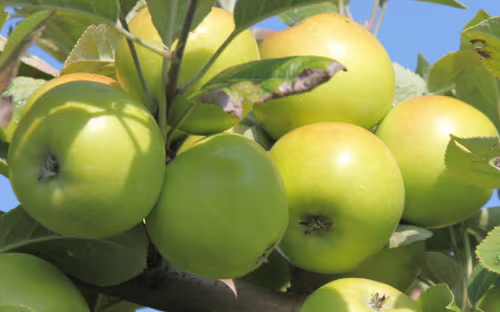
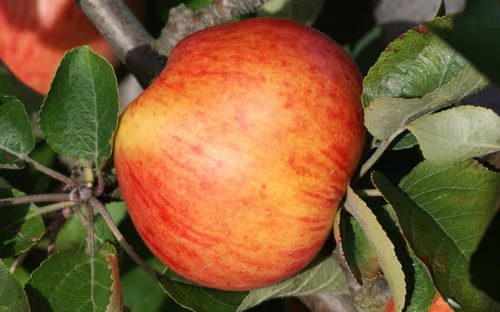
Binet Rouge

Binet Rouge is a traditional French hard cider variety from the Pays d'Auge area of Normandy.
From 26,50 

Apple trees

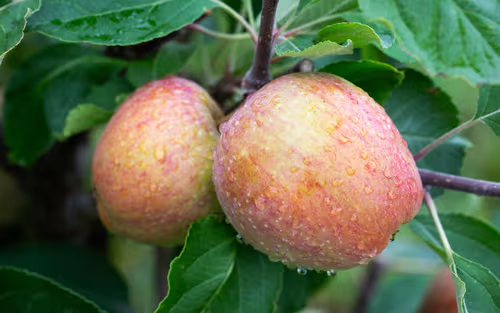
Colapuy

A traditional late-season dessert apple from France with a good sweet / sharp balance.
From 26,50 

Apple trees

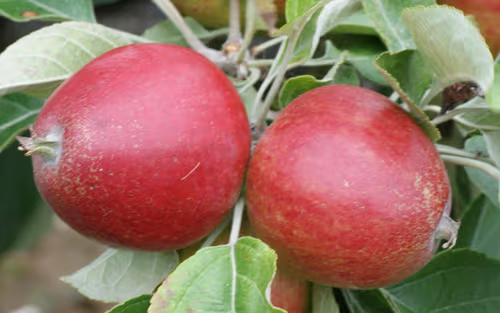
Dello

Dello cider apple tree, a sweet green cider apple of medium size, harvested in October and typical of the Thiérache region.

From 26,50 

Apple trees

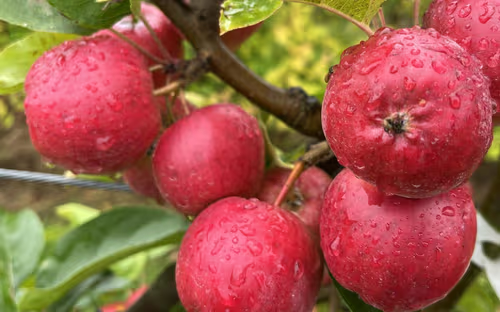
Du Verger

Du Verger is an old French bittersweet cider apple variety.
From 26,50 
Autumn 2026
Amere de Berthencourt is a traditional French bittersweet cider apple.
From 26,50 

Apple trees

Amere Nouvelle

Amere Nouvelle is a traditional French bittersweet cider apple.
From 26,50 

Apple trees

Armagnac

Armagnac is a traditional French cider apple, producing a sharp juice. It is a good choice for adding an acidic component to your cider blends.
From 26,50 

Apple trees

Ascahire

A large reliable cooking apple from northern France which is particularly good for juicing.
From 26,50 

Apple trees

Baguette d’Hiver

A traditional late season red dessert apple from northern France.
From 26,50 
Autumn 2026

Apple trees

Barbarie

Traditional cider apple from Northern France producing sweet, lightly tannic fruit used for balanced, aromatic cider blends.
From 26,75 

Apple trees

Bedan des Parts

A traditional French cider variety, producing a high quality bittersweet juice.
From 26,50 
Autumn 2026

Apple trees

Brown’s Apple

Brown's Apple cider apple tree, an English aromatic sharp-bittersweet variety for clear, fruity and balanced ciders.

From 26,50 
Autumn 2026

Apple trees

Coloradona

Coloradona cider apple tree, a red-fleshed Spanish variety with aromatic, tangy juice for colourful cider blends.

From 26,50 

Apple trees

Dabinett

Dabinett is a traditional English cider apple variety, producing a bittersweet juice.
From 26,50 

Apple trees

Domaines

French cider variety, very resistant to fireblight infection.
From 26,50 
Autumn 2026

Apple trees

Douce Moën

Classic bittersweet cider apple from Brittany, producing sugar-rich fruit that creates full-bodied, aromatic traditional ciders.
From 26,75 
Autumn 2026
Rare heritage cider apple from Northern France with deep red fruit, rich sweetness and aromatic juice ideal for traditional cider making.
From 26,75 

Apple trees

Ellis Bitter

Ellis Bitter is a traditional and popular English cider apple, producing a bittersweet juice.
From 26,50 
Autumn 2026

Apple trees

Everest

Malus Evereste is a popular traditional crab-apple with masses of white blossom, then red-yellow fruits.
From 26,50 
Autumn 2026

Apple trees

Fenouillet Gris

A traditional French cider apple variety producing aromatic fruit with balanced bittersweet qualities.
From 26,50 

Apple trees

Frequin Rouge

Frequin Rouge is one of the most important of the traditional French bittersharp cider varieties.
From 26,50 
Autumn 2026

Apple trees

Germaine

Historic bittersweet cider apple from Northern France, producing aromatic juice that blends beautifully with sweet and sharp cider varieties.
From 26,75 
Autumn 2026

Apple trees

Golden Gem

From 26,50 
Autumn 2026

Apple trees

Golden Gem

A flowering crab apple pollinator with abundant white blossom, suitable for apple flowering groups 3 and 4.
From 26,50 
Autumn 2026

Apple trees

Harrison

Harrison cider apple tree, an old American bittersweet variety for golden, full-bodied and aromatic cider.

From 26,50 
Harry Masters Jersey is a traditional English cider apple variety, producing a bittersweet juice.
From 26,50 

Apple trees

Kermerrien

A traditional French cider variety, grown for the acidic quality of its juice.
From 26,50 

Apple trees

Kingston Black

Kingston Black is one of the premier English cider varieties and produces a bittersharp juice.
From 26,50 
Autumn 2026

Apple trees

Maria Lena

A traditional cider apple variety producing aromatic fruit suitable for balanced artisanal cider production.
From 26,50 

Apple trees

Marie Menard

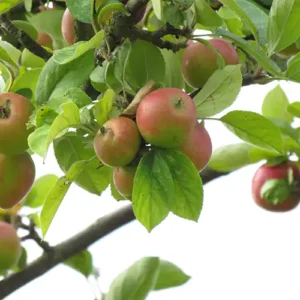
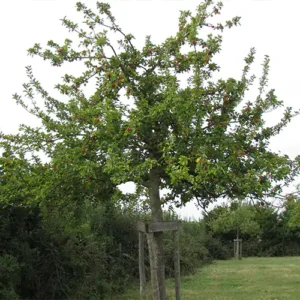
Marie Ménard cider apple tree, a regular productive bittersweet variety, picked in mid-October and pressed in November.
From 26,50 

Apple trees

Marseigna

Marseigna is a traditional French cider variety, producing a high quality bitter sweet juice.
From 26,50 
Autumn 2026

Apple trees

Medaille d’Or

Medaille d'Or is a traditional French cider variety, which produces a full bittersweet juice.
From 26,50 

Apple trees

Michelin

Michelin (or Normandie Blanc) is a traditional French cider apple variety producing a bittersweet juice.
From 26,50 

Apple trees

Muscadet de Dieppe

A very old French bittersweet cider variety.
From 26,50 
Autumn 2026

Apple trees

Néhou

An old French bittersweet cider variety.
From 26,50 

Cider apple trees: choosing varieties for a balanced cider

Cider apples are selected primarily for the composition and behaviour of their juice during fermentation. Many produce small, firm, bitter, sharp or astringent fruit that is not particularly pleasant to eat directly from the tree.

These same characteristics can provide cider with body, freshness, colour, aromatic complexity, structure and length.

A cider variety should be assessed according to its sugar content, acidity, tannins, aroma, juice yield, harvest period and behaviour during fermentation. Fruit size and raw eating quality are much less important than they are for a dessert apple.

The choice of varieties should be planned as a future blend from the moment the orchard is planted. Some apples can produce an interesting single-variety cider, but combining complementary profiles generally creates a more balanced drink and reduces the effect of differences between seasons.

The cider blend begins in the orchard

A balanced cider needs enough fermentable sugar to provide body and alcohol, sufficient acidity to maintain freshness and an appropriate level of tannins to create structure without excessive bitterness or dryness.

A sweet, high-sugar apple can provide a useful base but may produce a flat cider when used alone. A very sharp apple supplies freshness but can dominate a blend and create a hard finish.

Bitter and bittersweet varieties provide body, tannins and length, but too high a proportion may make the cider aggressively astringent.

It is therefore more useful to plant several complementary profiles than several varieties with almost identical juice composition.

A small coherent collection might contain two or three bittersweets, one more strongly tannic variety, a sharp or bittersharp apple and possibly an aromatic or versatile cultivar.

Harvest periods should remain sufficiently close to allow practical pressing. Varieties ripening six weeks apart can extend the season, but they require storage of the earliest fruit or several separate fermentations.

The four main cider apple categories

Sweet cider apples

Sweet apples are low in acidity and generally low in tannins. When they contain sufficient sugar, they provide roundness, volume and potential alcohol.

Used alone, they may produce a soft but relatively unstructured cider. They are particularly useful for reducing excessive acidity or tannin in a blend.

Bittersweet cider apples

Bittersweet varieties combine relatively low acidity with significant tannin content and often a useful concentration of sugar.

They form the basis of many traditional French and British cider styles.

Varieties such as ‘Dabinett’, ‘Michelin’, ‘Yarlington Mill’, ‘Douce Moën’, ‘Bedan’, ‘Binet Rouge’ and ‘Tremlett’s Bitter’ belong broadly to this profile, although they differ considerably in ripening season, vigour, tannin quality and aroma.

Bitter cider apples

Bitter apples are particularly rich in tannins and may be strongly astringent when eaten fresh.

They add structure, length and sometimes deeper colour, but are generally used in a measured proportion.

A highly tannic variety should not be planted alone in large quantities without access to sweeter or sharper fruit for balancing the juice.

Sharp and bittersharp cider apples

Sharp varieties provide malic acid, freshness and tension. They can also lower the pH of a must that would otherwise be insufficiently acidic.

Bittersharp apples combine substantial acidity with noticeable tannins. They contribute both freshness and structure.

Varieties such as ‘Kingston Black’, ‘Foxwhelp’ and ‘Stoke Red’ are commonly placed within the bittersharp group, although their exact composition varies according to climate and season.

French and British cider classifications

In France, cider apples are commonly described as sweet, bittersweet, bitter or sharp according to the dominant characteristics of their juice and their concentration of phenolic compounds.

The traditional British system distinguishes sweet, bittersweet, sharp and bittersharp apples.

The two systems follow the same general principle, but the analytical thresholds and terminology are not always exactly equivalent.

A French variety described as bitter or bittersweet may consequently receive a slightly different classification in a British collection.

The category mainly indicates the possible role of the fruit within a blend. Two varieties classified as bittersweet may still produce very different ciders because of their sugar level, aroma, tannin quality and fermentation behaviour.

French cider apple traditions

Normandy

Normandy has one of the richest cider apple heritages in Europe. Varieties were selected and maintained for centuries in pasture orchards containing widely spaced standard trees, often combined with livestock grazing.

Traditional Normandy ciders frequently rely on sweet and bittersweet apples to provide roundness, fruitiness and gentle bitterness.

Varieties such as ‘Bedan’, ‘Binet Rouge’, ‘Bisquet’, ‘Fréquin Rouge’, ‘Michelin’ and numerous local selections belong to this heritage.

Different parts of Normandy do not produce identical styles. Some traditions favour softer and fruitier blends, while others give greater importance to bitter and strongly tannic varieties.

Brittany

Brittany also maintains a very diverse cider apple heritage. Depending on the region and blend, its ciders may be light and fresh or richer, more tannic and deeply coloured.

Varieties such as ‘Marie Ménard’, ‘Douce Moën’, ‘Kermerrien’, ‘Peau de Chien’ and ‘Guillevic’ can contribute sugar, tannins, acidity or distinctive aromas.

‘Guillevic’ occupies a particular position among sharp and aromatic apples and can bring considerable freshness to a blend.

Varieties moving between regions

Cider apple boundaries have never been absolute. Graftwood has circulated between Normandy, Brittany, western France, Britain and research collections.

A variety may therefore be established in several cider regions or be known under different synonyms.

French apples such as ‘Michelin’, ‘Bedan’ and ‘Vilberie’ have been grown in British cider orchards, while British varieties are now planted in France and other European countries.

British cider apple traditions

Traditional British cider production is strongly associated with western and south-western England, particularly Herefordshire, Gloucestershire, Worcestershire, Somerset, Devon and Cornwall.

Wales, including Monmouthshire, also has an important cider and perry heritage.

Traditional orchards often contained large standard trees, while modern plantations may use smaller forms suited to easier management and mechanical harvesting.

Bittersweet varieties such as ‘Dabinett’, ‘Yarlington Mill’, ‘Harry Masters Jersey’, ‘Chisel Jersey’, ‘Brown Snout’, ‘Ellis Bitter’ and ‘Michelin’ contribute body, tannins and moderate acidity.

Bittersharp varieties such as ‘Kingston Black’, ‘Foxwhelp’ and ‘Stoke Red’ provide greater acidity alongside tannins.

Some British apples are regularly used for single-variety cider, but their reputation does not remove the influence of climate and crop load. A cultivar that appears balanced in one season may become excessively sharp, tannic or low in sugar in another.

Other European cider traditions

Asturias

Asturias in northern Spain maintains several hundred local apple varieties and an important tradition of natural cider.

Apples are classified according to acidity, sugar and phenolic composition, then blended to produce ciders that are generally dry, lively and lightly sparkling.

Varieties such as ‘Raxao’, ‘Regona’, ‘De la Riega’, ‘Blanquina’, ‘Xuanina’ and ‘Verdialona’ illustrate this extensive regional diversity.

The Basque Country

Basque cider, or sagardoa, also relies on a diverse collection of local apples.

Producers seek a balance between acidity, bitterness, aroma and structure rather than relying only on sweet fruit.

Traditional Basque cider is usually dry, fresh and lightly tannic, with blends remaining central to its identity.

Germany and central Europe

The German state of Hesse, particularly around Frankfurt, has a strong tradition of Apfelwein.

This apple wine is generally drier and sharper than traditional Normandy or western English cider.

It may be produced from versatile, high-acid regional apples rather than from a high proportion of specialised bittersweet varieties.

Fermented apple drinks are also produced in Switzerland, Austria, northern Italy, the Baltic countries and several other areas of central and northern Europe.

These traditions show that there is no single correct cider profile. Some styles emphasise tannins and roundness, while others favour acidity, clarity and a character closer to dry white wine.

Can a good cider be produced from one variety?

Yes, when one variety combines sufficient sugar, acidity, tannins and aroma.

A single-variety cider is also an excellent way to understand the true character of an apple within a collection.

It is, however, more dependent on the season. A cool year may reduce sugar, a heavy crop may dilute concentration and a dry summer may alter acidity and tannin levels.

Blending generally provides greater consistency. It does not hide the varieties, but uses each one according to its strengths: base, freshness, tannins, colour or aroma.

When several varieties are available, keep at least a small quantity of each juice separate. After fermentation, compare the results before deciding the most useful proportions for future blends.

Plan pollination before planting the cider orchard

A cider orchard must include varieties with sufficiently overlapping flowering periods to ensure effective pollination.

Most apple trees crop more reliably with pollen from a genetically different variety flowering at a compatible time.

Ploidy should also be checked. A triploid variety can receive compatible pollen and produce apples, but usually provides poor pollen for neighbouring trees.

A planting containing a triploid should therefore also include at least two compatible diploid varieties capable of pollinating one another.

Varieties should not be selected only according to their role in the finished cider. Flowering compatibility, harvest grouping, disease behaviour and cropping regularity are equally important.

Group the harvest periods

Harvest date is particularly important for a small orchard or family press.

Varieties ripening in two or three coherent groups are generally easier to manage than a collection requiring a separate pressing every week.

Some early apples can be stored briefly while later varieties finish ripening, but the fruit must remain sound, dry and well ventilated.

Very different harvest periods may still be useful when the intention is to produce several distinct batches or cider styles.

View the apple harvest calendar

Harvest periods are indicative and vary according to the country, region, exposure, rootstock, crop load and weather during the season.

Consider biennial bearing and disease resistance

Several traditional cider varieties are susceptible to biennial bearing. They may produce a very heavy crop one year followed by a light crop the next.

Regular pruning, fruit thinning during heavy years and a diverse range of varieties help reduce the consequences of this behaviour.

Disease susceptibility should also be compared. Canker, scab, powdery mildew, fire blight and storage diseases vary considerably between varieties.

An excellent cider apple that is difficult to keep healthy in a particular climate may be better planted in a limited proportion rather than forming the majority of the orchard.

Heritage varieties should not automatically be described as resistant. Some are remarkably robust, while others require careful management in humid European climates.

Standard trees or smaller orchard forms?

Traditional standard orchards remain characteristic of many European cider regions.

The widely spaced trees can be long-lived and combined with grazed grassland, but they require considerable space and take longer to reach full production.

Bush trees, low-stem trees and half standards generally begin cropping earlier and make pruning, monitoring and harvesting easier.

They are particularly suitable for small orchards, collections and plantings containing many varieties.

The same cider variety can be grown on several rootstocks and in different forms. Rootstock and training modify tree size, time to cropping, anchorage and adaptation to soil.

They do not change a sharp variety into a bittersweet apple or alter its basic cider classification.

Harvest cider apples at the correct stage

Cider apples from large standard trees are often collected from the ground after natural fruit fall.

They should nevertheless be gathered promptly so that they do not remain in wet grass, become crushed or begin to rot.

Several collections are preferable to one single harvest. This avoids mixing mature fruit with apples that are still green or already deteriorating.

Some varieties benefit from a short period of post-harvest maturation, sometimes called sweating, before pressing.

This may improve juice extraction, sugar concentration and aroma, but the fruit must remain under cover, dry, ventilated and free from rot.

A slightly bruised apple may be pressed promptly. Mouldy, heavily rotten or already fermenting fruit should be discarded, as it can introduce undesirable microorganisms and flavours into the entire batch.

Producing cider on a small scale

Start with sound, balanced fruit

Sort, wash and drain the apples before crushing.

Record the weight or approximate proportion of each variety so that a successful blend can be repeated or adjusted.

Taste the fruit and, when possible, the juices separately. A bittersweet should provide perceptible tannins without making the whole mouth excessively dry, while a sharp apple should provide freshness without dominating the blend.

Measure the juice

A hydrometer or refractometer can estimate sugar concentration and potential alcohol.

Measuring pH and, where possible, total acidity helps assess freshness and the microbiological stability of the must.

These measurements are more useful than applying the same fixed blend percentages every year, because the composition of the same variety may change considerably between seasons.

Crush and press progressively

Crushing should create an even pulp without reducing the seeds to a fine paste.

A very coarse crush releases little juice, while an excessively fine puree may block the press.

A controlled maceration before pressing can increase tannin extraction, colour and aroma in some styles.

Excessive oxidation may instead produce a brown, heavy juice lacking freshness.

Ferment while limiting oxygen

Juice may ferment with naturally occurring yeasts or with a selected cider or wine yeast.

Spontaneous fermentation can provide considerable character, but requires impeccable fruit and strict hygiene.

Cool fermentation generally preserves aroma more effectively than a very rapid fermentation in a warm room.

Once active fermentation has begun, use a suitable fermentation vessel fitted with an airlock and avoid excessive empty headspace.

Control residual sugar and bottle pressure

Sweet or medium cider cannot be produced safely simply by bottling juice while a large quantity of fermentable sugar remains.

Continuing fermentation can create excessive pressure and cause bottles to burst.

Natural clarification, repeated racking, controlled cooling, filtration or another reliable stabilisation method is required to retain residual sugar safely.

For a beginner, producing a fully fermented still cider is generally safer than attempting immediately to create a sweet bottle-conditioned cider.

How to build a coherent small cider collection

For a first planting, choose approximately four to six varieties with complementary roles and harvest periods that can be grouped into two or three pressing dates.

A French-based collection might combine several Normandy or Brittany bittersweets with a sharper variety.

A British-based collection might combine ‘Dabinett’ or ‘Yarlington Mill’ with a bittersharp such as ‘Kingston Black’, ‘Foxwhelp’ or ‘Stoke Red’.

Combining traditions is entirely coherent. Varieties such as ‘Dabinett’, ‘Michelin’, ‘Marie Ménard’, ‘Douce Moën’, ‘Tremlett’s Bitter’, ‘Kingston Black’ and ‘Vilberie’ may provide complementary characteristics, provided their harvest periods and performance suit the local climate.

Do not plant every variety in equal quantities without considering its role. A highly acidic or strongly tannic apple may be essential to the blend while representing only a small proportion of the total crop.

Keep notes for each season: harvest date, fruit condition, sugar, acidity, proportions, fermentation duration and the final tasting result.

Over time, these records turn the orchard into a genuine blending tool adapted to the climate, varieties and preferred cider style.

Frequently asked questions about cider apple trees

Can cider apples be eaten?

They are edible, but many varieties are too bitter, tannic, sharp or firm to be enjoyable when eaten raw. These characteristics become valuable after pressing and fermentation.

Can cider be made from dessert apples?

Yes, but the result often lacks tannins and structure. Sharp apples, crab apples or specialised cider varieties can provide greater balance.

What is the best cider apple?

There is no universal best variety. The result depends on the blend, climate, maturity, fermentation method and style of cider required.

Must cider always be made from a blend?

No. Some varieties produce excellent single-variety ciders, but blending generally makes it easier to balance sugar, acidity and tannins.

What does bittersweet mean?

A bittersweet cider apple is relatively low in acidity but rich in tannins. It usually provides body, structure and moderate bitterness.

What does bittersharp mean?

A bittersharp apple contains both substantial acidity and tannins. It contributes freshness, structure and astringency.

Can French and British cider apples be blended?

Yes. Their geographical origin creates no incompatibility. Choose them according to juice composition, ripening season and the required cider profile.

Do cider apple trees require pollinators?

Most crop more reliably with a genetically different apple variety flowering at a compatible time.

Why are triploid cider apples poor pollinators?

Triploids generally produce pollen of low fertility. They can produce fruit when pollinated, but should not be relied upon to pollinate neighbouring trees.

Why do cider apples fall before harvest?

Many are traditionally collected after natural fruit fall at maturity. Several collections prevent ripe fruit from remaining too long on wet ground.

Should cider apples be stored before pressing?

Some varieties benefit from a short, ventilated post-harvest maturation period. The fruit must remain dry, sound and free from mould.

Can mouldy apples be pressed?

No. Mouldy or heavily rotten fruit can contaminate the whole batch and introduce serious flavour defects.

How many varieties should be planted for a small cider orchard?

Four to six complementary varieties are often sufficient for an initial collection, provided their flowering and harvest periods are compatible.

Should every cider variety be planted in equal numbers?

No. Plant according to its intended role. A strongly tannic or highly acidic variety may be useful in a relatively small proportion.

Can sweet cider be bottled while fermentation is still active?

This is dangerous unless residual sugar and yeast activity are strictly controlled. Uncontrolled fermentation can generate enough pressure to burst bottles.

Are old cider apple varieties naturally disease-resistant?

Not necessarily. Disease behaviour varies considerably, and each variety should be assessed for the climate and orchard conditions.