Annabella is particularly suited to cool, humid regions, in a sunny orchard with plenty of room. We recommend it to growers who enjoy dark, juicy and aromatic cherries. Regular cropping and low susceptibility to cracking are major strengths. The tree is very vigorous with a drooping habit, however, and requires a compatible pollinator nearby.
Annabella
Price range: 26,50 € through 64,50 €
A highly productive German sweet cherry with dark reddish-brown to almost black fruit, juicy and aromatic flesh, and low susceptibility to cracking.
‘Annabella’ is a German variety selected at the Jork fruit research station, particularly valued for its hardiness, distinctive drooping habit and the good resistance of its fruit to summer rainfall.
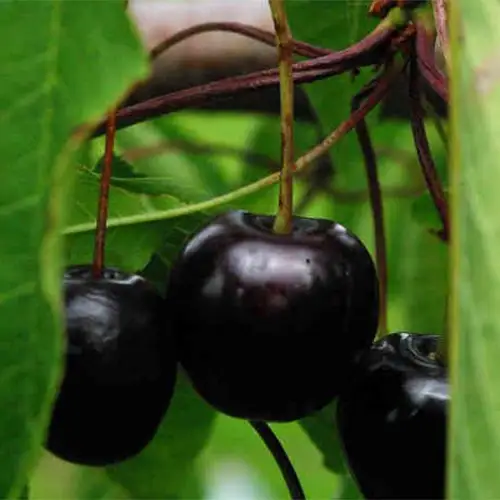
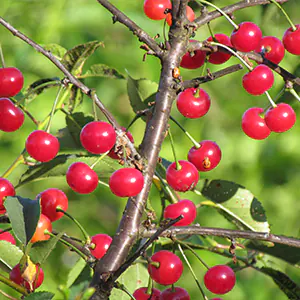
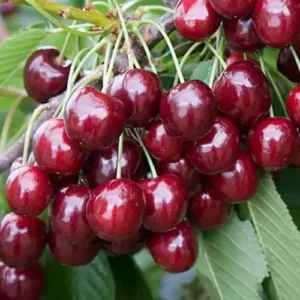
The medium-sized cherry is rounded to slightly heart-shaped or teardrop-shaped, with a clearly defined ventral suture. Its glossy skin turns dark reddish brown to almost black when fully ripe.
The dark-red flesh is moderately firm and juicy, with deeply coloured juice. Its flavour is pleasantly sweet and richly aromatic. The fruit is excellent for eating fresh and is also suitable for tarts, clafoutis, jams, juice and preserves.
Harvest generally takes place during the first half of July. The fruit has good resistance to cracking and rotting, making the variety particularly suitable for regions where rainfall is frequent during the cherry-ripening season.
The tree is very vigorous, robust and naturally healthy. It develops a distinctive habit, with flexible, drooping branches that can give it an almost weeping appearance. Crops are abundant, but regular simplification pruning helps maintain a balanced crown and ensure consistent production.
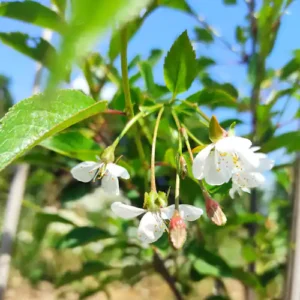
‘Annabella’ is self-sterile and has the incompatibility genotype S1S5. It must be planted with a compatible variety flowering at the same time, such as ‘Castor’, ‘Bigarreau Ghijssens’, ‘Kordia’ or ‘Ulster’.
Variety characteristics
A German variety resulting from a cross made in 1953 at the Jork Fruit Research Station in the Altes Land region and introduced into cultivation in 1970.
Origin and identity
Rube × Allers Späte Knorpelkirsche
Anabella
Growth and adaptation
Strong vigour, flexible and drooping habit, abundant cropping
Pollination and fertility
S1S5
Pollination
Compatible pollinating varieties
For reliable fruit set, plant at least one variety with a compatible flowering period nearby. Flowering period: 3 - mid season.
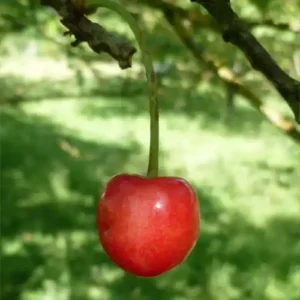 Cerise du Sars Price range: 26,50 € through 64,50 €View this variety
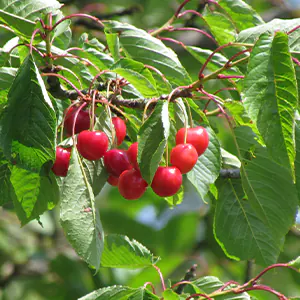 Hedelfingen Price range: 26,50 € through 64,50 €View this variety
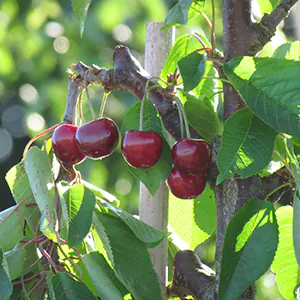 Coeur de Pigeon Price range: 26,50 € through 64,50 €View this variety
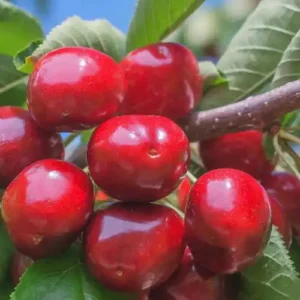 Lapins Price range: 26,50 € through 64,50 €View this variety
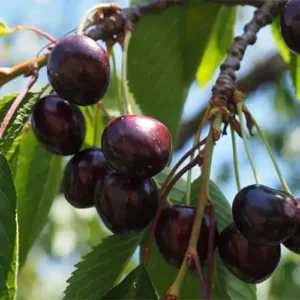 Kordia Price range: 26,50 € through 64,50 €View this variety
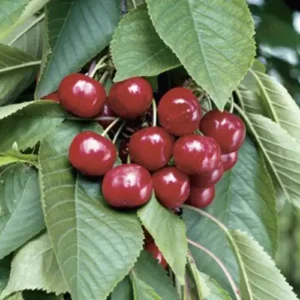 Stella Price range: 26,50 € through 64,50 €View this variety
Harvest calendar
Extend your harvest season
Discover varieties from the same category harvested just before, at the same time or just after.
About 15 days earlier
June 15-30
Related products
Cherry trees
Cherry trees
Cherry trees
Cherry trees