
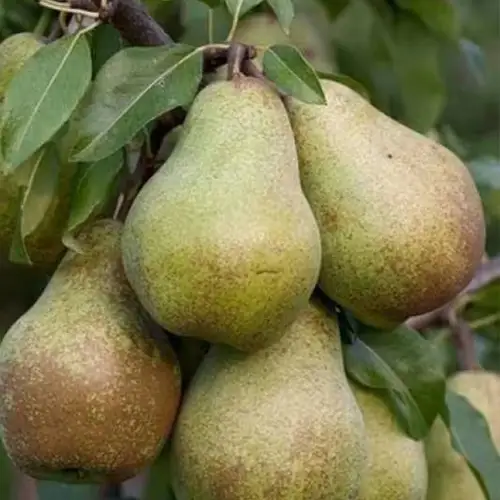
Jules d’Airoles is a pear for enthusiasts rather than a high-yielding commercial cultivar. Its irregular fruit develops exceptionally fine, buttery, juicy and sweet flesh with a light musky fragrance in November and December. It performs best in substantial soil and a warm, sheltered position. Proper thinning improves fruit size. We would readily choose it for an espalier or carefully managed smaller tree.
Jules d’Airoles
Price range: 26,50 € through 59,75 €
A French winter pear with fine, juicy, sweet and lightly muscat-flavoured flesh, valued for its good storage qualities.
‘Jules d’Airoles’ is an old French winter pear, particularly well suited to compact trained trees and espaliers thanks to the quality of its fruit and its good storage potential.
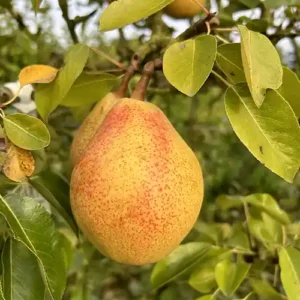
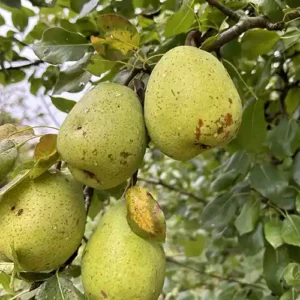
The pear is generally small to medium-sized, although larger fruit can be obtained when the crop is properly thinned. Its shape is elongated, irregular and slightly knobbly. The smooth skin turns orange-yellow when ripe, sometimes with bronze tones and a light red blush on the sun-exposed side.
The creamy-white flesh is fine, juicy and semi-melting. Its flavour is richly sweet, slightly acidic and pleasantly aromatic, with a subtle muscat note. The fruit develops its best qualities after several weeks in storage.
Harvest takes place around mid-October. The pears should then be stored in a cool place and are mainly eaten from late November through December, sometimes later under good storage conditions.
The tree has moderate vigour and produces numerous small shoots. Thorough fruit thinning is recommended to obtain fruit of a satisfactory size. The short fruiting shoots carrying much of the crop should be preserved when pruning. The variety prefers fairly heavy soils and sheltered positions, as the fruit may fall prematurely in light, dry ground. It has good compatibility with quince. Its late flowering and poor-quality pollen require compatible diploid varieties flowering at the same time.
Variety characteristics
A French variety sown in 1836 by Léon Leclerc in Laval, first fruited in 1852 and subsequently propagated by nurseryman François Hutin in the early 1860s.
Origin and identity
Seedling raised by Léon Leclerc, parents unknown
Jules d’Airoles Léon Leclerc, Jules d’Airolles
Growth and adaptation
Moderate vigour, spreading habit, numerous small shoots
Good compatibility with quince
Disease behaviour
Moderately susceptible to scab
Pollination
Compatible pollinating varieties
For reliable fruit set, plant at least one variety with a compatible flowering period nearby. Flowering period: 5 - very late.
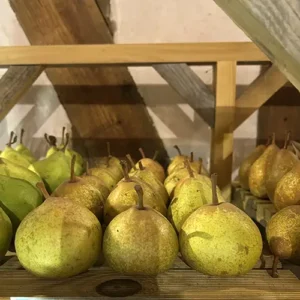
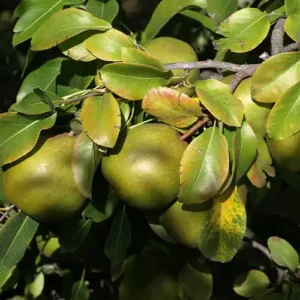 Passe-Crassane Price range: 26,50 € through 59,75 €View this variety
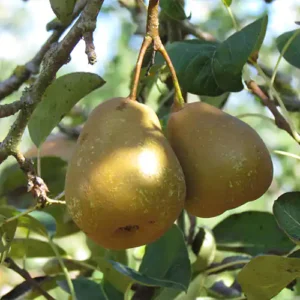
 Joséphine de Malines Price range: 26,50 € through 59,75 €View this variety
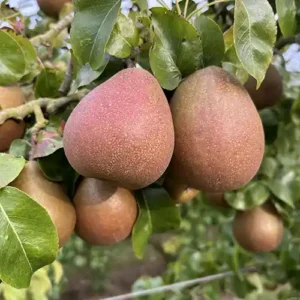
 Triompe de Vienne Price range: 26,50 € through 59,75 €View this variety
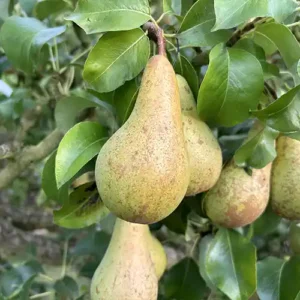
 Beurre Hardy Price range: 26,50 € through 59,75 €View this variety
 Concorde Price range: 26,50 € through 59,75 €View this variety
 Clapp’s Favorite Price range: 26,50 € through 59,75 €View this variety
Harvest calendar
Extend your harvest season
Discover varieties from the same category harvested just before, at the same time or just after.
At the same time
October 15-31
Related products

Pear trees
Dessert pear trees
Dessert pear trees
Pear trees