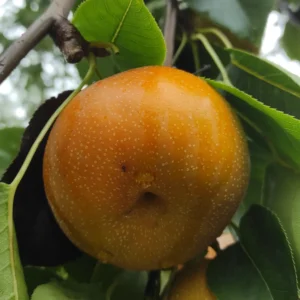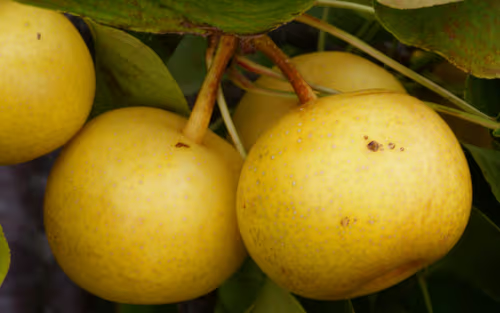
I mainly value Niitaka for its spectacular fruit size, heavy cropping and storage ability. The fruit stays crisp and juicy for a long time after harvest. A compatible pollinizer is essential because Niitaka is male-sterile and provides virtually no useful pollen itself.
Niitaka
Price range: 26,50 € through 59,75 €
A late Japanese Asian pear producing exceptionally large brown-russeted fruit with crisp, juicy, sweet flesh. Highly productive and especially valued for fruit size and long storage life.
Pre-orders are open
No payment today. You are reserving your trees before the inventory in early August.
After inventory, we will confirm the available trees and send you a payment link.
Dispatch generally takes place from late November to February, depending on the weather and the progress of lifting the trees.
Asian Pear ‘Niitaka’ is an important Japanese cultivar of Pyrus pyrifolia, released in 1927. Modern genetic work has confirmed its parentage as ‘Amanogawa’ × ‘Chojuro’, correcting the older attribution to ‘Imamuraaki’.
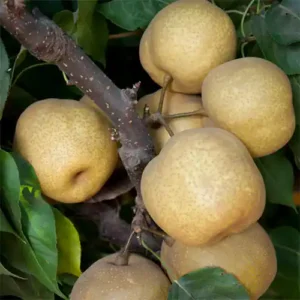
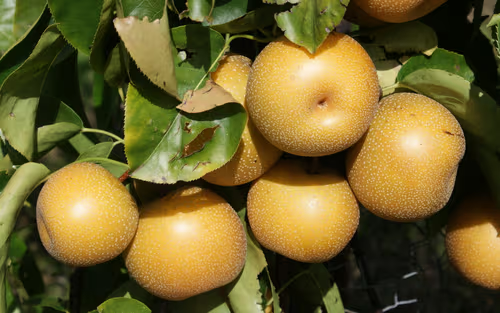
The fruit is very large, commonly around 700 g in Japanese descriptions, round and heavily russeted. The flesh is firm, crisp and juicy with a sweet, mild flavour. Its impressive size, high productivity and good keeping quality have made ‘Niitaka’ an important late-season Asian pear in Japan and Korea.
Ripening is late, generally from late September into early October in Japan, although climate can shift harvest considerably. Under good refrigerated conditions the fruit can keep for several months.
‘Niitaka’ is self-incompatible and also male-sterile, producing little or no useful pollen. It therefore requires a compatible pollinizer nearby and should not itself be relied upon to pollinate another pear. ‘Shinko’ and ‘Ya Li’ are among the cultivars recommended as pollen sources. The cultivar is resistant to Japanese pear black spot, while fire blight remains a concern in regions where that disease occurs.
Variety characteristics
Japanese cultivar released in 1927. Modern SSR and self-incompatibility studies confirmed Amanogawa and Chojuro as its true parents.
Origin and identity
Amanogawa x Chojuro
Niitaka pear
Growth and adaptation
Productive and vigorous, with a relatively upright habit. Fruit thinning is important to obtain the largest fruit.
Disease behaviour
Resistant to Japanese pear black spot. Fire blight remains a concern.
Pollination
Compatible pollinating varieties
For reliable fruit set, plant at least one variety with a compatible flowering period nearby. Flowering period: 2 - early.
 Tsu Li Price range: 26,50 € through 59,75 €View this variety
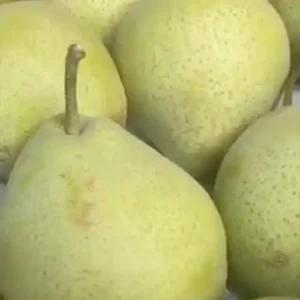 Shin Li Price range: 26,50 € through 59,75 €View this variety
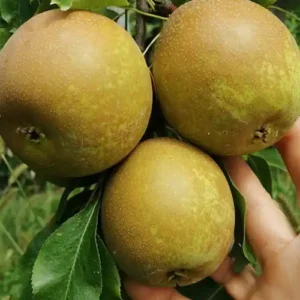 Benita Price range: 26,50 € through 59,75 €View this variety
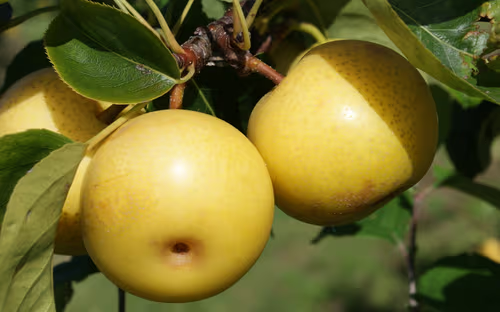 Shinseiki Price range: 26,50 € through 59,75 €View this variety
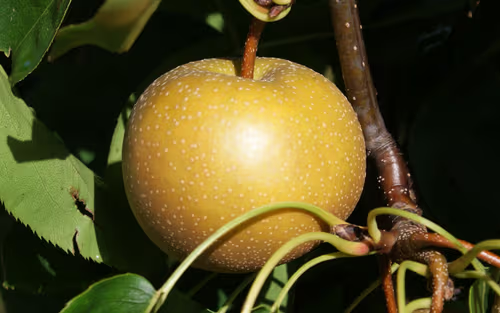 Chojuro Price range: 26,50 € through 59,75 €View this variety
 Hosui Price range: 26,50 € through 59,75 €View this variety
Harvest calendar
Extend your harvest season
Discover varieties from the same category harvested just before, at the same time or just after.