

I particularly like Petit Muscat for its flavour rather than its size. The fruits are tiny compared with modern apricots, but they are sweet, intensely aromatic and almost snack-sized. Its self-fertility and good performance in cooler conditions also make it a very interesting choice for northern European gardens.
Petit Muscat
Price range: 29,75 € through 64,50 €
An unusual apricot producing small, bite-sized yellow fruits with a distinctive sweet Muscat-grape flavour. Self-fertile, hardy and well suited to cooler growing areas.
Pre-orders are open
No payment today. You are reserving your trees before the inventory in early August.
After inventory, we will confirm the available trees and send you a payment link.
Dispatch generally takes place from late November to February, depending on the weather and the progress of lifting the trees.
Apricot ‘Petit Muscat’ is an unusual old cultivar of Prunus armeniaca, valued less for fruit size than for its distinctive flavour and reliable garden performance.
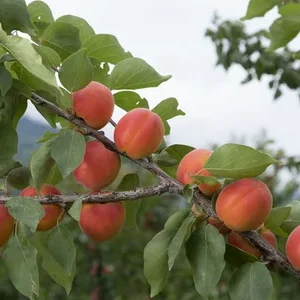
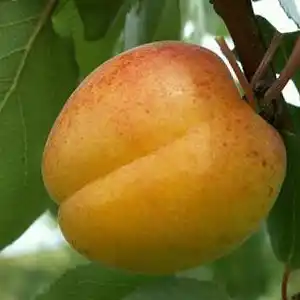
The fruits are small, usually around 3 to 3.5 cm across, with yellow skin developing red speckles or a light blush on the sunny side. The flesh is tender, sweet and highly aromatic, with a characteristic Muscat-grape flavour. They are excellent eaten straight from the tree and are also well suited to preserves, baking and drying.
‘Petit Muscat’ ripens mainly from the second half of July into August. The tree is self-fertile, so a second apricot tree is not required for cropping. It is generally vigorous and has a semi-upright habit.
One of its most useful qualities is its suitability for relatively cool climates. It is usually described as late flowering, which can help reduce exposure to the earliest spring frosts, and it is reported to have good general disease resistance. A sunny, sheltered position and freely draining soil will nevertheless give the best crops and fruit quality.
Variety characteristics
A traditional apricot reported as having been selected in England, although its precise breeder and date of origin are not well documented.
Origin and identity
de Nancy, de Wurtemberg, De Tours, Gros pêche, Pêche, Royal peach, Abricot de Nancy
Growth and adaptation
Moderate to vigorous growth with a semi-upright habit. Approximately 4 m high in favourable conditions, although final size depends strongly on the rootstock.
Pollination
Compatible pollinating varieties
For reliable fruit set, plant at least one variety with a compatible flowering period nearby. Flowering period: 4 - late.
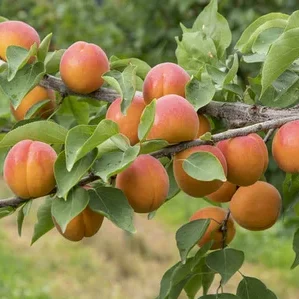 Manera Price range: 33,75 € through 64,50 €View this variety
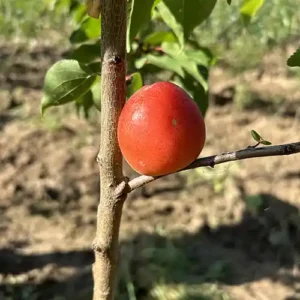 Luizet Price range: 33,75 € through 64,50 €View this variety
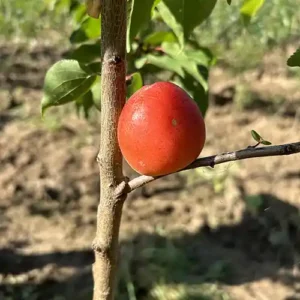 Mediva Price range: 33,75 € through 64,50 €View this variety
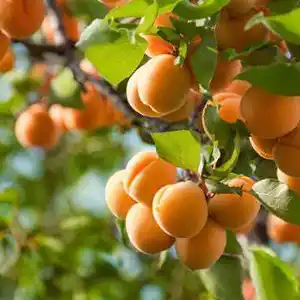 Polonais Price range: 33,75 € through 64,50 €View this variety
 Mia Price range: 33,75 € through 64,50 €View this varietyHarogem Price range: 29,75 € through 64,50 €View this variety
Harvest calendar
Extend your harvest season
Discover varieties from the same category harvested just before, at the same time or just after.
About 15 days earlier
July 15-30
At the same time
July 15-31
Related products
Apricot trees
Apricot trees
Apricot trees
Apricot trees