

Bergeron is one of the apricots I would consider for cooler or continental parts of Europe because its late flowering gives it a useful advantage against spring frost. The fruit is firm, aromatic and nicely balanced between sugar and acidity. I would however pay particular attention to bacterial canker and brown rot in damp climates.
Bergeron
Price range: 29,75 € through 64,50 €
A classic late-season French apricot with large orange fruits, firm aromatic flesh and a balanced sweet-tart flavour. Self-fertile and particularly useful for its late flowering.
Pre-orders are open
No payment today. You are reserving your trees before the inventory in early August.
After inventory, we will confirm the available trees and send you a payment link.
Dispatch generally takes place from late November to February, depending on the weather and the progress of lifting the trees.
Apricot ‘Bergeron’ is a classic French cultivar of Prunus armeniaca, discovered as a chance seedling near Lyon in the early twentieth century. It became one of the reference apricot varieties of the Rhône Valley and remains widely valued for its reliability and fruit quality.
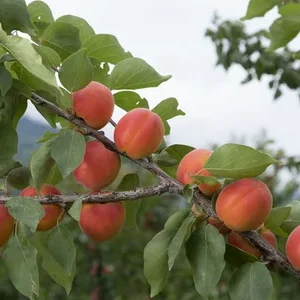
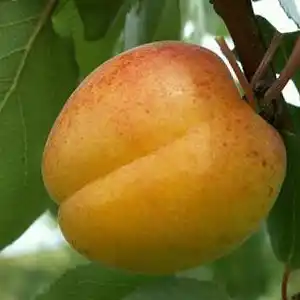
The fruits are large and slightly elongated, with golden yellow to deep orange skin developing an attractive red blush on the sunny side. The orange flesh is firm, fine-textured and juicy when fully ripe. Its flavour combines good sweetness with a refreshing acidity and a rich traditional apricot aroma.
‘Bergeron’ is a late-season apricot, generally harvested from late July into the first half of August in temperate European climates. The fruits hold well on the tree and have better handling qualities than many softer apricots. They are excellent for fresh eating and equally useful for preserves, baking and cooking.
The tree has moderate to strong vigour with a semi-upright habit and crops regularly once established. One of its main advantages is its late flowering, which can reduce exposure to early spring frosts in continental and cooler growing areas. ‘Bergeron’ is self-fertile, so it can crop without a second apricot nearby. Its main weaknesses are susceptibility to brown rot and bacterial canker, especially in wet or poorly ventilated sites.
Variety characteristics
Chance seedling discovered around 1920 by Mr Bergeron at Saint-Cyr-au-Mont-d’Or near Lyon, France.
Origin and identity
Chance seedling, parents unknown
Gabrielle Bergeron
Growth and adaptation
Moderate to strong vigour with a semi-upright habit. Regular cropping once established, although it can be relatively slow to come into full production.
Disease behaviour
Susceptible to brown rot and bacterial canker
Pollination
Compatible pollinating varieties
For reliable fruit set, plant at least one variety with a compatible flowering period nearby. Flowering period: 4 - late.
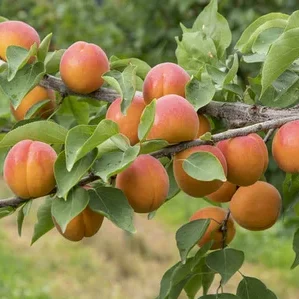 Manera Price range: 33,75 € through 64,50 €View this variety
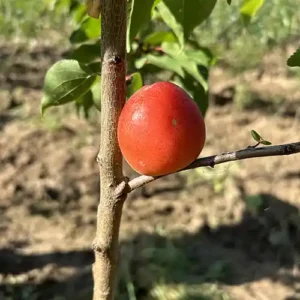 Luizet Price range: 33,75 € through 64,50 €View this variety
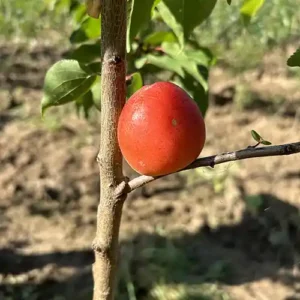 Mediva Price range: 33,75 € through 64,50 €View this variety
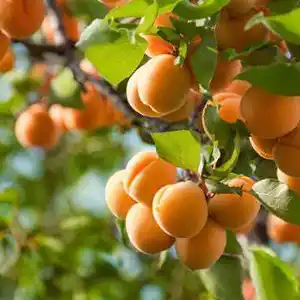 Polonais Price range: 33,75 € through 64,50 €View this variety
 Mia Price range: 33,75 € through 64,50 €View this varietyHarogem Price range: 29,75 € through 64,50 €View this variety
Harvest calendar
Extend your harvest season
Discover varieties from the same category harvested just before, at the same time or just after.
About 15 days earlier
July 15-30
At the same time
July 15-31
Related products
Apricot trees
Apricot trees
Apricot trees
Apricot trees