
Cambridge Gage is one of the gages I would choose when flavour is the priority. The fruit can become exceptionally sweet and juicy, but unlike some old greengages it also has a reputation for reasonably reliable cropping. I would give it the warmest, sunniest position available to get the best flavour.
Cambridge Gage
Price range: 26,50 € through 64,50 €
A classic English greengage with exceptionally sweet, rich and juicy green-yellow fruit. One of the most reliable gages and superb for dessert, preserves and baking.
Pre-orders are open
No payment today. You are reserving your trees before the inventory in early August.
After inventory, we will confirm the available trees and send you a payment link.
Dispatch generally takes place from late November to February, depending on the weather and the progress of lifting the trees.
Gage Plum ‘Cambridge Gage’ is a traditional English selection of Prunus domestica, probably related to the old Green Gage. It was received by the National Fruit Trials in 1927 from Chivers & Son of Histon, Cambridgeshire.
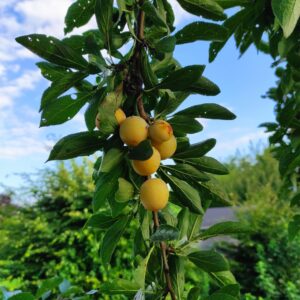
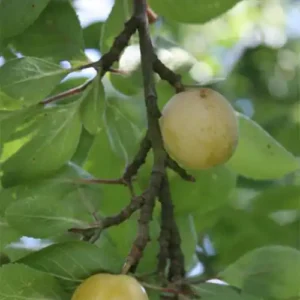
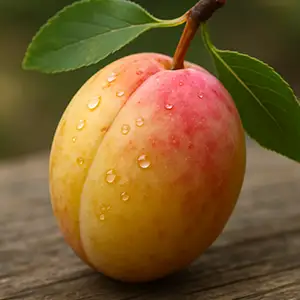
The fruit is medium-sized and round, with green to yellow-green skin and a typical gage appearance. The flesh is exceptionally juicy, sweet and rich, with the honeyed flavour associated with the best greengages. It is outstanding eaten fresh and is also excellent for preserves, bottling, baking and other culinary uses.
Harvest is generally from the second half of August into early September. Like many high-quality gages, the fruit is best allowed to become fully ripe on the tree to develop maximum sweetness and aroma.
The tree is vigorous and performs best in a warm, sunny and sheltered position. ‘Cambridge Gage’ is considered more reliable than many traditional greengages and can produce reasonably regular crops in favourable conditions. It is partially self-fertile, although a compatible plum or gage flowering at a similar time can improve fruit set.
Variety characteristics
An English gage associated with Cambridgeshire. It was sent to the National Fruit Trials in 1927 by Chivers & Son of Histon.
Origin and identity
Probably a seedling or close relative of Green Gage, although the parentage has not been proven.
Cambridge Greengage|Cambridge
Growth and adaptation
Vigorous, forming a substantial gage tree. More reliably productive than many traditional greengages but performs best in a warm, sheltered position.
‘Bleue de Belgique’ is an old variety traditionally grown in Belgium and northern France, valued for its hardiness and abundant crops.
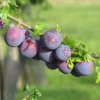
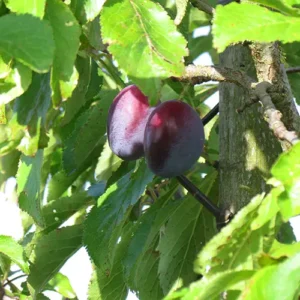
The medium to large plum is oval, almost round and sometimes slightly irregular. Its thin skin turns dark bluish purple when ripe and is covered with a heavy pale bloom.
The greenish-yellow flesh is initially firm, becoming melting, exceptionally juicy and pleasantly aromatic. Its flavour is richly sweet, balanced by a light acidity that provides freshness. The stone generally separates well when the fruit is fully ripe.
Harvest takes place mainly around mid-August and may continue over several weeks depending on the climate and exposure. The fruit has a short storage life and should be eaten or processed soon after picking.
‘Bleue de Belgique’ is a good dessert plum and is also very well suited to tarts, compotes, jams, preserves and fruit brandies.
The tree is vigorous and hardy, begins cropping fairly quickly and is generally highly productive. It initially forms a fairly upright crown, becoming more spreading with age. As heavily laden branches can become brittle, balanced pruning and occasional fruit thinning help reduce the risk of breakage.
The variety is partially self-fertile and produces good-quality pollen. It can crop alone, although another European plum flowering at the same time will generally improve fruit set and the abundance of the harvest.
Disease behaviour
Bleue de Belgique – Old Belgian blue plum
Pollination
Compatible pollinating varieties
For reliable fruit set, plant at least one variety with a compatible flowering period nearby. Flowering period: 4 - late.
 Badoual Mirabelle Price range: 26,50 € through 64,50 €View this variety
 De Floyon Price range: 26,50 € through 64,50 €View this variety
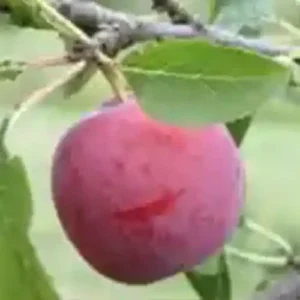 Reine Claude Rouge Hative Price range: 26,50 € through 64,50 €View this variety
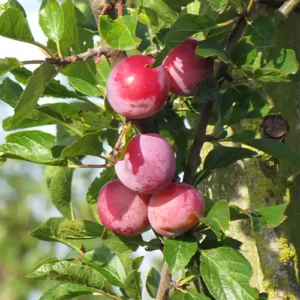 Count Althann’s Gage Price range: 26,50 € through 64,50 €View this variety
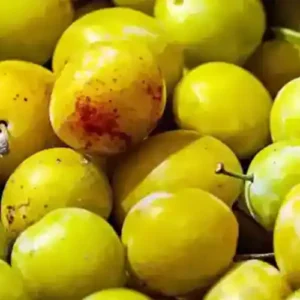 Oullins Gage Price range: 26,50 € through 64,50 €View this variety
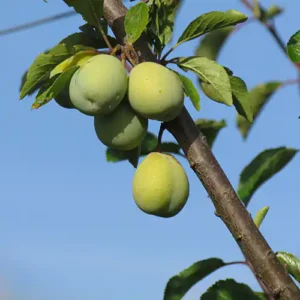 Sainte Catherine Price range: 26,50 € through 42,75 €View this variety
Harvest calendar
Extend your harvest season
Discover varieties from the same category harvested just before, at the same time or just after.
At the same time
August 15-31
Related products
Plum trees
Plum trees
Plum trees

Plum trees