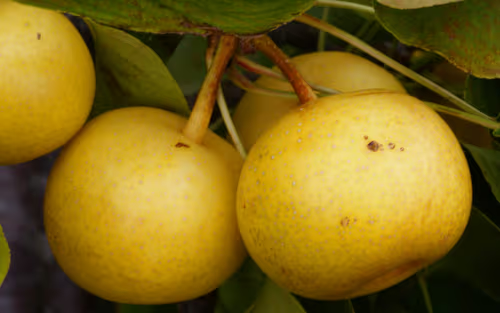
I mainly value Kimizuka Wase for its earliness and its place in the history of Japanese pear breeding. The fruit is crisp, juicy and pleasant rather than exceptionally rich, and I would pay attention to black spot in humid growing conditions.
Kimizuka Wase
Price range: 26,50 € through 59,75 €
An early Japanese Asian pear with bronze-russeted fruit, crisp juicy flesh and a pleasant sweet flavour. A historic parent of several important modern nashi cultivars.
Pre-orders are open
No payment today. You are reserving your trees before the inventory in early August.
After inventory, we will confirm the available trees and send you a payment link.
Dispatch generally takes place from late November to February, depending on the weather and the progress of lifting the trees.
Asian Pear ‘Kimizuka Wase’, also written ‘Kimizukawase’, is a Japanese cultivar of Pyrus pyrifolia released in 1940 from the cross ‘Shinkozo’ × ‘Doitsu’.
The fruit is medium-sized and distinctly flattened, with bronze to brown russeted skin. The flesh is crisp, juicy and sweet, with a pleasant pear-like aroma. It is valued mainly as an early-season nashi rather than for long storage.
Ripening is early, generally during August. Long-term trials in East Asia placed its average ripening date around mid-August, although timing varies with climate.
‘Kimizuka Wase’ is self-incompatible and requires a compatible pollinizer. Its S-genotype is S1S5. The cultivar is also genetically susceptible to Japanese pear black spot caused by Alternaria, so good airflow and disease monitoring are useful in humid climates.
It has historical importance in Japanese pear breeding and is one of the parents of ‘Shinsui’.
Variety characteristics
Japanese cultivar released in 1940 from the cross Shinkozo × Doitsu.
Origin and identity
Shinkozo x Doitsu
Kimizukawase|Kimizuka Wase
Growth and adaptation
Moderate vigour, producing an early-cropping Japanese pear tree. Detailed growth habit is less consistently documented than its fruit and breeding characteristics.
Disease behaviour
Susceptible to black spot (Alternaria); scab sensitivity is less clearly documented.
Pollination
Compatible pollinating varieties
For reliable fruit set, plant at least one variety with a compatible flowering period nearby. Flowering period: 3 - mid season.
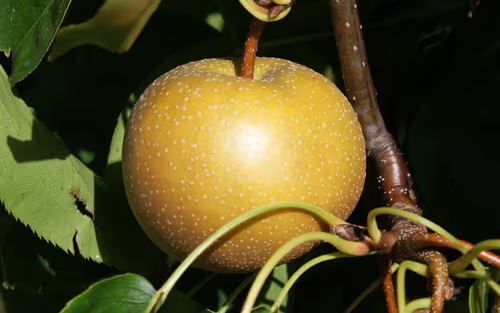 Chojuro Price range: 26,50 € through 59,75 €View this variety
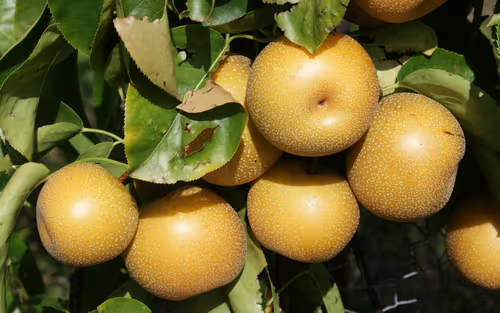 Hosui Price range: 26,50 € through 59,75 €View this variety
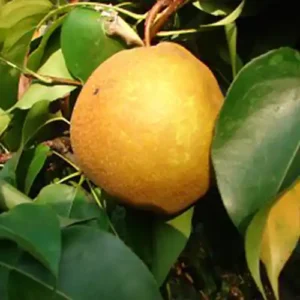 New World Price range: 26,50 € through 59,75 €View this variety
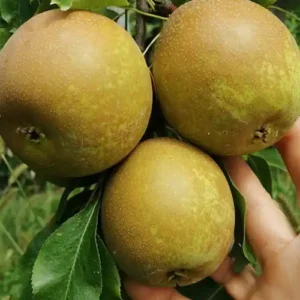 Benita Price range: 26,50 € through 59,75 €View this variety
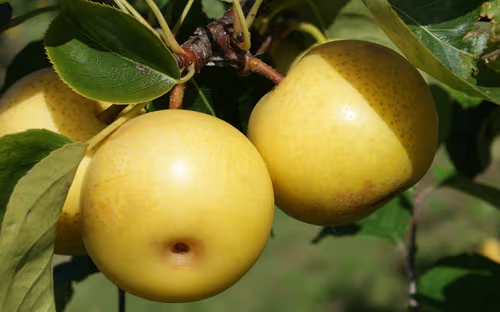 Shinseiki Price range: 26,50 € through 59,75 €View this variety
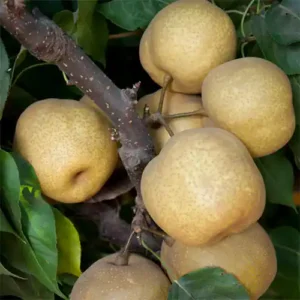 Tsu Li Price range: 26,50 € through 59,75 €View this variety
Harvest calendar
Extend your harvest season
Discover varieties from the same category harvested just before, at the same time or just after.