

Shinsui is particularly interesting for opening the Asian pear season early without sacrificing flavour. The flesh is crisp, very juicy and more lively in taste than Kosui because it carries a little more acidity. The compromises are smaller fruit, shorter storage life and susceptibility to black spot.
Shinsui
Price range: 26,50 € through 59,75 €
An early Japanese Asian pear with golden-brown russeted fruit, crisp juicy flesh and a rich sweet-tart flavour. Excellent eating quality and one of the earliest classic nashi cultivars.
Pre-orders are open
No payment today. You are reserving your trees before the inventory in early August.
After inventory, we will confirm the available trees and send you a payment link.
Dispatch generally takes place from late November to February, depending on the weather and the progress of lifting the trees.
Asian Pear ‘Shinsui’ is a Japanese cultivar of Pyrus pyrifolia bred from ‘Kikusui’ × ‘Kimizuka Wase’. The cross was made in 1947 and the cultivar was officially released in Japan in 1965.
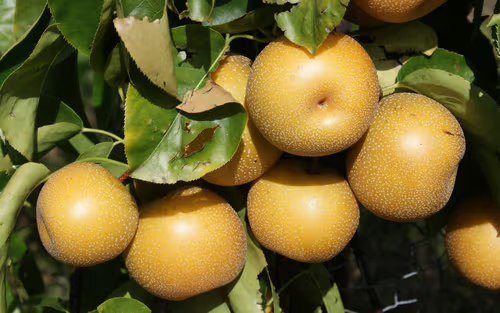
The fruit is small to medium-sized, usually around 250 to 300 g, with brown to golden russeted skin. The flesh is crisp, tender and very juicy. Sugar levels are high, around 13% in Japanese trials, while acidity is more noticeable than in ‘Kosui’. This gives ‘Shinsui’ a rich and lively flavour rather than simply a very sweet one.
‘Shinsui’ is an early cultivar. In Japan it ripens around mid-August and generally matures before ‘Kosui’. Fruit quality is excellent, although the fruit is relatively delicate and storage life is shorter than that of late Asian pears.
The tree is self-incompatible and needs a compatible pollinizer. ‘Chojuro’ and ‘Shinko’ are recommended pollen sources. ‘Kosui’ should not be used because both cultivars share the S4S5 incompatibility genotype. ‘Shinsui’ can itself be a useful pollinizer for compatible cultivars. Its main disease weakness is susceptibility to Japanese pear black spot caused by Alternaria.
Variety characteristics
Japanese cultivar from a Kikusui × Kimizuka Wase cross made in 1947 and officially released in 1965 as Nashi Norin No. 4.
Origin and identity
Kikusui x Kimizuka Wase
Shinsui Nashi
Growth and adaptation
Vigorous and relatively upright. It tends to form relatively few axillary flower buds, which can limit productivity compared with some later cultivars.
Disease behaviour
Susceptible to Japanese pear black spot caused by Alternaria.
Pollination
Compatible pollinating varieties
For reliable fruit set, plant at least one variety with a compatible flowering period nearby. Flowering period: 3 - mid season.
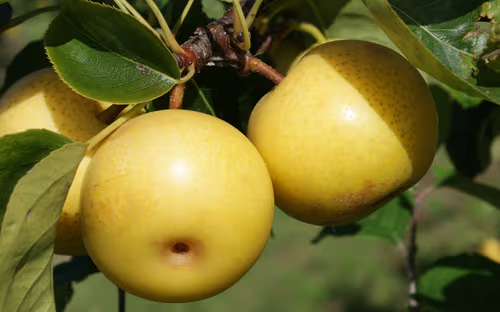 Shinseiki Price range: 26,50 € through 59,75 €View this variety
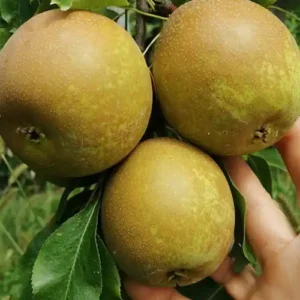 Benita Price range: 26,50 € through 59,75 €View this variety
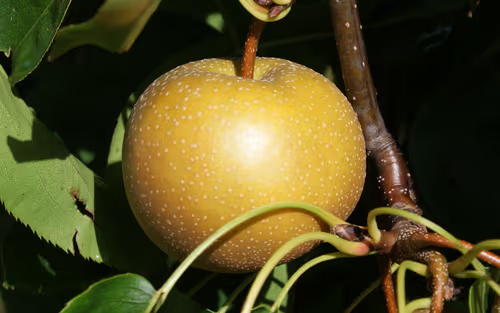 Chojuro Price range: 26,50 € through 59,75 €View this variety
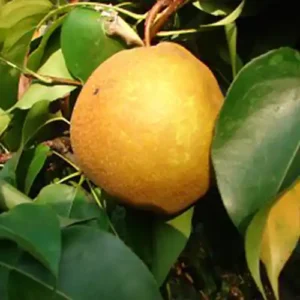 New World Price range: 26,50 € through 59,75 €View this variety
 Hosui Price range: 26,50 € through 59,75 €View this variety
 Kumoï Price range: 26,50 € through 59,75 €View this variety
Harvest calendar
Extend your harvest season
Discover varieties from the same category harvested just before, at the same time or just after.
Related products
Asian pear trees
Asian pear trees
Asian pear trees
Asian pear trees