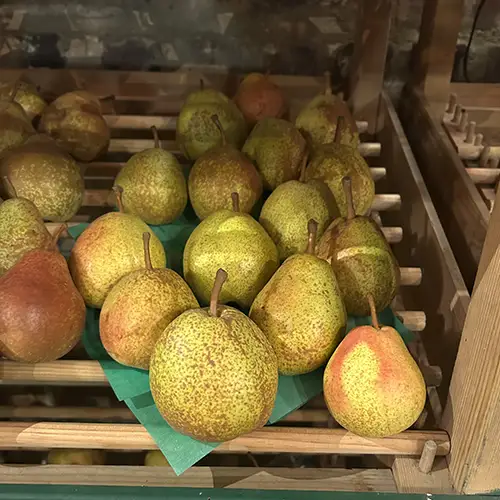
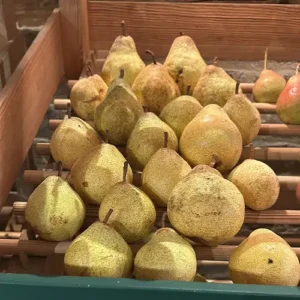
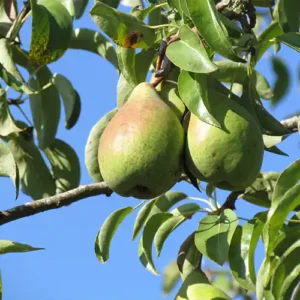
Duchesse d’Angoulême particularly deserves attention for the impressive size and texture of its fruit. Its exceptionally large, uneven pears become melting, abundantly juicy and mild after a period of ripening. A warm position considerably improves eating quality. It performs well as a smaller tree on quince, although susceptibility to pear scab makes an open, sunny and regularly monitored position preferable.
Duchesse d’Angoulême
Price range: 26,50 € through 59,75 €
An old pear from Anjou producing exceptionally large, knobbly fruit with melting, juicy, sweet and lightly aromatic flesh.
‘Duchesse d’Angoulême’ is an old French variety once widely grown for the impressive size and good eating quality of its fruit.
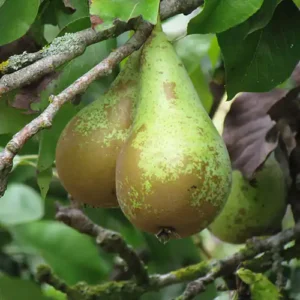
The pear is large to exceptionally large, broad and generally knobbly. Its fairly thick skin is initially green, turning lemon yellow when ripe. It is dotted with russet and may develop a light pink blush on the side exposed to the sun.
The white flesh is firm when picked, then becomes moderately fine, melting and very juicy as it ripens. Its flavour is sweet, slightly acidic and delicately aromatic, with a few grit cells sometimes present around the core. Fruit quality is best in a warm, well-exposed position.
Harvest takes place in early October. The pears then continue to ripen in storage and are mainly eaten during November. They are suitable for eating fresh and can also be poached or used in cooking.
The tree is moderately vigorous, heavily branched and well suited to compact or trained forms. It has good compatibility with quince. However, its susceptibility to scab can become significant depending on the climate and disease pressure, so an open, well-exposed position is preferable.
Variety characteristics
Origin and identity
Growth and adaptation
Disease behaviour
Pollination
Compatible pollinating varieties
For reliable fruit set, plant at least one variety with a compatible flowering period nearby. Flowering period: 3 - mid season.
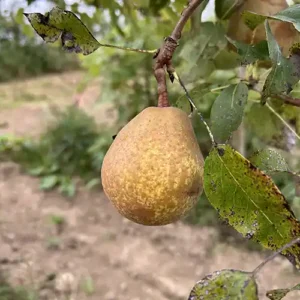 Trapezitsa Price range: 26,50 € through 59,75 €View this variety
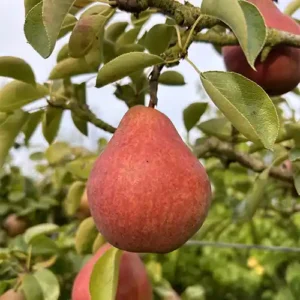 Red Williams Price range: 26,50 € through 59,75 €View this variety
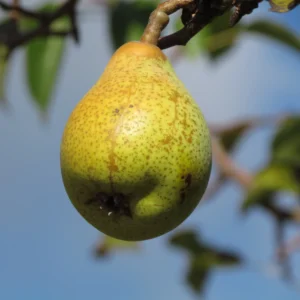 Cornelie Price range: 26,50 € through 59,75 €View this variety
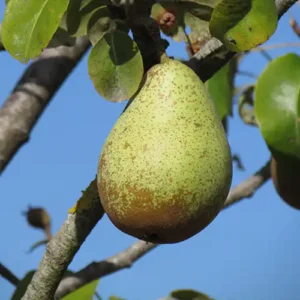 Comtesse de Paris Price range: 26,50 € through 59,75 €View this variety
 Conference Price range: 26,50 € through 59,75 €View this variety
 President Heron Price range: 26,50 € through 59,75 €View this variety
Harvest calendar
Extend your harvest season
Discover varieties from the same category harvested just before, at the same time or just after.
Related products
Dessert pear trees
Pear trees
Dessert pear trees
Dessert pear trees