
Harogem is one of the Canadian apricots I find particularly interesting for northern European conditions. The combination of late flowering, self-fertility and firm, aromatic fruit makes it a useful garden cultivar. It is hardy, although not necessarily the hardiest of the Harrow selections, and I would still keep an eye on bacterial spot in wet conditions.
Harogem
Price range: 29,75 € through 64,50 €
A hardy Canadian apricot with attractive orange-red fruit, firm aromatic flesh and good eating quality. Self-fertile, late flowering and particularly interesting for cooler growing areas.
Pre-orders are open
No payment today. You are reserving your trees before the inventory in early August.
After inventory, we will confirm the available trees and send you a payment link.
Dispatch generally takes place from late November to February, depending on the weather and the progress of lifting the trees.
Apricot ‘Harogem’ is a Canadian cultivar of Prunus armeniaca selected at the Harrow Research Station in Ontario. It originated from the cross ‘Rouge du Roussillon’ × NJA2, the latter being derived from ‘Morden 604’ × open pollination.
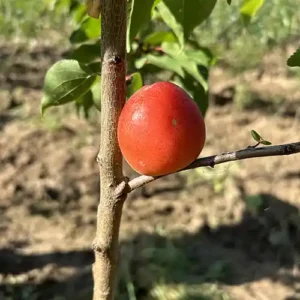
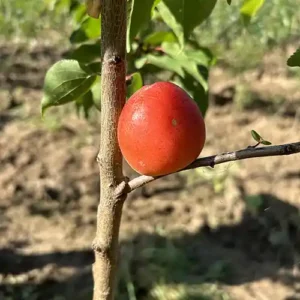
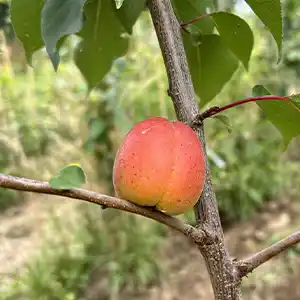
The fruit is medium-sized and particularly attractive, with deep orange skin developing a glossy dark red blush on the exposed side. The orange flesh is firm, freestone and aromatic, with a balanced sweet-tart flavour. Fruit quality is good for fresh eating and the firm texture also makes ‘Harogem’ useful for preserves, baking and drying.
Harvest is relatively late for an apricot, generally falling in early to mid-August under temperate European conditions. The fruit colours well before it is fully ripe, so it is important not to harvest solely according to skin colour.
The tree has moderate vigour and a fairly upright habit. ‘Harogem’ is self-fertile and flowers late, which is useful in areas exposed to spring frost. It was bred for improved adaptation to cold climates and has good resistance to brown rot and perennial canker. Bacterial spot can however be a problem in some seasons, so it should not be considered completely disease resistant.
Variety characteristics
The cross was made in 1963 by L. F. Hough and Catherine H. Bailey at Rutgers University in New Jersey. Harogem was selected at Harrow, Ontario, in 1969 and officially introduced in 1979 by Richard E. C. Layne.
Origin and identity
Rouge du Roussillon x NJA2 (Morden 604 x open pollination)
HW 405|H6305044
Growth and adaptation
Moderate vigour with a fairly upright habit. Productive and well adapted to cooler climates, although cropping can vary with site and season.
Pollination
Compatible pollinating varieties
For reliable fruit set, plant at least one variety with a compatible flowering period nearby. Flowering period: 4 - late.
 Mia Price range: 33,75 € through 64,50 €View this variety
 Manera Price range: 33,75 € through 64,50 €View this variety
 Luizet Price range: 33,75 € through 64,50 €View this variety
 Polonais Price range: 33,75 € through 64,50 €View this variety
 Mediva Price range: 33,75 € through 64,50 €View this varietyBergeron Price range: 29,75 € through 64,50 €View this variety
Harvest calendar
Extend your harvest season
Discover varieties from the same category harvested just before, at the same time or just after.
About 15 days earlier
July 15-31
Related products
Apricot trees
Apricot trees
Apricot trees
Apricot trees