Pre-orders are open No payment today. Stock will be checked during the inventory in early August, then you will receive a payment link for the available trees.

Raspberry

Autumn 2026

Raspberry

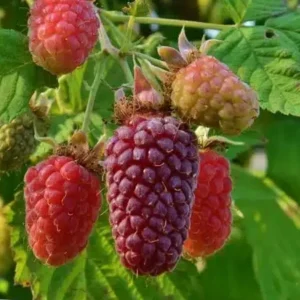
Buckingham

Buckingham tayberry plant, a blackberry–raspberry hybrid with dark red, raspberry-rich fruit harvested in July-August.
From 6,00 
Autumn 2026

Raspberry

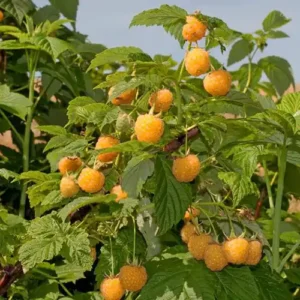
Fall Gold

A remontant yellow raspberry variety producing very large golden berries with sweet, rich flavour.
From 6,00 
Autumn 2026

Raspberry

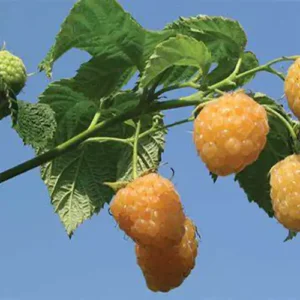
Golden Queen

A summer-fruiting yellow raspberry variety producing abundant sweet, firm berries in July and August.
From 6,00 
Autumn 2026

Raspberry

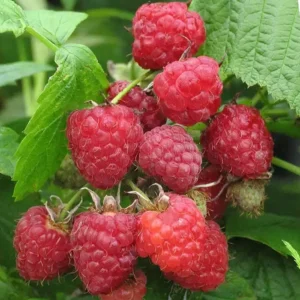
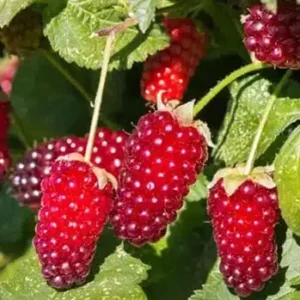
Heritage

Heritage raspberry plant, an everbearing variety with generous crops of firm, flavourful red berries from June then August to October.
From 6,00 
Autumn 2026

Raspberry

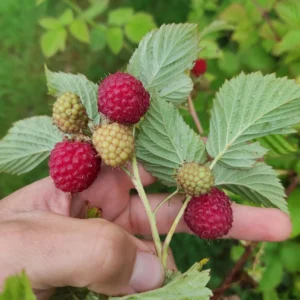
Loganberry

Loganberry hybrid berry plant, a blackberry–raspberry cross with very large elongated dark red fruits harvested in July-August.
From 6,00 
Autumn 2026

Raspberry

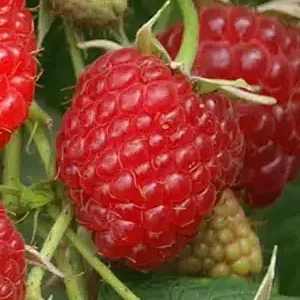
Meeker

Meeker raspberry plant, a self-fertile summer-fruiting variety with a large July crop of big, flavourful red raspberries.
From 6,00 
Autumn 2026

Raspberry

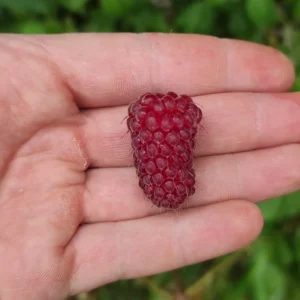
Polka

Polka raspberry plant, an everbearing Polish variety with firm, bright red, flavourful berries from June then August to October.
From 6,00 
Autumn 2026

Raspberry

Tayberry

Tayberry hybrid berry plant, a thornless blackberry–raspberry cross with dark red fruit harvested in July-August.

From 6,00 

Raspberry plants: choosing the right cultivar for your garden

The cultivated red raspberry belongs mainly to Rubus idaeus, a species originating from the cool and temperate regions of Europe and Asia. Its underground crown and roots remain alive for several years, but each individual stem, known as a cane, has a relatively short life.

Understanding which canes carry the crop is essential when choosing and pruning raspberry plants. Cutting the wrong stems can remove most of the following harvest.

Raspberries are well adapted to cool temperate climates across Europe. Winter hardiness is rarely the principal difficulty for established red and yellow cultivars.

Crop quality depends more on the fruiting type, ripening season, soil moisture, drainage, sunlight, renewal of the canes and the frequency with which ripe berries are picked.

Cultivars also differ greatly in aroma, sweetness, acidity, fruit size, firmness and ease of detachment from the receptacle.

A very large and firm raspberry may be valuable for handling and transport, while a softer and more aromatic cultivar may provide much better eating quality when picked directly from the garden.

Summer-fruiting or autumn-fruiting raspberry?

Summer-fruiting raspberries

Summer-fruiting raspberries, also known as floricane-fruiting varieties, crop on canes formed during the previous growing season.

During its first year, a new cane is called a primocane. It grows vegetatively and normally produces little or no main crop.

After winter, the same cane becomes a floricane. It produces fruiting laterals, carries its crop during early or mid-summer and then dies naturally.

Summer-fruiting cultivars generally provide a relatively concentrated harvest. They are useful where a substantial quantity of fruit is required for freezing, jam making or processing within a short period.

Many traditional cultivars with particularly fine flavour belong to this group.

Immediately after harvest, remove the brown canes that have produced fruit at ground level. Retain, thin and tie in the vigorous green canes formed during the current season, as these will carry the following year’s crop.

Autumn-fruiting raspberries

Autumn-fruiting raspberries, also known as primocane-fruiting varieties, produce fruit near the upper part of canes formed during the same growing season.

The simplest pruning method is to cut every cane to ground level during dormancy. New shoots emerge in spring and produce one crop from late summer into autumn.

This system is easy to understand, keeps the row relatively open and removes most of the old cane material each winter.

Autumn-fruiting cultivars are particularly convenient for small gardens and for growers seeking a straightforward annual pruning system.

In cool climates, earliness is essential. A very late primocane cultivar may continue flowering and forming fruit after temperatures and light levels have become too low for satisfactory ripening.

An early autumn cultivar capable of producing most of its crop before cold and wet weather is generally more useful than a variety advertised as cropping until the first frost but leaving a large proportion of unripe berries.

Obtaining two crops from an autumn-fruiting cultivar

An autumn-fruiting cane does not necessarily die after producing at its tip. If retained, the lower section can form fruiting laterals and carry a second crop during early summer of the following year.

To use this system, remove only the upper section that has already fruited and retain the healthy lower part of the cane.

After its second crop, remove the whole cane at ground level.

This double-cropping method extends the season but makes pruning more complicated and creates a denser mixture of young and old canes.

It is most suitable for vigorous plants growing in fertile, well-drained soil. It does not always produce more high-quality fruit than the simpler system of cutting every cane down annually.

Red, yellow, black and purple raspberries

Red raspberries

Most familiar raspberry cultivars belong principally to Rubus idaeus and produce red fruit.

This group includes both summer- and autumn-fruiting varieties, with considerable differences in flavour, fruit size, firmness, cane vigour and disease behaviour.

Yellow raspberries

Yellow raspberries are generally forms of Rubus idaeus whose fruit produces little or no red pigment.

They are not a separate species and are cultivated and pruned according to the same summer- or autumn-fruiting principles as red raspberries.

Several yellow cultivars possess a mild, sweet and relatively low-acid flavour, although yellow colour does not automatically indicate greater sweetness.

The pale fruit may initially be less visible to birds, but fully ripe crops can still require protection.

Black raspberries

Black raspberries belong mainly to the North American species Rubus occidentalis.

Their dark fruit is generally firmer and more strongly pigmented than that of red raspberries, with a concentrated and distinctive aroma.

Black raspberry plants normally produce fewer distant root suckers than red cultivars. Their long arching canes can root naturally where the tips touch the soil.

They fruit principally on canes formed during the previous season and should not be cut completely to the ground each winter like an autumn-fruiting red raspberry.

Purple raspberries

Purple raspberries are generally hybrids between red and black raspberries.

They often form long, vigorous and arching canes and produce dark red to purple fruit with a rich flavour.

Most crop on the previous season’s wood and are trained and pruned more like black raspberries than autumn-fruiting red cultivars.

These groups should not be compared by fruit colour alone. Their growth habit, fruiting cycle, production of root suckers, training requirements and susceptibility to disease can differ substantially.

Is more than one raspberry cultivar required for pollination?

Most cultivated red, yellow, black and purple raspberries are self-fertile. One correctly identified cultivar can therefore produce fruit without another raspberry nearby.

There are no separate male and female raspberry plants that must be paired.

The flowers are nevertheless visited by bumblebees, honeybees and numerous solitary bees.

Each raspberry is composed of many small drupelets. Effective pollination allows more of these drupelets to develop, producing a complete, regularly shaped and firmly connected fruit.

Cold, wet or windy flowering weather can reduce pollinator activity and cause unevenly formed raspberries even on a self-fertile cultivar.

Drought, mites, viruses and other plant-health problems can also produce crumbly or incomplete fruit and should not automatically be mistaken for a lack of cross-pollination.

Useful characteristics when comparing raspberry cultivars

Flavour

Raspberries may be sweet, sharp, floral, intensely aromatic or comparatively mild.

Cultivars selected primarily for commercial transport often emphasise berry size, firmness, shelf life and resistance to handling.

These characteristics are valuable but do not necessarily produce the strongest raspberry aroma.

For fruit eaten directly from the garden, prioritise flavour and the ability to pick the berry at full maturity.

Ripening season

Among summer-fruiting raspberries, early cultivars advance the start of the harvest while later varieties extend production into midsummer.

Among autumn-fruiting cultivars, earliness determines how much of the potential crop can ripen before cool, humid and low-light autumn conditions arrive.

Combining summer- and autumn-fruiting cultivars can provide ripe raspberries over a much longer season.

Firmness and ease of picking

A ripe raspberry should separate easily from its pale receptacle without requiring a strong pull.

Some cultivars remain firm at this stage and tolerate handling successfully, while others become delicate very quickly.

A berry that resists detachment is usually not fully ripe, even when its external colour appears complete.

Fruit harvested too early may be attractive and firm but lacks the sweetness and aroma it would have developed on the plant.

Fruit size

Large raspberries are quick to pick and attractive in desserts, but size depends on water, soil fertility, cane strength, pollination and crop load as well as genetics.

A smaller cultivar may provide a much more concentrated flavour than a very large-fruited commercial selection.

Cane habit and vigour

Some cultivars produce relatively upright and sturdy canes, while others arch strongly under their own weight or beneath a heavy crop.

Even a variety described as self-supporting normally benefits from wires or another support system.

Trellising keeps fruit away from the soil, improves airflow and prevents canes from obstructing paths.

Production of root suckers

Red and yellow raspberries can spread vigorously through their root systems.

Some cultivars remain comparatively compact, while others rapidly form new plants outside the original row.

This characteristic is useful for filling a productive bed but can become inconvenient close to paths, vegetable plots or perennial borders.

Resistance to root diseases

Susceptibility to Phytophthora root rot varies considerably between raspberry cultivars.

In heavy soil or in a site where previous raspberry plants have declined, root-disease tolerance may be more important than the maximum advertised yield or fruit size.

No cultivar can compensate completely for permanently waterlogged and airless soil.

Where should raspberries be planted?

A sunny position generally produces the sweetest and most aromatic fruit in cool and temperate climates.

Raspberries tolerate light partial shade, but deep shade beneath large trees creates weak canes, limited flowering and strong competition for water.

In hot and dry regions, some afternoon shade may reduce heat stress and excessive drying of the root zone.

Choose a site with good airflow while avoiding a position exposed to violent winds that bend the canes and dry newly planted roots.

A row running approximately north to south can receive relatively even light on both sides, but soil quality and drainage are more important than a theoretically perfect orientation.

Avoid frost pockets and low, wet areas in which water remains visible after heavy rain.

Raspberries appreciate cool soil but their fine roots perform poorly when deprived of oxygen for prolonged periods during active growth.

A moist, fertile and well-drained soil

Raspberries prefer fertile soil containing useful organic matter, with a slightly acidic to neutral reaction and enough moisture to support rapid cane and fruit development.

An approximate pH between 5.5 and 7 suits most cultivars.

Clay soil can be suitable where it remains structured and excess water can escape.

On heavy ground, planting along a slightly raised row may be safer than placing the roots at the bottom of a trench filled with loose compost that subsequently collects water.

Sandy soil normally drains freely but contains a smaller reserve of water and nutrients.

Regular mulching, mature organic matter and irrigation become particularly important in these lighter soils.

Avoid planting raspberries immediately in the position of an old diseased raspberry row.

Ground that has recently carried strawberries, potatoes, tomatoes, aubergines or other plants susceptible to verticillium wilt may also present an increased risk where the pathogen is already present.

Planting young raspberry plants

Dormant bare-root and container-grown raspberries are preferably planted from autumn to early spring whenever the ground is neither frozen nor waterlogged.

A container plant that has already produced leaves under protection can be planted later, but its tender shoots are more susceptible to late frost than a dormant established crown.

Prepare a broad planting strip rather than a series of isolated holes.

Work the ground when it has drained sufficiently to form a fine crumbly structure and remove couch grass, bindweed and other perennial weeds carefully before planting.

Position the crown approximately at the depth at which it grew in the nursery.

Planting too deeply in heavy soil increases the risk of root suffocation, while roots placed too close to the surface dry rapidly.

Backfill mainly with the original garden soil.

Mature compost can be incorporated across a broad area, but avoid placing fresh manure, concentrated fertiliser or a narrow pocket of pure potting compost directly against the roots.

Water thoroughly after planting and maintain a weed-free strip around the row.

Continue watering throughout the first growing season whenever rainfall is insufficient, not only during the first weeks after planting.

An organic mulch reduces evaporation and weed competition, but should not be piled as a permanently wet layer directly around the canes.

Spacing raspberry plants

Plant spacing depends on cultivar vigour, training system and whether individual plants will be allowed to merge into a continuous row.

Red and yellow raspberries planted approximately 40 to 60 centimetres apart normally fill the spaces between plants as their roots produce new shoots.

Rows generally require approximately 1.5 to 2.5 metres between them, depending on machinery access, cane vigour and the width of the maintained fruiting strip.

Black and purple raspberries form more distinct crowns and generally require more space between plants because of their long arching canes.

A narrow, well-lit row is preferable to an uncontrolled mass of canes several metres wide.

Controlling suckers and supporting the canes

Red and yellow raspberry plants naturally produce shoots from their spreading roots.

A cultivar can therefore develop into a continuous row and later colonise paths and neighbouring beds when unwanted shoots are not removed.

Maintain a relatively narrow productive strip by cutting or lifting shoots that emerge too far from the row.

An excessively wide bed receives little light in its centre, remains wet for longer after rain and becomes difficult to prune and harvest.

A support formed from strong posts and horizontal wires keeps the canes upright and separates them into manageable groups.

For summer-fruiting raspberries, the old cropping canes can be tied to one side and the new replacement canes to the other. This makes removal of the old wood much easier after harvest.

Black and purple raspberries produce fewer distant root suckers, but their long canes still require support.

Prevent their tips from remaining in contact with the ground unless new plants are deliberately being propagated by tip layering.

How should summer-fruiting raspberries be pruned?

After the summer harvest, cut every cane that has carried fruit at ground level.

Old floricanes can be recognised by their brown colour, numerous fruiting laterals and gradual drying.

Do not merely shorten these old canes. They will not provide another useful main crop and can harbour cane diseases.

Retain the vigorous green primocanes produced during the current season.

Remove weak, damaged and badly positioned shoots and thin the remaining canes sufficiently to provide light and airflow.

Tie the selected canes to the support, as they will carry the following summer’s crop.

How should autumn-fruiting raspberries be pruned?

For one straightforward autumn crop, cut every cane to ground level during dormancy.

New primocanes emerge in spring and form fruit near their upper ends later in the same season.

Cutting the whole row annually simplifies pruning and removes a large proportion of the cane material on which diseases might survive.

Do not leave long stubs, as these serve no productive purpose and can interfere with new shoots.

Where two crops are desired, retain selected healthy canes and remove only the portion that fruited during autumn.

The lower section then carries an early-summer crop before the whole cane is removed.

Pruning black and purple raspberries

Black and purple raspberries generally crop on canes produced during the previous season.

Remove complete canes after they have fruited, as with a summer-fruiting red raspberry.

Young black raspberry canes may be tipped during their first summer to encourage the production of lateral branches.

These laterals can be shortened during dormancy according to the vigour of the plant and the strength of the support.

Avoid allowing an unmanaged tangle of long canes to develop, as shaded fruiting laterals produce smaller berries and remain humid after rain.

Raspberry harvest season

Summer-fruiting cultivars normally crop from early to midsummer, while autumn-fruiting varieties begin later and can continue until cool weather slows ripening.

Actual harvest periods vary according to cultivar, country, exposure, soil, crop load and seasonal temperatures.

The harvest calendar is therefore intended principally for comparing cultivars rather than predicting one exact picking date for every garden.

Variety
June 1–15 16–30
July 1–15 16–31
Available Available on backorder Currently unavailable

Harvest periods are indicative and may vary according to the region, exposure, rootstock and the season’s weather conditions.


How can a fully ripe raspberry be recognised?

A ripe raspberry has developed the characteristic colour and aroma of the cultivar and separates almost without resistance from the pale receptacle that remains attached to the plant.

When the fruit resists picking, it generally requires more time even when it has already turned red, yellow or black.

Raspberries do not develop substantially more sweetness or aroma after harvest.

Picking too early produces firm fruit with reduced flavour and stronger acidity.

The berries within one cluster do not all ripen simultaneously, so the plants must be harvested repeatedly.

During warm weather, ripe raspberries may require picking every day or two.

Harvesting, storing and using raspberries

Pick during dry and relatively cool conditions where possible.

Place the berries directly into shallow containers rather than transferring them repeatedly or allowing their own weight to crush the lower fruit.

Cool the crop promptly after picking.

Fully ripe garden raspberries keep for only a short period and should be eaten, frozen or processed quickly.

Do not wash the fruit until shortly before use, as surface moisture encourages leakage and fungal deterioration.

Firm cultivars are useful for decorating cakes, freezing and transporting.

Softer and more aromatic raspberries are excellent for fresh eating, jam, coulis, juice, sorbet, desserts and fermentation.

Fruit intended for freezing can first be spread in a single layer and then transferred to a container once firm, preventing the berries from freezing into one large block.

Important raspberry diseases and pests

Phytophthora root rot

Phytophthora root rot is one of the most serious raspberry problems in heavy and poorly drained soil.

Affected canes grow weakly, become yellow and may collapse while carrying fruit.

The roots and base of the plant develop brown, damaged tissues instead of healthy pale growth.

Prevention depends primarily on drainage, healthy planting material, avoiding infected sites and choosing cultivars with useful tolerance.

Cane diseases

Several fungi can cause spots, lesions, cankers and dieback on raspberry canes.

A narrow and ventilated row, rapid removal of old floricanes and avoidance of frequent irrigation over the foliage reduce favourable conditions.

Remove diseased canes at ground level rather than retaining damaged sections within the support.

Grey mould

Grey mould, caused by Botrytis, affects flowers and ripening fruit during humid weather.

Dense rows, overripe berries and fruit damaged during picking increase losses.

Harvest frequently, maintain airflow and remove mouldy fruit from the planting area.

Viruses and crumbly fruit

Several viruses can reduce vigour, distort leaves and cause berries to separate into poorly connected drupelets.

Incomplete pollination, mites and cold flowering weather can produce similar crumbly fruit, so one malformed berry does not prove that the plant is infected.

Repeated symptoms affecting most of the crop, together with declining growth or abnormal foliage, justify closer examination.

Viral diseases cannot be cured, making healthy certified planting material particularly important.

Spotted-wing drosophila

Spotted-wing drosophila, Drosophila suzukii, can lay eggs in raspberries as they ripen.

Late summer and autumn crops are often particularly exposed because pest populations have increased by that stage of the season.

Frequent picking, rapid cooling and removal of overripe, damaged and fallen fruit reduce breeding opportunities within the row.

Birds

Bird damage varies between gardens and cultivars but can become important as fruit begins to colour.

A fruit cage or properly tensioned net provides more reliable protection than loose netting placed directly over the canes.

Which raspberry plant should you choose?

For a concentrated summer crop, choose a summer-fruiting cultivar with good flavour, healthy canes and adaptation to the available soil.

For progressive picking from late summer into autumn, choose an autumn-fruiting cultivar early enough to ripen reliably in the local climate.

For the simplest pruning, grow an autumn-fruiting variety for one crop and cut all canes to ground level each winter.

For fresh eating, prioritise aroma, sweetness and easy detachment at full maturity rather than firmness alone.

For freezing, baking and transport, a firmer and more regularly shaped berry is useful.

In heavy ground or a site with a history of raspberry decline, choose a cultivar with useful root-rot tolerance and improve drainage before planting.

For a restricted space, choose a comparatively compact autumn-fruiting cultivar and control suckers regularly.

For a long season, combine early and late summer-fruiting varieties with one early autumn-fruiting cultivar.

Do not select by fruit size alone. A well-adapted, aromatic and healthy cultivar normally provides better raspberries than a spectacular variety that ripens too late or declines in unsuitable soil.

Frequently asked questions about raspberry plants

Are two raspberry plants required for fruit?

No. Most cultivated raspberry varieties are self-fertile. Pollinating insects remain important for producing complete and regularly shaped berries.

What is the difference between summer- and autumn-fruiting raspberries?

Summer-fruiting varieties crop on canes formed during the previous year. Autumn-fruiting varieties can produce on canes formed during the current growing season.

What do primocane and floricane mean?

A primocane is a cane during its first growing season. A floricane is the same cane during its second year, when summer-fruiting cultivars produce their crop.

Which raspberry is easiest to prune?

An autumn-fruiting cultivar grown for one crop is the simplest. Cut all canes to ground level during dormancy and allow new shoots to produce the following autumn.

Can an autumn-fruiting raspberry produce twice?

Yes. Retain the lower section of selected canes after their autumn crop and it can fruit during early summer of the following year. The entire cane is then removed.

Why does my raspberry produce many leaves but little fruit?

Possible causes include insufficient light, excessive nitrogen, incorrect pruning, young canes that have not yet reached their fruiting year or a late autumn cultivar that cannot complete its crop.

Do raspberries tolerate partial shade?

They tolerate light partial shade, but fruit is normally sweeter, more aromatic and more abundant in a sunny position. Deep shade beneath large trees is unsuitable.

Can raspberries grow in clay soil?

Yes, where the clay remains structured and adequately drained. Prolonged saturation substantially increases the risk of Phytophthora root rot.

Why do the old canes die after harvest?

This is normal for floricanes that have completed their two-year cycle. Cut them at ground level and retain the new green canes for the next crop.

Why do raspberries spread into nearby beds?

Red and yellow raspberries naturally produce shoots from spreading roots. Remove unwanted suckers while they are young and maintain a defined fruiting strip.

Do raspberry plants require a support?

A support is strongly recommended even for relatively upright cultivars. It keeps canes and fruit away from the ground and makes pruning and harvesting easier.

How can a ripe raspberry be recognised?

It should be fully coloured, aromatic and separate almost without resistance from the receptacle left on the plant.

Do raspberries ripen after picking?

They do not develop their full sweetness and aroma after harvest. Pick fruit intended for fresh eating only when it detaches readily.

Why do my raspberries fall into separate small pieces?

Incomplete pollination, cold flowering weather, mites and certain viruses can prevent all of the drupelets from developing or remaining connected.

Why do raspberries rot before they can be picked?

Humid weather, dense canes, damaged fruit and berries left overripe favour grey mould. Thin the row, harvest frequently and remove affected fruit.

Can raspberries be grown in containers?

Compact cultivars can crop in a large container, but require regular watering, feeding, cane renewal and a strong support. Open ground is normally preferable for vigorous and freely suckering cultivars.

Can red and yellow raspberries be planted together?

Yes. They have similar cultivation requirements and do not require separation for pollination. Their root suckers may eventually intermingle, making the individual cultivars more difficult to identify.

Are black raspberries pruned like autumn-fruiting red raspberries?

No. Black raspberries generally crop on canes formed during the previous season. Removing every cane in winter would eliminate the following harvest.

How often should ripe raspberries be picked?

During warm weather, inspect the plants every day or two. Frequent picking improves quality and reduces losses from grey mould and spotted-wing drosophila.