Pre-orders are open No payment today. Stock will be checked during the inventory in early August, then you will receive a payment link for the available trees.

Blackcurrant

Autumn 2026

Blackcurrant

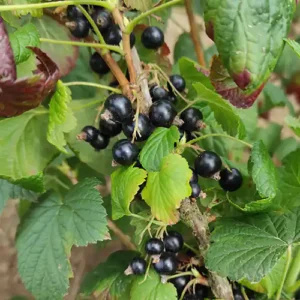
Andega

A productive blackcurrant variety producing large aromatic berries with excellent flavour.
9,50 
Autumn 2026

Blackcurrant

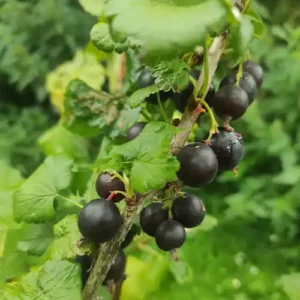
Anita

A vigorous caseille variety producing large dark berries with rich aromatic flavour.
9,50 
Autumn 2026

Blackcurrant

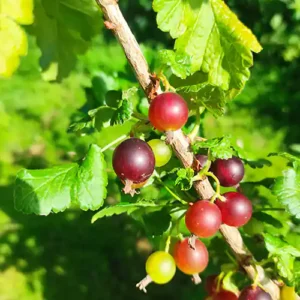
Blackdown

Blackdown blackcurrant bush, a late self-fertile variety with firm, sweet berries and regular production.
9,50 
Autumn 2026

Blackcurrant

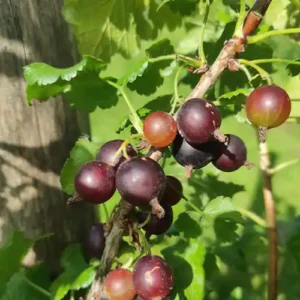
Josta

Josta jostaberry bush, self-fertile and thornless, with large tangy blackcurrant-like berries and strong disease resistance.

9,50 

Blackcurrant plants: choosing for flavour and reliable cropping

The blackcurrant, Ribes nigrum, is a deciduous fruiting shrub originating from the cool and temperate regions of Europe and Asia. It belongs to the same botanical family as redcurrants and gooseberries, but its fruiting wood, pruning requirements, pollination and principal uses are sufficiently different to require specific cultivation advice.

Blackcurrants are particularly well adapted to cool European climates. Established plants tolerate severe winter cold, normally receive sufficient winter chilling and do not require an exceptionally hot summer to ripen their fruit.

The principal limitations are more often spring frost during flowering, inadequate pollination, dry soil during berry development, ageing branches, poor renewal growth and diseases specific to blackcurrants.

Cultivars differ considerably in aroma. Some produce powerful resinous, herbal, spicy or slightly sulphurous flavours valued for juice, syrup, liqueurs and crème de cassis. Others carry larger, milder and less astringent berries that are easier to eat fresh.

The largest berry is therefore not automatically the one that produces the most aromatic jelly, juice or liqueur. Cultivar choice should begin with the intended use of the crop.

Is one blackcurrant plant sufficient for fruit?

Blackcurrant flowers contain both male and female reproductive organs. There are no separate male and female plants to pair, unlike sea buckthorn and certain kiwi plants.

Many modern blackcurrant cultivars are self-fertile and can produce fruit using their own pollen.

This general rule should not be applied to every variety. The level of self-fertility varies according to cultivar, flower structure and weather during blossom.

‘Noir de Bourgogne’, valued for the strength and complexity of its aroma, is traditionally regarded as self-incompatible or insufficiently self-fertile for dependable isolated cropping.

It should be planted with another blackcurrant flowering at the same time. ‘Royal de Naples’ is its traditional pollinating partner in Burgundy, although the overlap of their flowering periods can vary according to spring temperatures and location.

Even a self-fertile cultivar may produce fuller strings and larger berries when compatible pollen from another variety is available.

Where space permits, planting two different cultivars with overlapping blossom periods therefore provides greater security than relying entirely on self-pollination.

Pollinating insects remain important

Blackcurrant flowers are visited principally by bumblebees, honeybees and a range of solitary bees.

A shrub can flower abundantly without producing a full crop when the weather remains cold, windy or persistently wet and insects visit the flowers only rarely.

For a self-incompatible cultivar, the presence of a second blackcurrant is not sufficient when it flowers significantly earlier or later.

The pollinating cultivar must provide viable pollen while the flowers of the principal variety are receptive.

Nearby spring-flowering plants can encourage pollinating insects to remain within the garden, provided that they do not shade or compete strongly with the blackcurrants.

Why do some flowers fail to produce berries?

The loss of flowers or very young berries can result from inadequate pollination, frost, prolonged cold, dry soil or another severe stress affecting the plant.

When a blackcurrant flowers heavily but forms almost no fruit, first check the cultivar’s self-fertility and whether insects were active during blossom.

This is especially important for ‘Noir de Bourgogne’ and for older cultivars whose pollination behaviour may not be clearly documented.

When strings begin forming but subsequently lose many berries, possible causes also include drought, weak growth, pest damage and unfavourable temperatures immediately after flowering.

Additional fertiliser cannot correct the absence of compatible pollen.

Excessive nitrogen may instead produce long leafy shoots, disturb the balance between growth and fruiting and increase susceptibility to aphids and diseases.

Winter chilling and spring frost

Blackcurrants require a period of winter cold to release their buds from dormancy and support regular bud break and flowering.

Chilling requirements differ according to cultivar and geographical origin. Some varieties require a long and cold winter, while others perform more regularly in milder regions.

In northern, central and continental parts of Europe, insufficient winter chilling is rarely the main difficulty.

In regions with increasingly mild winters, demanding cultivars may produce uneven bud break, an extended flowering period and reduced yields.

Dormant blackcurrant wood is very hardy, but open flowers, young leaves and newly formed berries are considerably more vulnerable.

A late frost may destroy the crop without causing lasting damage to the shrub itself.

Flowering date is therefore an important cultivar characteristic. A later-flowering variety may avoid certain frost events, but an appropriate pollinator must flower at a similarly late period where cross-pollination is required.

Avoid enclosed hollows, the bottom of slopes and positions in which cold air accumulates during clear nights.

Useful characteristics when comparing blackcurrant cultivars

Aroma

Blackcurrant aroma is complex and varies considerably between cultivars.

Some varieties produce powerful herbal, resinous, spicy or slightly sulphurous notes, while others are milder, sweeter and more conventionally fruity.

For liqueurs, syrups, jelly and concentrated juice, an intensely aromatic cultivar may be more useful than a very large-fruited selection with a comparatively weak flavour.

‘Noir de Bourgogne’ remains an important reference for aromatic intensity despite its more demanding pollination and generally more modest productivity compared with certain modern cultivars.

Fresh eating quality

For eating directly from the plant, choose a cultivar producing large, juicy berries with sufficient sweetness, moderate astringency and relatively fine skin.

Even the mildest blackcurrants normally retain more acidity and aromatic intensity than a blueberry.

Eating quality also depends on harvest stage. A berry that has turned black is not necessarily fully ripe.

Sugar, juiciness, aroma and skin texture may continue improving for several days after the final colour first appears.

String length and ripening pattern

Long and evenly filled strings make hand harvesting quicker.

On some older cultivars, berries within the same string ripen progressively and may need to be picked individually.

Several modern cultivars possess a more concentrated ripening period, allowing complete strings or a large proportion of the plant to be harvested together.

Concentrated maturity is useful for freezing, juice and large batches of preserves, while progressive maturity can extend fresh consumption.

Berry size and firmness

Large berries are quicker to pick and often more convenient for fresh eating.

Actual size depends on cultivar, number of berries per string, water availability, pollination and the vigour of the fruiting shoots.

Firm skin improves handling and short-term storage but may be less pleasant when the fruit is eaten directly.

Cultivars developed for mechanical harvesting and processing are therefore not always selected according to the same criteria as varieties intended for a garden.

Vigour and growth habit

An adult blackcurrant normally forms a multi-stemmed bush approximately 1 to 1.5 metres high and wide, depending on cultivar and growing conditions.

Compact cultivars are easier to accommodate in small gardens and large containers.

Very vigorous cultivars produce abundant wood but can become dense when old branches are not removed regularly.

Strong growth does not guarantee a heavier crop when the centre becomes shaded and the new fruiting shoots remain weak.

Resistance to pests and diseases

Susceptibility to mildew, leaf spots, blackcurrant leaf midge and blackcurrant gall mite varies considerably between cultivars.

This characteristic is especially important where older blackcurrant plants in the garden already show abnormal buds, declining vigour or recurrent disease.

Resistance to one specific problem should not be interpreted as immunity to every blackcurrant disease.

Healthy planting material, good airflow, appropriate watering and regular renewal of old wood remain essential.

Where should blackcurrants be planted?

Blackcurrants produce their best crops in a sunny position, although they tolerate light partial shade.

In cool European climates, several hours of direct sunlight improve flowering, sugar concentration, aroma and the ripening of young wood.

Light shade during the hottest part of the day can be useful in dry and warm regions, but is less beneficial in cool maritime climates.

A position beneath large trees generally produces excessive root competition, weak replacement shoots and fruit with reduced flavour.

The site should be protected from severe winds without being completely enclosed.

Good airflow allows leaves and strings to dry after rain and reduces conditions favourable to fungal diseases.

Allow approximately 1.5 metres between ordinary bush cultivars and more space for particularly vigorous selections.

Blackcurrants planted too closely soon form a shaded mass that is difficult to prune, inspect and harvest.

Soil, moisture and tolerance of lime

Blackcurrants prefer deep and fertile soil containing useful organic matter, remaining moist during active growth while draining adequately during wet periods.

They normally require more consistent moisture than gooseberries and perform poorly in very dry, shallow ground.

Structured clay soil can be highly suitable because it retains water during berry development.

Compacted clay that remains saturated for prolonged periods restricts oxygen around the roots and gradually weakens the plant.

Blackcurrants tolerate a reasonably broad range of soils but generally prefer slightly acidic to neutral ground.

A moderately calcareous soil may be suitable when it remains deep and moist, while very calcareous, shallow and drought-prone ground can produce weak growth and chlorosis.

Sandy soil requires regular additions of mature organic matter, mulching and careful irrigation.

Without sufficient moisture, the strings remain short, the berries small and the new shoots too weak to carry the following crop effectively.

Moist soil should not be confused with permanently waterlogged soil. Blackcurrants tolerate temporary wetness better than many small fruit plants, but their roots still require air.

The essential role of water

A substantial part of the blackcurrant root system develops relatively close to the soil surface.

The plants are therefore strongly affected by grass competition and by drying of the upper soil layers.

Drought following flowering reduces berry retention, final fruit size and the length of the replacement shoots that will carry much of the following crop.

Maintain reasonably consistent moisture during cane growth and fruit swelling.

Avoid extreme fluctuations and excessive irrigation as the berries approach maturity, as susceptible cultivars may split after a sudden increase in water availability.

An organic mulch reduces evaporation and competition from annual weeds.

Apply mulch to soil that is already moist and leave a small clear area around the base of the branches rather than keeping the crown continuously wet.

Planting a young blackcurrant

Dormant bare-root and container-grown blackcurrants are preferably planted from autumn to early spring whenever the ground is neither frozen nor waterlogged.

Autumn planting is particularly suitable in drained soil and allows root development to begin before spring growth.

A container-grown plant already carrying leaves or flowers after protected cultivation is more vulnerable to frost than a dormant established bush.

In frost-prone regions, wait until the principal risk has passed or protect tender growth temporarily.

Prepare a broad area of loosened and finely cultivated soil once the ground has drained sufficiently.

Remove couch grass, bindweed, docks and other perennial weeds carefully before planting.

A bush-form blackcurrant can normally be planted approximately 5 centimetres deeper than it grew in the nursery.

The buried portions of the stems can form additional roots and new shoots, encouraging the development of a vigorous multi-stemmed bush.

This deeper planting method does not apply to a grafted standard blackcurrant. A standard should remain at its original depth with the graft union above the soil and requires permanent staking.

Backfill principally with the original garden soil, improved across a broad area with mature compost where required.

Avoid placing fresh manure, concentrated fertiliser or a small pocket of pure potting compost directly against the roots.

Water thoroughly after planting, maintain a weed-free root zone and continue watering throughout the first growing season whenever rainfall is insufficient.

Should a blackcurrant be cut back after planting?

Traditional establishment pruning involves cutting a young dormant blackcurrant back severely after planting, sometimes leaving only one or two buds above the soil.

This sacrifices the first potential crop but encourages several vigorous shoots to develop from the base and helps create a durable bush.

Severe establishment pruning is particularly useful for a young bare-root cutting or a poorly branched plant intended to form a conventional multi-stemmed bush.

It should not be applied automatically to every blackcurrant.

A well-developed container plant already carrying several vigorous branches may require only the removal of weak or damaged growth.

A plant already in leaf should not be cut back brutally while it is also being transplanted into dry or warm conditions.

The decision should consider season, root volume, branch structure and the intended training system.

Cuttings, seedlings and the absence of a conventional rootstock

Named blackcurrant cultivars are normally propagated from hardwood cuttings.

This produces plants on their own roots and preserves the characteristics of the selected cultivar.

There is no commonly used range of rootstocks for controlling the vigour of ordinary bush blackcurrants.

Final size depends mainly on cultivar, soil, moisture, nutrition and pruning.

Standard blackcurrants occasionally offered commercially may be grafted onto another Ribes species.

They have a decorative small-tree appearance and leave space beneath the crown, but require permanent staking and cannot renew themselves from ground level like an own-root bush.

Blackcurrant seedlings do not reproduce named cultivars accurately. Their flavour, fertility, harvest period, growth habit and disease susceptibility may all differ from the parent plant.

Blackcurrants are easy to propagate, but cuttings should never be taken from an old plant with swollen buds, abnormal growth, declining vigour or suspected viral disease.

Which wood carries the blackcurrant crop?

Blackcurrants produce their best fruit on young wood, particularly on shoots formed during the previous growing season.

Branches that are two or three years old can remain productive, but their yield and string quality gradually decline.

Current-season shoots do not normally carry the principal crop while they are extending. They develop the buds that will flower during the following spring.

An old branch may continue carrying younger fruiting laterals, but eventually becomes long, arching and productive mainly near its outer end.

Light reaches its centre less effectively and the strings become smaller.

Blackcurrant pruning is therefore based on continuous renewal: encourage vigorous new stems from the base, allow them to fruit and remove the oldest branches progressively.

This differs fundamentally from redcurrant pruning. Redcurrants retain productive spurs on older branches and should not be renewed as rapidly.

How should an adult blackcurrant be pruned?

A balanced adult bush contains branches of different ages and remains sufficiently open for light to reach the base and the replacement shoots.

It does not need to form a geometrically perfect open-centred shape.

Each year, remove approximately one quarter of the oldest branches at ground level.

Old stems can be recognised by their darker bark, greater diameter, arching habit and limited quantity of vigorous young lateral growth.

Retain strong and well-positioned young stems to renew the bush.

Remove very weak growth, canes lying on the ground, crowded shoots and branches crossing heavily through the centre.

Do not trim every branch to the same external outline as though the plant were a hedge.

Uniform shortening removes fruiting wood, produces numerous weak laterals and accelerates ageing within the base of the bush.

Pruning can be completed during dormancy. Old and unproductive branches can also be removed immediately after harvest, while their poor strings remain easy to identify.

A neglected old bush can be renovated more severely, but spreading rejuvenation over two or three seasons normally avoids losing the complete crop in one year.

Managing crop load and berry size

Blackcurrants are not normally thinned berry by berry.

Crop balance is managed through plant vigour, pollination, soil moisture and renewal of the fruiting wood.

A bush carrying numerous small strings on weak branches often lacks water, light or vigorous young wood.

Improving soil conditions and pruning is generally more useful than removing individual berries.

Excessive nitrogen produces long tender shoots and irregular cropping, while a severely undernourished bush forms too little replacement wood.

A moderate annual application of mature compost and an organic mulch are normally sufficient in fertile garden soil.

Blackcurrant harvest season

Early cultivars begin ripening near the start of the blackcurrant season, while later varieties extend harvesting and processing into midsummer.

Actual dates vary according to cultivar, country, exposure, soil, crop load and seasonal temperatures.

The calendar is therefore intended primarily for comparing cultivars rather than predicting one exact harvest date for every garden.

Variety
July 1–15 16–31
Available Available on backorder Currently unavailable

Harvest periods are indicative and may vary according to the region, exposure, rootstock and the season’s weather conditions.


How can a fully ripe blackcurrant be recognised?

Blackcurrant berries change from green through dark red before becoming black.

Black colour does not always indicate complete eating maturity.

The berries may continue accumulating sugar, juice and aroma for several days after completing their colour change.

A ripe blackcurrant is uniformly black, slightly soft without being shrivelled, juicy and easy to detach.

Its acidity remains pronounced but is balanced more successfully by sugar and aroma.

Older cultivars often ripen progressively within each string. The first berries may be ready while those near the end remain red or firm.

Cultivars with concentrated maturity can be harvested by removing the entire string once most berries have ripened.

Overripe fruit becomes very soft, loses its ability to withstand handling and may begin fermenting rapidly after harvest.

Healthy overripe berries can still be suitable for immediate juice or cooking.

Harvesting and storing blackcurrants

Harvest during dry weather after the morning dew has evaporated.

Wet fruit packed into deep containers heats rapidly and deteriorates more quickly.

For fresh eating, pick fully ripe berries carefully or remove complete strings from cultivars suited to this method.

Place the fruit in shallow containers and move it to cool conditions promptly.

Fully ripe blackcurrants generally keep for only a few days under refrigeration.

Freezing is particularly effective. The berries can be frozen whole after sorting, washing and thorough drying.

Fruit intended for juice, jelly or jam should be processed quickly after harvest.

The skin and seeds contain a substantial proportion of the pigments and aromatic compounds, contributing to the intensity of preparations made with the complete berry.

Flavour and uses

Blackcurrants can be eaten fresh, but their pronounced acidity, tannins and powerful aroma make them especially valuable for processing.

They are suitable for jelly, jam, compote, coulis, syrup, juice, sorbet, pastries, fruit vinegar, liqueurs and crème de cassis.

Highly aromatic cultivars create the most distinctive processed products but may appear aggressive when eaten raw.

Large-fruited and milder selections are generally better for fresh eating and desserts in which the berries remain whole.

For jelly, acidity and concentrated aroma are advantages. For fresh fruit, size, sweetness, juiciness and skin texture become more important.

Blackcurrant leaves are also strongly aromatic.

A limited quantity of healthy leaves can be used to flavour infusions, syrups, desserts and savoury preparations, but excessive harvesting reduces the leaf area required by the plant.

Blackcurrant gall mite and reversion disease

Blackcurrant gall mite, Cecidophyopsis ribis, is a microscopic mite that lives inside the buds.

Affected buds become abnormally large, round and swollen during winter, while healthy buds remain more elongated and pointed.

Heavily infested buds open poorly, produce distorted leaves or fail to develop shoots and flowers.

A substantial infestation progressively reduces vigour and yield.

The mite can also transmit blackcurrant reversion virus.

Reversion alters the flowers, reduces fertility and causes a progressive decline in productive capacity.

There is no treatment capable of curing a plant infected with the virus.

On a plant with only a few suspicious buds, remove and dispose of them during winter.

Where much of the bush is affected or production is declining significantly, removing the complete plant and replacing it with healthy material is normally the safest option.

Do not take cuttings from a suspect plant.

Where gall mite is already present locally, choose healthy nursery stock and cultivars with documented resistance or useful tolerance.

Other important diseases and pests

Powdery mildew

Powdery mildew forms a white or grey coating on young leaves and shoot tips.

Leaves may become distorted and shoot growth can slow during severe attacks.

Susceptibility differs considerably between cultivars.

Dense growth, excessive nitrogen and water stress can increase vulnerability.

Remove affected wood during pruning and maintain good airflow through the bush.

Leaf spots

Several fungi can cause brown leaf spots followed by premature yellowing and leaf fall during humid summers.

Early defoliation reduces the reserves available for winter and can weaken the following crop.

Remove heavily affected fallen foliage, avoid repeatedly wetting the leaves during irrigation and open bushes that have become excessively dense.

Blackcurrant leaf midge

Blackcurrant leaf midge larvae develop within young leaves that remain folded.

They cause distortion, tearing and occasionally the death of shoot tips.

Damage is particularly important on young plants and susceptible cultivars because it restricts the formation of new wood required for the following crop.

Aphids

Aphids colonise young shoots and the undersides of leaves, causing curling, blisters and irregular growth.

A small population is normally tolerated by an established bush.

Young plants require closer observation because a few damaged shoots can represent a large proportion of their future structure.

Currant clearwing moth

The caterpillar of the currant clearwing moth tunnels inside the branches.

An affected cane wilts, declines or breaks easily and may contain a dark central gallery.

Remove damaged stems at ground level and dispose of them.

Regular renewal of old branches also reduces the quantity of ageing wood available to the pest.

Birds

Birds can remove a crop rapidly as soon as the berries begin changing colour.

A fruit cage or correctly tensioned net provides the most reliable protection.

Do not place loose netting directly over the branches, as birds can become trapped and strings touching the mesh remain accessible.

Which blackcurrant should you choose?

For crème de cassis, liqueur and strongly flavoured syrup, select a cultivar known for the power and complexity of its aroma.

A smaller berry or more modest yield can be acceptable where aromatic quality is the priority.

For fresh eating, choose large, mild and juicy berries with relatively fine skin and strings that are easy to harvest.

For jam, jelly, juice and freezing, choose a productive and deeply coloured cultivar with concentrated maturity and a good balance between acidity and aroma.

For a small garden, a compact and reliably self-fertile variety simplifies planting.

For ‘Noir de Bourgogne’ or another cultivar with poor self-fertility, include a compatible pollinator with an overlapping flowering period from the beginning.

In frost-prone ground, consider relatively late flowering.

In a humid garden or a site already affected by gall mite and mildew, resistance should be considered alongside flavour, yield and berry size.

Do not choose solely according to the highest advertised yield. A cultivar suited to its intended use, correctly pollinated and regularly renewed will normally be more satisfactory than an extremely productive variety with limited aroma or poor adaptation to the site.

Frequently asked questions about blackcurrant plants

Are two blackcurrant plants required?

Many modern cultivars are self-fertile and can produce alone. Cross-pollination often improves fruit set and berry size, while cultivars such as ‘Noir de Bourgogne’ require a suitable pollinating partner for reliable cropping.

Which pollinator is traditionally used for ‘Noir de Bourgogne’?

‘Royal de Naples’ is its traditional pollinator. The flowering periods must still overlap under the local climatic conditions.

Are bees required?

Blackcurrant flowers are visited by bumblebees, honeybees and solitary bees. Low insect activity during cold or wet blossom weather can reduce the crop even on a self-fertile cultivar.

Are blackcurrants suitable for cool climates?

Yes. They possess excellent winter hardiness and generally perform particularly well in cool temperate regions. Spring frost and dry soil during fruit development are usually more important than winter cold.

Can blackcurrants grow in partial shade?

They tolerate light partial shade but normally flower and fruit more successfully in a sunny position. Deep shade reduces sugar, aroma and the vigour of replacement shoots.

Can blackcurrants grow in clay soil?

Yes, provided that the clay remains structured and adequately drained. Deep moisture-retentive clay can be highly suitable, while compacted and permanently saturated ground weakens the roots.

Do blackcurrants require acidic soil?

No. They generally prefer slightly acidic to neutral ground but can grow in moderately calcareous soil where it remains deep and moist. They do not require ericaceous compost.

Should a blackcurrant be planted more deeply?

A bush-form blackcurrant can normally be planted approximately 5 centimetres deeper than its nursery level to encourage new basal shoots. A grafted standard must remain at its original depth.

Should all branches be cut back after planting?

A young dormant bare-root plant can be cut back severely to form a vigorous bush, sacrificing the first crop. This advice should not be applied automatically to a well-branched container plant already in active growth.

Which wood produces the best fruit?

The best crops are carried mainly on young wood, particularly shoots formed during the previous season. Older branches should be removed progressively as their growth and productivity decline.

How does blackcurrant pruning differ from redcurrant pruning?

Blackcurrants require frequent renewal of branches from the base. Redcurrants retain productive spurs on older wood and should not be renewed as rapidly.

When should blackcurrants be pruned?

The principal pruning is completed during dormancy. Old branches can also be removed immediately after harvest while the least productive stems remain easy to identify.

Why does my blackcurrant flower without producing fruit?

Possible causes include insufficient compatible pollen, low insect activity, frost, drought, unfavourable temperatures or a plant that is still too young.

Why are the berries small?

Common causes include drought, ageing wood, a dense shaded bush, heavy crop load, poor pollination or a cultivar that naturally produces small berries.

Is a black berry necessarily ripe?

No. Blackcurrants may turn black before reaching their best balance of sugar, acidity and aroma. Wait until the berries are juicy, slightly soft and easy to detach.

What are the large round buds visible in winter?

They normally indicate blackcurrant gall mite. Infested buds become swollen and open poorly and may contain large numbers of microscopic mites.

Can gall mite transmit a disease?

Yes. It can transmit blackcurrant reversion virus, which progressively reduces fertility and yield. A seriously affected plant should normally be removed and replaced with healthy stock.

Can an old blackcurrant be propagated from cuttings?

Yes, but only when the plant is healthy. Do not take cuttings from a bush with swollen buds, abnormal growth or an unexplained decline in production.

Can blackcurrants be grown in containers?

A compact cultivar can crop for several years in a large container with regular watering and feeding. Open-ground cultivation remains preferable for a durable and highly productive bush.

Can blackcurrants be frozen?

Yes. They freeze very successfully for juice, jelly, baking and desserts. Sort, wash and dry the berries thoroughly before freezing.