
Pear trees
Pear trees
Pear trees
Pear trees
Pear trees
Pear trees
Perry pear trees: planting varieties to create a balanced drink
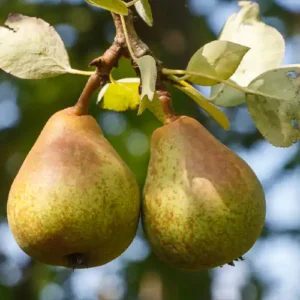
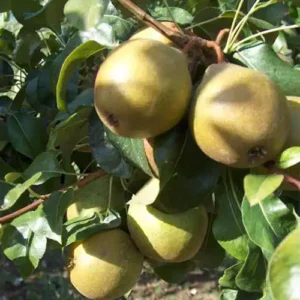
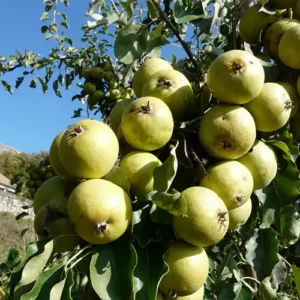
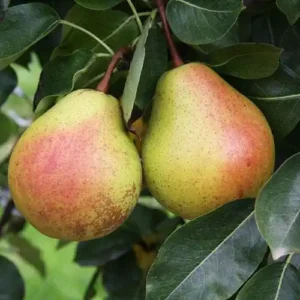
Perry pears are selected not for eating fresh, but for the quality and composition of their juice after fermentation. The fruit is often small, firm, gritty, acidic, bitter or strongly astringent. These characteristics may make it almost inedible when raw, but can provide perry with freshness, structure, length and the ability to develop with time.
A perry pear should not be assessed in the same way as a dessert pear. Fruit size, soft flesh and external appearance are less important than sugar concentration, acidity, tannins, aroma, juice yield, harvest date and behaviour during fermentation.
The future blend should be considered when the orchard is planted. A single cultivar can produce an excellent perry when its juice possesses a complete balance, but combining several complementary varieties usually provides greater complexity and more consistent results between seasons.
The blend begins in the orchard
A good perry is not produced simply by fermenting every pear that happens to be available. The blend should balance fermentable sugar, acidity, astringency, bitterness, aroma and the quality of the fermentation.
A sweet, high-sugar cultivar provides body, potential alcohol and roundness, but may produce a flat or heavy drink when used alone.
An acidic pear contributes freshness and may improve microbiological stability, but can create a hard and unbalanced perry when it dominates the blend.
A tannic cultivar supplies structure and length, while an excessive proportion can produce aggressive dryness and astringency.
Highly aromatic pears remain valuable even when they represent only a small proportion of the finished drink. They may contribute floral, fruity, spicy, herbal or pastry-like notes without necessarily forming a sufficiently balanced fermentation base on their own.
It is therefore more useful to plant several technological profiles than several cultivars with almost identical juice.
A coherent small collection might contain a productive base pear rich in juice and sugar, a cultivar supplying acidity, one or two tannic pears and an aromatic selection used in a smaller proportion.
Harvest dates must also be considered. Cultivars ripening several weeks apart cannot be pressed together without storing the earlier fruit or fermenting separate batches.
Should the fruit, the juice or the finished perry be blended?
Blending can take place at several stages. The pears may be mixed before milling, the different juices may be combined before fermentation or each cultivar may be fermented separately and blended after tasting.
Blending the fruit before milling
Mixing the fruit before pressing is the simplest method for a small producer.
It requires a good understanding of the cultivars because an excessive proportion of acidity or tannins cannot be removed once the whole batch has been milled and pressed.
Pressing separately and blending the juices
Pressing each cultivar separately allows its juice to be tasted and measured before the proportions are decided.
Sugar concentration, pH, acidity, tannic sensation and juice yield can then be compared.
This method requires more containers but provides greater control over the future drink.
Fermenting separately before blending
Separate fermentation offers the greatest flexibility because a cultivar may behave very differently after fermentation from what its fresh juice suggested.
Small blending trials can be prepared once fermentation is complete, allowing the proportions to be adjusted according to the actual aroma, acidity, tannins and structure of each batch.
Single-variety perry
A single-variety perry can be highly distinctive when one cultivar possesses sufficient sugar, acidity, tannins and aromatic character.
It is also an excellent way to understand the qualities of an orchard collection.
Single-variety production should not lead to the assumption that blending is less valuable. In the principal historic perry regions, blending is a central skill used to balance the fruit and compensate for seasonal variation.
The Normandy and Domfront perry tradition
France’s best-known perry landscape lies in the southern Normandy bocage, particularly around Domfront and Mortain, close to the historic borders of Normandy, Brittany and Maine.
Perry pears were traditionally grown as large standard trees within grazed grassland. These deeply rooted trees could reach considerable dimensions, remain productive for several generations and carry several hundred kilograms of fruit in a favourable year.
Perry was historically an everyday farm drink, although production included several styles. Simple drinks could be still and relatively light, while pure-juice bottle-conditioned perry was reserved for more valued occasions.
‘Plant de Blanc’ has a central position in Poiré Domfront. Its juice combines useful sugar, acidity, phenolic compounds and a good ability to clarify.
Within the Poiré Domfront specification, it forms at least 40% of the blend, while other cultivars complete and refine the final profile.
This principle illustrates the logic of perry production: one main cultivar can provide the direction of the drink, while complementary pears adjust its balance and reduce the effect of differences between seasons.
The English perry tradition
In Britain, the fermented drink made from specialised pears is known as perry.
Its principal historic region lies in western England, particularly Gloucestershire, Herefordshire and Worcestershire, with a traditional extension into Monmouthshire in Wales.
These areas are often described as the Three Counties and possess an exceptionally rich heritage of local perry pears, many of which were historically restricted to a small number of villages, farms or parishes.
Traditional English perry pears generally form very large standard trees. Their fruit is often too hard, tannic or astringent for fresh consumption and was grown almost exclusively for fermentation.
English perry has retained a particularly strong tradition of named single-variety drinks. Cultivar groups and varieties associated with names such as Huffcap, Blakeney, Thorn and Butt can possess highly distinctive fermentation characteristics.
Blending nevertheless remains important for balancing sweetness, acidity and tannins and for compensating for differences in crop quality between seasons.
English perry may be still, lightly sparkling or fully sparkling and may finish dry or retain a perceptible sweetness.
Pears naturally contain sorbitol, which ordinary fermentation yeasts use only to a limited extent. Sorbitol can therefore maintain a sweet impression even after most fermentable sugars have disappeared.
Other major European traditions of fermented pears
The Mostviertel in Austria
The Mostviertel in Lower Austria is one of Europe’s most important landscapes of beverage pear trees.
The word Most refers locally to fermented fruit juice, while Birnenmost is produced mainly or exclusively from specialised pears.
Large standard pear trees still structure the hills, meadows and farm surroundings, and the region maintains several hundred heritage cultivars, including many selected for fermentation.
Producers make both blends and single-variety drinks. Some cultivars contribute floral and fruity aromas, while others provide acidity, tannins or a stronger structure.
Southern Germany
The traditional orchard regions of Baden-Württemberg, Swabia and Franconia maintain a long history of Birnenmost, fermented pear juice and sparkling pear wines.
Pear trees were planted within the mixed grassland orchards known as Streuobstwiesen.
Cultivars such as ‘Champagner Bratbirne’ have been valued specifically for the finesse of their fermented juice and their suitability for sparkling drinks.
Other beverage pears were blended with apples or used to modify acidity, tannins and structure.
Switzerland
Switzerland also possesses an important heritage of Mostbirnen, or pears intended for must and processing.
Cultivars such as ‘Schweizer Wasserbirne’, ‘Gelbmöstler’, ‘Grünmöstler’ and ‘Egnacher Mostbirne’ were grown as standard trees for juice, fermentation, concentrated fruit syrups and distillation.
Swiss traditions frequently combine pure pear drinks, apple-and-pear blends, concentrated juice and fruit spirits.
They demonstrate the long selection of pears for technological qualities rather than fresh-eating appearance.
Other European regions
Fermented pear drinks have also been produced in other parts of France, Belgium, the Alpine countries and central Europe.
Many traditions declined as standard orchards disappeared and apple cider became easier to produce and market.
Domfront, the English Three Counties and the Austrian Mostviertel remain especially significant because beverage pears shaped their cultivars, landscapes and processing methods over a long period.
What makes a good perry pear?
Sufficient fermentable sugar
A perry pear must produce juice containing enough fermentable sugar to provide body and an appropriate potential alcohol level.
Sugar concentration varies according to cultivar, sunlight, crop load, soil, water availability and fruit maturity.
Useful acidity
Acidity provides freshness and reduces the impression of heaviness.
It also contributes to the microbiological stability of the juice.
Pear juice is often less acidic and has a higher pH than apple juice, making hygiene and fermentation management particularly important.
Appropriate tannins and phenolic compounds
Phenolic compounds contribute bitterness, astringency, colour and part of the structure of perry.
They may also complicate clarification or create a coarse and aggressive drink when present in excessive quantities.
The quality and sensation of the tannins are as important as their total concentration.
Good juice yield
Some cultivars possess very gritty flesh or a pulp that releases juice poorly.
Others produce a clear and abundant juice with relatively little pressing effort.
Juice yield is an important practical characteristic when large quantities of fruit must be handled.
Predictable behaviour after milling
The behaviour of the fruit after milling can be as important as its initial flavour.
A cultivar may produce pleasant fresh juice but ferment too rapidly, oxidise strongly, clarify poorly or create a large amount of sediment.
These characteristics only become fully apparent after repeated small-scale trials.
Pollination should be planned with the blend
Most pear cultivars crop more reliably when a genetically different variety flowering at a compatible time is nearby.
A perry collection should therefore be planned according to both juice composition and flowering compatibility.
Several useful cultivars may ripen together but fail to provide reliable pollen for one another if their blossom periods do not overlap.
Some heritage perry pears are triploid and produce pollen of limited fertility.
A triploid cultivar can receive pollen and produce fruit, but should not be relied upon as the only pollinator for another tree.
Where triploids are planted, include at least two compatible diploid cultivars capable of pollinating one another.
Cold, wind and prolonged rain during flowering can reduce the activity of bees and other pollinating insects even when the cultivar combination is theoretically correct.
Rootstocks and traditional orchard forms
Traditional perry pear trees are generally grafted onto vigorous pear seedling rootstocks to create deeply rooted, long-lived standard trees.
These trees require considerable space and may take longer to reach full production, but can remain productive for generations.
A mature standard also requires advance planning for fruit collection, access beneath the crown, mowing and the movement of orchard equipment.
Lower-vigour trees can be useful for evaluating a collection because they begin cropping earlier and keep the fruit within easier reach.
Not every perry cultivar is directly compatible with every quince rootstock, and some vigorous heritage varieties may be poorly balanced on a very weak root system.
Rootstock choice should therefore consider cultivar compatibility, soil, mature size, anchorage and the intended lifespan of the orchard.
Harvest perry pears at the correct stage
The quality of perry depends strongly on fruit maturity.
A pear harvested too early contains less sugar, releases less juice and retains undeveloped green or herbaceous aromas.
A pear that is overripe, bletted or decomposing introduces heavy flavours, volatile acidity and undesirable microorganisms.
Collect cultivars separately and make several passes where the fruit does not fall uniformly.
Gathering every pear beneath a large tree on one day often combines immature, ripe, bruised and already deteriorating fruit.
Traditional standard trees are normally harvested from the ground after natural fruit fall because the crown is too high for practical hand picking.
Keep the orchard floor reasonably clean and collect fallen pears quickly before they remain in wet grass or are crushed by animals and vehicles.
Some cultivars benefit from a short period of post-harvest maturation before pressing, but the fruit must remain sound, dry and well ventilated.
Do not deliberately allow the whole crop to become bletted. The pears should have developed sufficiently for pressing while remaining free from rot.
View the perry pear harvest calendar
Harvest periods vary according to cultivar, country, region, exposure, rootstock, crop load and seasonal weather.
Sort the pears before milling
Good perry begins with clean and healthy fruit.
Remove pears that are rotten, mouldy, heavily covered with soil, contaminated by animal droppings or carrying strong foreign odours.
A small fresh bruise does not necessarily prevent immediate pressing.
A soft, brown, fermented or leaking area indicates deterioration and the fruit should be discarded.
Wash the mill, press, containers, hoses and other equipment thoroughly before use.
Because pear juice may be relatively low in acidity, it can be particularly vulnerable to unwanted bacterial development.
Milling, maceration and pressing
Perry pears are milled or grated to form a reasonably uniform pulp.
A very coarse mill produces poor juice extraction, while an excessively fine puree may block press cloths and drainage channels.
In the Domfront tradition, the pulp may rest for a period before pressing. This maceration allows phenolic compounds to evolve and can influence extraction, colour and clarification.
The duration should not be applied identically to every cultivar.
A strongly tannic pear, warm pulp or overripe fruit will not respond in the same way as a mild cultivar processed in cool conditions.
Press progressively to extract the juice without crushing the seeds excessively or carrying an unnecessary quantity of solids into the must.
Gradual pressure generally produces cleaner juice than sudden and excessive compression.
Measure the juice before fermentation
Tasting the juice is essential, but tasting alone cannot describe its fermentation potential.
A hydrometer or refractometer estimates sugar concentration and potential alcohol.
Measuring pH and, where possible, total acidity provides information about flavour balance and microbiological vulnerability.
Measure each cultivar separately whenever possible.
A pear that tastes sweet may contain less fermentable sugar than expected, while a highly astringent variety may produce a rich and useful juice once correctly blended.
Record the harvest date, fruit condition, measurements, blend proportions, fermentation progress and final tasting results.
These records make it possible to improve the blend and adapt it to seasonal variation from one harvest to the next.
Conduct a clean and regular fermentation
Place the juice promptly into a clean fermenting vessel.
Leave sufficient space for the early activity of fermentation, then minimise empty headspace once the vigorous stage has passed.
A cool and steady fermentation generally preserves delicate pear aromas more effectively than a rapid fermentation in a warm room.
Fermentation may begin with the naturally occurring yeasts present on the fruit and equipment or with a selected cider, perry or wine yeast.
Spontaneous fermentation can produce considerable complexity, but is less predictable and requires exceptionally sound fruit, impeccable equipment and attentive monitoring.
A selected yeast normally offers greater regularity, but cannot correct juice produced entirely from immature or rotten pears.
Use an airlock to allow carbon dioxide to escape while limiting the entry of air and contaminants.
Follow fermentation by measuring density rather than relying solely on visible bubbling.
Once fermentation slows, the perry may be racked away from coarse sediment.
Limited contact with clean fine lees can add roundness, while prolonged contact with deteriorating deposits may create undesirable sulphurous or animal aromas.
Why can dry perry still taste slightly sweet?
Pears contain sorbitol, a naturally sweet-tasting compound that ordinary fermentation yeasts use only slightly under normal conditions.
A fully fermented perry can therefore retain a sweeter impression than an apple cider with a similar final density.
This natural softness can balance acidity and astringency.
It does not necessarily mean that the drink still contains a large quantity of fermentable sugar.
Density and stability must nevertheless be understood before bottling.
A perry that still contains fermentable sugar can develop high pressure and become dangerous in an unsuitable bottle.
Still, lightly sparkling or fully sparkling perry
Still perry
Perry may be retained as a still drink after fermentation, provided that oxidation and contamination are controlled.
This style allows the acidity, structure and natural aromas of the pears to be assessed directly.
Sparkling perry
Light or full effervescence can be produced through a controlled secondary fermentation in a pressure-rated tank or bottle.
Traditional Domfront bottle conditioning relies on fermentation of part of the remaining natural sugars rather than artificial carbonation.
Natural bottle conditioning requires accurate control of fermentable sugar, yeast activity, temperature and bottle strength.
An approximate calculation can produce excessive pressure and exploding bottles, while insufficient fermentation creates a flat drink.
For a first attempt, it is safer to produce a healthy and balanced still perry before attempting a naturally sparkling version.
Common perry faults
Vinegar or solvent aromas
An aroma of vinegar or solvent normally indicates excessive activity by acetic bacteria favoured by exposure to oxygen.
Keep vessels appropriately full after primary fermentation and avoid splashing during transfers.
Sulphurous or reduced aromas
Egg-like or reduced aromas may appear when yeasts are stressed or when perry remains too long on deteriorating sediment.
These faults should be distinguished from naturally sulphurous notes that may occur in certain cultivars.
A flat and heavy drink
A flat or heavy perry frequently lacks sufficient acidity.
Blending with a sharper cultivar can provide freshness without masking the pear character.
An excessively hard or astringent drink
A harsh perry may contain too much acidity, tannin or both.
Blending with a sweeter, softer or less tannic cultivar is normally more effective than attempting to conceal the imbalance after fermentation.
Cloudiness and unstable sediment
Cloudiness is not automatically a flavour defect, but an unstable drink may form large deposits or restart fermentation unpredictably.
Time, careful racking and slow fermentation can often provide natural clarification.
Combining French and British perry pears
Planting both French and British cultivars brings together two complementary heritages.
Normandy pears may contribute the finesse, roundness and freshness associated with Domfront perry, while the extensive British collection provides access to more tannic, floral, bitter, aromatic or powerful profiles.
Country of origin alone does not determine the role of a cultivar.
Each pear should be assessed according to sugar, acidity, tannins, juice yield, maturity, aroma and its actual performance in the local soil and climate.
For a small collection, choose cultivars whose flowering periods provide effective pollination and whose harvest dates remain sufficiently close for practical pressing.
Earlier and later cultivars can be added where separate storage, milling and fermentation facilities are available.
Which perry pear trees should you choose?
For a balanced blend, do not choose only the cultivars described as the most aromatic.
Select a complementary group containing a productive base rich in juice and sugar, a source of acidity and one or more pears supplying tannins and complexity.
For a first experiment, two or three cultivars ripening at similar times are easier to manage than a collection whose harvest extends over two months.
For single-variety perry, choose cultivars with well-documented technological qualities and keep each juice separate so that the fermentation results can be compared.
For a large traditional orchard, choose vigorous trees on pear seedling rootstock and plan access, mowing, ground collection and pollination before planting.
For a trial collection, lower-vigour forms can provide fruit earlier where the cultivar and rootstock are compatible.
The best perry blend develops over several harvests. Simple measurements, separate trials and tasting notes are as important as the number of cultivars in the orchard.
Frequently asked questions about perry pear trees
Can a perry pear be eaten raw?
It is edible, but often too hard, bitter or astringent to be enjoyable. These characteristics are valuable for fermentation and do not indicate a poor cultivar.
Can perry be made from dessert pears?
Yes, but the result is generally softer, less tannic and less structured. Dessert pears can complement a blend but do not always replace the technological qualities of genuine perry pears.
Is it better to use one cultivar or a blend?
Both approaches are possible. A single-variety perry reveals the identity of the cultivar, while blending makes it easier to balance sugar, acidity, tannins and aroma.
When should the blend be decided?
It should be considered when the trees are selected, then adjusted after measuring and tasting the juice. The final blend can be produced before fermentation or after separate batches have fermented.
How many perry pear cultivars should be planted?
Two or three complementary cultivars are sufficient for an initial project, provided that their flowering and harvest periods are compatible. A larger collection provides more options but complicates harvesting and fermentation.
Are two perry pear trees required for pollination?
Most cultivars crop more reliably with compatible pollen from another pear tree. Plant at least two suitable cultivars and allow for any triploids that produce pollen of limited fertility.
Should perry pears be allowed to become bletted before pressing?
No. Some cultivars benefit from a short period of post-harvest maturation, but the fruit must remain healthy. Bletted or decomposing pears increase the risk of juice deterioration.
Why are traditional perry pears collected from the ground?
Traditional trees are extremely tall and their fruit falls naturally as it reaches maturity. The pears should be collected promptly and in several passes to avoid mixing maturity stages and allowing rot to develop.
Why is the milled pulp rested before pressing?
Maceration changes phenolic extraction, juice yield and clarification. Its duration must be adjusted according to cultivar, maturity, temperature and tannin concentration.
Why can a dry perry still taste sweet?
Pears contain sorbitol, which tastes sweet but is only slightly fermented by ordinary yeasts. It can remain after most fermentable sugars have disappeared.
Can perry be bottled immediately to make it sparkling?
Bottle conditioning requires accurate knowledge of the remaining fermentable sugar and the use of bottles rated for pressure. Without measurement and control, dangerous overpressure can develop.
What is the difference between poiré and perry?
Poiré is the French term and perry is the English term for a fermented drink made from pears. The general principle is similar, but the cultivars, regional traditions and finished styles differ.
Are there perry traditions outside Normandy and Britain?
Yes. Austria’s Mostviertel has an important tradition of Birnenmost, while southern Germany and Switzerland maintain numerous beverage pears used for fermentation, blending and distillation.
What rootstock is normally used for a traditional perry orchard?
Vigorous pear seedling rootstock is traditionally used to create large, deeply rooted and long-lived standard trees. Smaller rootstocks may be useful for evaluation collections and gardens.
Can French and British perry pears be blended together?
Yes. Their geographical origin creates no incompatibility. Select each cultivar according to its juice composition, maturity, pollination and role in the finished drink.
How can I improve my perry from one year to the next?
Record harvest dates, fruit maturity, sugar, pH, acidity, blend proportions, fermentation progress and tasting results. These observations make it possible to adapt the blend to each season.